
Reviewed · WALKS WITH A LOCAL GUIDE
Explore Lausanne’s Art and Culture with a Local
Lausanne art hits fast, and it feels human. This local walk strings together museums, architecture, and street culture in just 1 hour 30 minutes, so you get context instead of random photo stops. I like how the route mixes big-name places like the Palais de Rumine and the Cathedral with smaller streets where daily life and culture overlap.
One thing to weigh: it is mostly a walking experience, and admission tickets are not included, so if you plan museum time beyond the guided stops, you will want extra budget.
In This Review
- Key highlights you should care about
- Why a local-guided art walk works in Lausanne
- Meeting near Rte du Signal 2 and getting your bearings fast
- Fondation de l’Hermitage: city views and art on the hill
- A 15th-century defensive castle with Italian-style influence
- Palais de Rumine: the kind of building you notice without trying
- Lausanne Cathedral, the bell tower approach, and that stair moment
- Place de Palud and the Fountain de la Justice
- Esplanade de Flon: how a warehouse district became entertainment space
- Montbenon park pause: Casino de Montbenon and Palais de Justice
- Platforme 10: an arts district for fine art, photography, and design
- Finishing by the MCBA, MUDAC, and Musée de l’Elysée
- Price and value: what $136.11 buys you in 90 minutes
- Who this tour suits best in Lausanne
- Should you book this Lausanne art and culture walk?
- FAQ
- How long is the Lausanne art and culture walk?
- What is the price per person?
- Where do I start and where do I end?
- What is included in the tour price?
- Are museum admission tickets included?
- How big is the group?
- Is there a mobile ticket?
- What is the cancellation policy?
Key highlights you should care about
- Local perspective throughout so you understand what you are seeing, not just what it is called
- Fondation de l’Hermitage viewpoints that frame the city in seconds
- Cathedral views plus the wooden stair-and-cobbles moment for a memorable stop-by-stop visual payoff
- Palais de Rumine architecture that is worth slowing down for
- Old city to new arts district in one pass, from Place de Palud to Platforme 10
Why a local-guided art walk works in Lausanne
Lausanne can feel like it has two personalities at once. You have classic stone, church towers, and museum steps. Then you have creative spaces, design energy, and modern districts doing their own thing. The smart move is to connect those dots with a local, because the story behind the buildings makes the city easier to read.
What I really liked is the pace. At 1 hour 30 minutes, you are not stuck all day. You also avoid the common problem of culture tours that turn into a checklist. Here, the guide helps you focus on what matters: why a certain building sits where it does, how the architecture reflects past priorities, and how the city’s art scene shows up in everyday spots.
This is also a small-group experience, with a maximum of 8 people. That matters more than it sounds. You can ask questions, the guide can adjust to your interests, and you are not fighting for attention every five minutes.
Meeting near Rte du Signal 2 and getting your bearings fast
You start at Rte du Signal 2, 1018 Lausanne, and you finish at Pl. de la Gare 16, 1003 Lausanne, near several major museums. Starting points matter in Lausanne because the city is layered, with viewpoints and steep streets. You feel that quickly, so it helps that the tour is designed like a walkable arc rather than a straight line.
At this stage, I’d do two practical things right away. First, bring comfortable shoes. The route includes cobbled streets and a steep stair moment later on, so flip-flops are a bad plan. Second, decide how you want to use the finish line. Since you end by the Musée cantonal des Beaux-Arts (MCBA), MUDAC, and Musée de l’Elysée, you can plan a follow-up museum visit if you still have energy.
Also, you get a mobile ticket, which is handy if you do not want to keep track of paper. And if you rely on public transport, the meeting area is close enough that getting there should not be a headache.
More Local Guide Walks in Lausanne
- Discover Lausanne’s highlights with a local guide (EN)
★ 4.8 · 16 reviews - Lausanne: Private custom tour with a local guide
★ 4.0 · 12 reviews - Lausanne: Private Walking Tour with a Local Guide
★ 4.8 · 10 reviews
Fondation de l’Hermitage: city views and art on the hill
The tour begins by passing Fondation de l’Hermitage, and the big draw is the perspective. This is one of those Lausanne moments where the view does half the work for you. You get a sense of how the city is arranged and why certain neighborhoods feel like they’re above the rest.
I like this first stop because it sets the tone. Instead of rushing into museums immediately, you get an atmospheric primer. A good local guide can point out small things you might miss on your own, like how the skyline shapes how you move through town.
If you are the type who likes art but also likes to understand the setting, you will appreciate this timing. It also gives you a mental map. After this viewpoint, the rest of the walk feels less random, because you already have the “where we are” part in your head.
A 15th-century defensive castle with Italian-style influence
Next comes a jump into older architecture: a 15th-century castle with defensive design and Italian design influences. That combination is exactly what makes Lausanne interesting. This city is not only about pretty facades. It has buildings built for protection, and then later influences changed how those structures looked and functioned.
When you stop here, pay attention to how the structure feels. Defensive architecture often reads as practical and solid. The Italian design part suggests that even in earlier periods, people in the region were not living in a cultural bubble. They were absorbing ideas from elsewhere, and that shows in the details.
A local guide helps here because it is easy to get stuck staring at one feature. The better approach is to scan broadly, looking for how the layout and design communicate the building’s original purpose. You might not notice all of it at street level, but the guide can steer your attention to the right surfaces.
Palais de Rumine: the kind of building you notice without trying
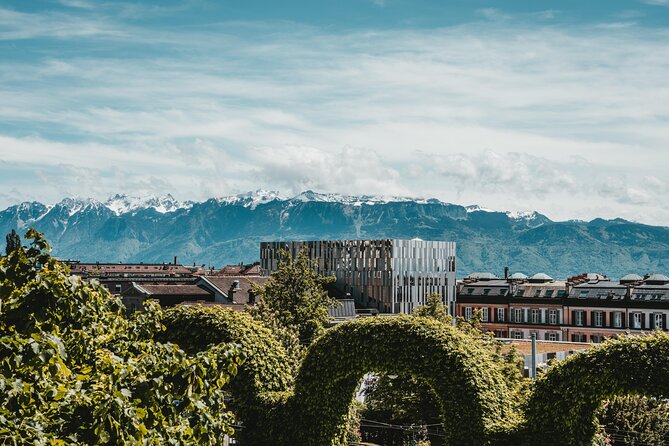
Then you reach Palais de Rumine, described as a true architectural heritage point in Lausanne. This is the stage where the tour becomes more than scenic. It becomes educational in a way that still feels like walking.
What you get from a stop like this is a sense of civic ambition. Buildings like Palais de Rumine are designed to do more than house rooms. They signal that the city values learning and culture enough to put effort into the structure itself. Even if you do not go inside, the exterior can tell you a lot.
I also like that this stop sits in the middle of the route. You have already had viewpoint context from Fondation de l’Hermitage, and you have older architecture coming up with that castle. Palais de Rumine bridges those themes, so by the time you reach the religious and street-level parts of the walk, you understand how Lausanne’s culture is staged.
Lausanne Cathedral, the bell tower approach, and that stair moment
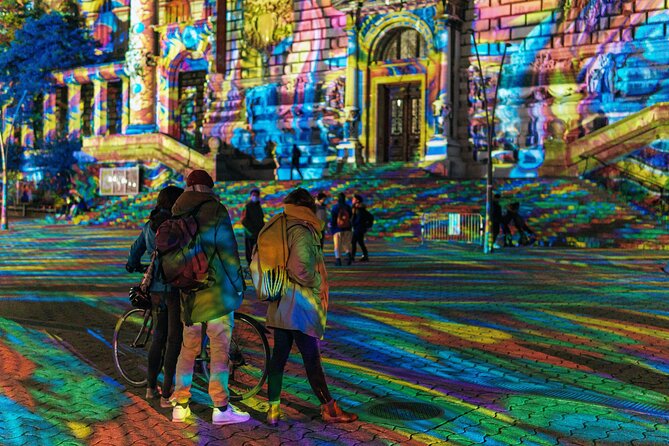
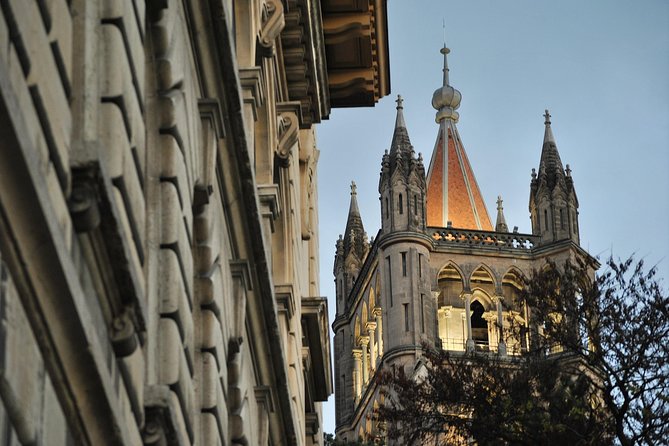
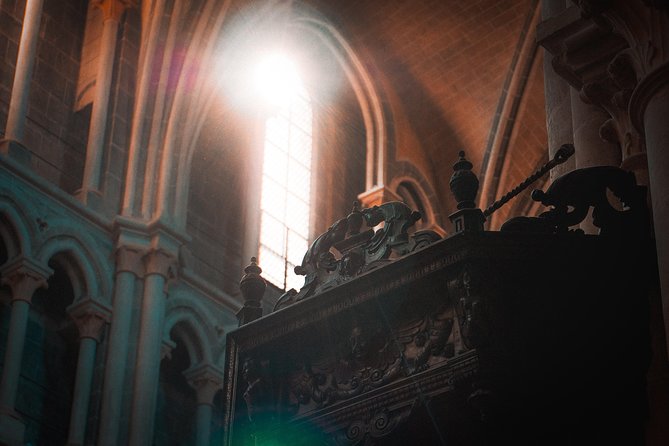
Next is Lausanne Cathedral, and this is one of the most satisfying stops on the walk. The Cathedral is tied to the city’s spiritual heritage, and the guide’s job is to help you see it as more than a landmark.
The route then includes a striking transition: a winding wooden stairway that rises from a steep cobbled street, with cafes and boutiques lining the way. You are literally climbing through an old-street atmosphere, which makes the arrival at the Cathedral bell tower feel dramatic in a way that photos do not always capture.
Practical tip: if you want the best sense of the climb, pause halfway up rather than rushing straight to the top. That way you feel the street texture and the street rhythm, not just the final view. This is also a good place to take a breath and decide whether you will later continue exploring the area on your own.
Higher up, or further along the lake:
- The Olympic Museum Entrance Ticket in Lausanne★ 4.5 · 211 reviews
- Lausanne: 3-Hour Riviera and Lavaux Region Cruise★ 4.2 · 185 reviews
- Lausanne: The Olympic Museum Entry Ticket★ 4.7 · 123 reviews
- From Lausanne: Glacier 3000 Experience Tour★ 4.6 · 96 reviews
Place de Palud and the Fountain de la Justice
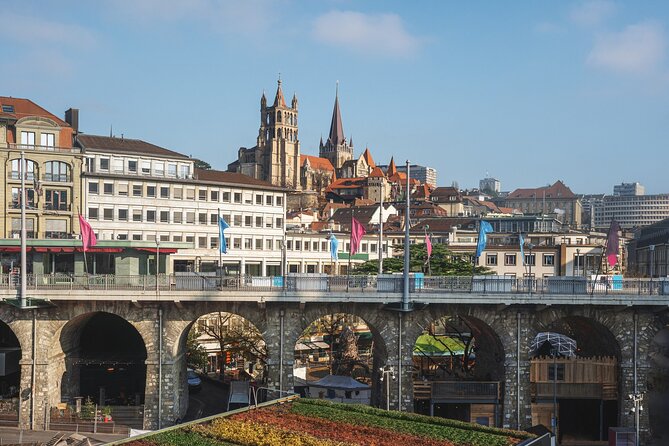
After the Cathedral area, you reach Place de Palud, the heart of Lausanne. This stop gives you a different kind of culture, the kind that happens when people gather.
You are meant to notice the Fontaine de la Justice, and then look around for the market setup. The guide points out that the space supports both a country market and a craft market. That matters because it connects art and culture to everyday purchasing and local making.
If you like travel that feels real, not staged, this kind of square is where you get it. The architecture frames the scene, but the market energy is what makes the place feel alive. Even if you are visiting outside market hours, the square layout is still a strong orientation point for the old city.
Esplanade de Flon: how a warehouse district became entertainment space
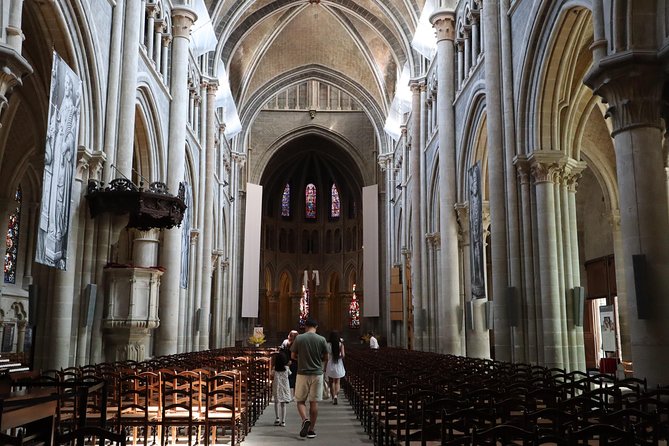
Then you move to Esplanade de Flon, where the story shifts from old city to urban change. The area was once a warehouse district, and now it is a hub for entertainment with rooftop terraces, shops, and more.
This stop is valuable because it shows that culture is not fixed in the past. Lausanne reuses space. It turns industrial bones into social places. And the rooftops matter here. You start to see how the city layers public life at different heights, which is a big part of how Lausanne feels.
If you only visit the classic sights, you miss this modern cultural pulse. But if you include it, the city starts to make more sense. It is not just museums and cathedrals. It is a living scene that keeps reinventing itself.
Montbenon park pause: Casino de Montbenon and Palais de Justice
Next is an oasis moment: views, a romantic fountain, a park setting, and major buildings nearby including the Swiss Film Archive’s Casino de Montbenon and the Renaissance-style Palais de Justice.
I like this stop because it breaks the walk into a more humane pace. You get a visual pause, a chance to relax your feet, and then you return to architecture again from a different angle. The Swiss Film Archive connection is a reminder that cultural institutions are not only traditional museums. Film culture counts too.
The Palais de Justice brings the Renaissance style angle, which helps you keep track of time periods as you move. When you can compare styles in a short span, you start noticing patterns in how Lausanne expresses power, learning, and culture across centuries.
Platforme 10: an arts district for fine art, photography, and design
Finally, you reach Platforme 10, described as a new arts district with fine art, photography, and design in one place. This is the modern bookend to the whole walk.
The best way to use this stop is to look at it as a transition from history to contemporary creative practice. Earlier stops focus on heritage, buildings, and spiritual identity. Here you get the idea that culture today is organized into spaces where multiple art types can share a room or a neighborhood.
If you like photography and design, this is likely where you will want to linger. Even if you do not plan to pay for additional experiences, you can often absorb the vibe just by observing the space, signage, and how people move through it.
Finishing by the MCBA, MUDAC, and Musée de l’Elysée
Your walk ends at Pl. de la Gare 16, close to Musée cantonal des Beaux-Arts (MCBA), MUDAC (Musée cantonal de design et d’arts appliqués contemporains), and Musée de l’Elysée. That is a smart finish because it gives you options without forcing you to backtrack.
If your feet are okay, you can turn the guided context into deeper museum time. And if you are museum-tired already, you can simply use the area as your final orientation for the day, with public transit nearby.
In other words, the tour does not trap you. It gives you direction, and then it hands you the choice of what comes next.
Price and value: what $136.11 buys you in 90 minutes
At $136.11 per person for about 1 hour 30 minutes, the real value here is not “sightseeing alone.” It is the local person guiding you through the city’s cultural layout. You also get group discounts and a mobile ticket, which are practical perks for the kind of short walk this is.
One detail to keep in mind: admission tickets are not included. That is normal for many walk-based experiences, but it changes the math. If your plan is to go inside multiple museums during the tour, you might end up paying extra anyway. If your plan is to learn how the places fit together and then choose one or two museums after, this price becomes much easier to justify.
Also, the fact that the max group size is 8 is part of the value. In a small group, a good guide can actually work with the pace, and you get a more personal experience.
Who this tour suits best in Lausanne
This is best for you if you want art and culture without a full-day schedule. It works well for first-timers who need orientation, and it also works for returning visitors who want a different angle than the usual major sights.
It also suits different travel styles. If you like architecture, you will enjoy the Cathedral approach and the mix of historic and Renaissance-style stops. If you prefer contemporary culture, Platforme 10 and the Flon transformation give you that modern scene. If you are traveling with limited time, the structure helps you hit the right highlights efficiently.
If you struggle with steep streets, plan your expectations. The tour includes a steep cobbled street and stair moment, so you may want to go slow, take breaks, and wear supportive shoes.
Should you book this Lausanne art and culture walk?
I think you should book it if you want a guided thread through Lausanne’s art and cultural identity, from heritage architecture to modern creative spaces. The small group size, the local-led storytelling, and the way the walk is paced over about 90 minutes make it a strong “first meaningful day” option.
Skip it only if you want a museum-only experience with included admissions. This walk is designed for context and atmosphere. You get the direction, then you decide what to explore more deeply afterward near MCBA, MUDAC, and Musée de l’Elysée.
FAQ
How long is the Lausanne art and culture walk?
It is about 1 hour 30 minutes.
What is the price per person?
The price is $136.11 per person.
Where do I start and where do I end?
You start at Rte du Signal 2, 1018 Lausanne, Switzerland, and you end at Pl. de la Gare 16, 1003 Lausanne, Switzerland.
What is included in the tour price?
The tour includes a local who wants to show you their city.
Are museum admission tickets included?
No. Admission tickets are not included.
How big is the group?
The experience has a maximum of 8 travelers.
Is there a mobile ticket?
Yes, the tour uses a mobile ticket.
What is the cancellation policy?
You can cancel for a full refund if you cancel up to 24 hours in advance. If you cancel less than 24 hours before the start time, the amount you paid is not refunded.
Added lately around Lausanne



Walks with a Local Guide, compared.
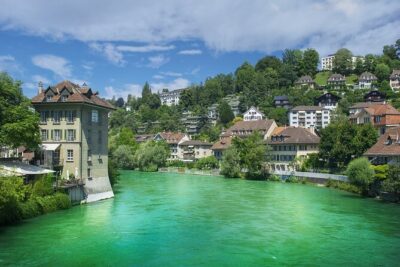
Bern Walking Tour: Explore Top Sights & Hidden Gems
Read our review →
Private Walking Tour with a Local Guide (Private tour)
Read our review →Browse the lists this tour appears in