
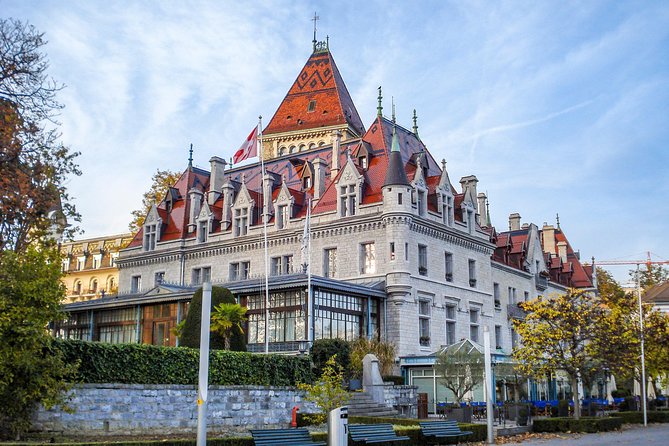
Reviewed · WALKS WITH A LOCAL GUIDE
Architectural Lausanne: Private Tour with a Local Expert
Lausanne is architecture in motion. This 2-hour private walk with a local expert puts the city’s bridges, squares, monuments, and cathedrals into context, and I especially like the small group feel and the chance to study Lausanne Cathedral up close. The catch is simple: you’ll be walking, with stops that can shift if weather turns, so wear good shoes and plan for a steady pace.
What makes this different from a standard sightseeing loop is the local viewpoint and the tailored route. You stay with your group only, up to 8 people total, and the plan adapts to your interests and walking speed. You also get a mobile ticket and confirmation at booking, and you start at Place Bel-Air, then finish in the Rhodanie area.
If you want architecture explained clearly, not just photographed, this kind of guide-led stroll is ideal. You’ll connect the Gothic details of the cathedral to the civic role of landmark buildings and the way Lausanne has evolved into a modern city with historic charm.
In This Review
- Key highlights at a glance
- Why Lausanne architecture is best on foot (and with a guide)
- Getting oriented at Place Bel-Air and Tour Bel-Air viewpoints
- Lausanne Cathedral: Gothic architecture you can actually interpret
- Place Saint-François and the human heartbeat of old Lausanne
- Tour Bel-Air and the commercial hub angle on city change
- Bridges and city connections: where Grand-Pont fits in
- The Federal Supreme Court: Swiss civic architecture with gravity
- Maison du Sport International and why Lausanne is the Olympic Capital
- Price and what you actually get for $809.47 per group
- Practical tips for a smooth 2-hour architecture walk
- Should you book Architectural Lausanne with a local expert?
- FAQ
- How many people are on this tour?
- Is this tour private or shared?
- How long is the Architectural Lausanne tour?
- Where do you meet, and where does the tour end?
- Which landmarks does the tour include?
- What is not included in the tour price?
- How much does the tour cost?
- What is the cancellation policy?
- How do tickets and confirmation work?
Key highlights at a glance
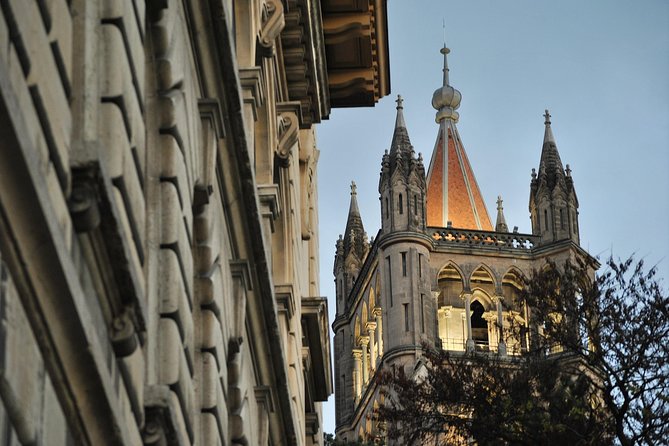
- Lausanne Cathedral, Switzerland’s largest Gothic church with an eye-catching portal and stained glass
- Place Saint-François, the social center where historic facades meet café life
- Tour Bel-Air views from a prime spot in the commercial hub
- Federal Supreme Court of Switzerland, a major national legal site in a grand historic building
- Maison du Sport International, linking Lausanne to the Olympic world
- Private, local-led pacing with small group size and route adjustments for weather and interests
Why Lausanne architecture is best on foot (and with a guide)
I love the way walking changes how a city reads. In Lausanne, you do not just pass buildings, you see how they relate to streets, viewpoints, and the flow of daily life. That is exactly what you get here: an architecture-focused route that helps you understand why these places matter, not just what they look like.
A big part of the value is the guide’s local logic. Instead of listing facts, you get stories tied to what you are standing in front of. That makes the Gothic lines of the cathedral feel connected to the civic buildings around it, and it helps the bridges and squares stop being random postcard stops.
The other practical win is group size. Up to 8 people keeps questions manageable and the pace realistic, especially on uneven sidewalks and stairs. You will also feel the benefits of a tour that adapts to your interests and walking pace, since not every traveler wants the same level of architectural detail.
Getting oriented at Place Bel-Air and Tour Bel-Air viewpoints
You begin in Place Bel-Air, a natural launch pad for orientation. This is where you can quickly understand Lausanne’s layout and the way the city climbs and opens toward views. The meeting point matters, because it sets you up for a route that moves through key areas rather than circling randomly.
From there, Tour Bel-Air becomes your first serious “look back and plan your next views” moment. It sits in the commercial hub, so the setting helps you understand Lausanne as both a historic city and a living, working one. When you stand where you can see the city spread out, you start noticing patterns: how neighborhoods stack, where major landmarks sit, and why certain bridges and squares feel like natural meeting points.
One thing I like about a viewpoint stop early in the tour is that it upgrades everything you see later. When you return to an area or pass a landmark, you’re not just reacting, you’re connecting it to the bigger shape of the city.
More Local Guide Walks in Lausanne
- Discover Lausanne’s highlights with a local guide (EN)
★ 4.8 · 16 reviews - Lausanne: Private custom tour with a local guide
★ 4.0 · 12 reviews - Lausanne: Private Walking Tour with a Local Guide
★ 4.8 · 10 reviews
Lausanne Cathedral: Gothic architecture you can actually interpret
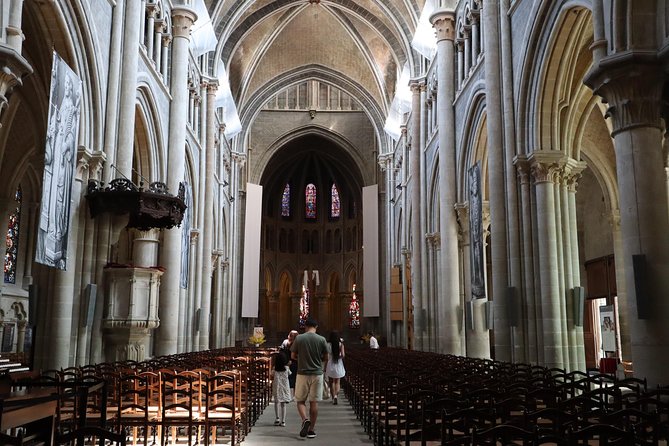
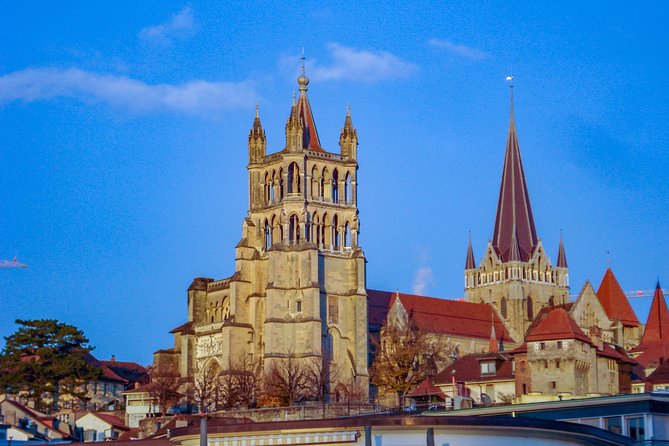
Lausanne Cathedral is the headline for a reason. It is the largest Gothic church in Switzerland, and that scale is easy to feel even before the details. The cathedral’s portal and its stained glass are the kind of features that reward slow looking, and a guide helps you know what to look for without turning it into a lecture.
Here’s what you get from focusing on Gothic architecture in real time. You see how the structure directs attention upward, and you notice the way light interacts with stained glass as you move around. Instead of seeing color as decoration, you learn why it matters to the building’s mood and messaging.
The cathedral also acts like an anchor for the whole walk. Once you understand what makes the cathedral distinct, you can better spot how later buildings express civic pride in different styles. That contrast is one of the most satisfying parts of this tour.
Practical note: plan for standing time. Even if you do not climb far, you’ll likely spend moments looking up and then turning to take in different angles. If you’re sensitive to crowds, the small group size helps keep it comfortable.
Place Saint-François and the human heartbeat of old Lausanne
After the cathedral, you shift from monument to everyday life at Place Saint-François. This square is the heart of Lausanne’s social scene, and it is not just about old stone. You get the sense of the city as people use it: meeting, chatting, and grabbing coffee in front of historic facades.
This stop is valuable because architecture is not only about famous structures. Squares are stage sets. They shape movement, frame views, and create spaces where community happens. In a guided format, you can connect the built environment to how locals behave in that space.
I also like how this stop balances the tour. A cathedral can be awe-inspiring, but it can also feel distant. Place Saint-François keeps the tone grounded and gives you a clearer picture of what Lausanne looks like when it is not posing for visitors.
If you enjoy street-level travel, this is where you start getting the most out of your camera. Just remember, you’ll enjoy the stop more if you look at details beyond the main buildings. Watch doorways, window rhythms, and how cafés relate to the square edges.
Tour Bel-Air and the commercial hub angle on city change
One clever part of the route is how it ties views to function. Tour Bel-Air is not only about panoramas, it also helps explain Lausanne’s role as a modern city with historic charm. Being in the commercial hub means you see how daily work and historic architecture share the same stage.
When a guide connects these dots, it changes your reading of Lausanne. Instead of thinking of history as a static museum topic, you start seeing it as a living framework that cities still operate inside. That is a big theme of this tour: how Lausanne transforms without losing its architectural identity.
From a traveler’s point of view, this matters because it affects what you do after the tour. If you understand where the city’s center of gravity is, you can choose your next neighborhood for wandering. You might decide to linger in café zones, or head toward landmarks with a sense of direction.
Bridges and city connections: where Grand-Pont fits in
The tour is about more than buildings. Lausanne’s architecture includes the connectors, the in-between spaces that make routes make sense. The walk includes bridge areas like Grand-Pont, which helps you understand how the city links districts over water and along streets.
Why bridges belong on an architecture tour: they shape sightlines. They offer a moving viewpoint, and they force you to see buildings from an angle you would not get standing on a sidewalk. They also reveal planning logic, since bridges are where engineering meets public space.
Even if you already know Lausanne has great lakeside scenery, a bridge stop gives you something different. You see the city as a connected system, not a set of separate attractions.
Also, if you are traveling with limited time, bridge viewpoints are smart energy savers. They give you big perspective in a short time, and they keep the walk lively.
Higher up, or further along the lake:
- The Olympic Museum Entrance Ticket in Lausanne★ 4.5 · 211 reviews
- Lausanne: 3-Hour Riviera and Lavaux Region Cruise★ 4.2 · 185 reviews
- Lausanne: The Olympic Museum Entry Ticket★ 4.7 · 123 reviews
- From Lausanne: Glacier 3000 Experience Tour★ 4.6 · 96 reviews
The Federal Supreme Court: Swiss civic architecture with gravity
Next comes the Federal Supreme Court of Switzerland, set in a grand historic building. This stop adds a different kind of architecture to the mix. Churches and squares feel expressive. Courts feel formal. Together, they show how architecture communicates values.
A guided approach helps here because you’re not just looking at stone. You’re learning the building’s role as a major national legal site. That context changes how you interpret the structure, the tone of the space, and the overall presence of the building.
If you like understanding how institutions shape a country’s identity, this stop will hit well. It also complements the tour’s theme of transformation. You get a sense of continuity, how historic forms can house modern national functions.
One practical consideration: legal buildings can have strict routines around access and observation, and entry tickets are not included. Expect to view and learn from the outside and from permitted areas, and do not count on spontaneous museum-style access unless you already planned for it separately.
Maison du Sport International and why Lausanne is the Olympic Capital
Then you move toward Maison du Sport International, a hub for international sports organizations. This is where Lausanne’s identity expands beyond architecture into global relevance. The city is often framed as the Olympic Capital, and this stop gives you a tangible, modern counterpart to the older civic and religious landmarks.
What I like about including sports infrastructure in an architecture walk is that it proves the theme of modern transformation. Lausanne did not stop with old cathedrals. It built institutions that serve international communities, and those modern buildings now sit alongside historic charm.
This stop is especially good if you like the idea of travel as meaning. You’re not only collecting sights. You’re building a mental map of why Lausanne matters to the world, and why the city invests in places where international action happens.
If you’re a sports fan, you’ll likely get extra enjoyment from this part. If you are not, the architectural lesson still lands: modern institutional buildings can express identity just as strongly as older monuments.
Price and what you actually get for $809.47 per group
The price is $809.47 per group, up to 2 people. That format matters because it changes the math. If you book for two, your effective cost per person is about half the group price. If you book solo, you are paying the full group amount, so it’s often better when you have a travel partner.
Now, is it worth it? I think it can be, because you are buying three things that are hard to replicate on your own:
- a local expert guide who explains what you are seeing
- a private experience tailored to your interests and walking pace
- a route that focuses on architecture stories instead of random stops
It is also booked well in advance on average, which usually signals demand for this kind of guided, small-group specialty. You are not paying for just a walk. You’re paying for interpretation and structure.
One more value factor: entry tickets for museums and monuments are not included. That keeps expectations realistic. You are still getting landmark time, but if you want ticketed interiors, you’ll plan those separately.
Practical tips for a smooth 2-hour architecture walk
This is a 2-hour experience, so every stop counts. You’ll be walking in the city, with an itinerary that can adapt based on weather conditions. That flexibility is good. It means the guide can protect you from a miserable day by adjusting what is practical, not forcing you through discomfort.
Wear shoes you can trust. Lausanne sidewalks can include uneven paving and slopes. Even on a short tour, you’ll appreciate traction and comfort.
Bring a light layer. Even if the forecast looks fine, cathedral and bridge areas can feel cooler, and you might stand still for viewpoints. A small pack with water is a smart move, too.
For logistics, you start at Place Bel-Air and end at Av. de Rhodanie 54. That end point is useful for planning your next move, since you can continue exploring without needing to backtrack.
Finally, this is near public transportation, so if you split your day, you can hop back to your hotel or connect to other stops easily.
Should you book Architectural Lausanne with a local expert?
I’d book it if you want architecture that comes with context and you like walking with a guide who can answer questions on the spot. It is a strong choice for first-time visits to Lausanne because the route covers major architectural themes, from Lausanne Cathedral to civic and institutional landmarks like the Federal Supreme Court and Maison du Sport International.
I would skip or rethink if you hate walking, or if you strongly prefer ticketed museum time. This tour is about architectural interpretation during a walk, and it does not include entries.
If you book with a partner, the group pricing becomes much easier to justify. And if your travel dates line up with local street energy, the guided narration can make the whole outing feel extra lively.
FAQ
How many people are on this tour?
The tour is led by a local expert in a small group of up to 8 people, and it is also described as a private tour where only your group participates.
Is this tour private or shared?
It is a private tour. Only your group will participate.
How long is the Architectural Lausanne tour?
The duration is approximately 2 hours.
Where do you meet, and where does the tour end?
You start at Place Bel-Air, Pl. Bel-Air, 1003 Lausanne, Switzerland, and end at Av. de Rhodanie 54, 1007 Lausanne, Switzerland.
Which landmarks does the tour include?
The tour includes Lausanne Cathedral, Place Saint-François, Tour Bel-Air, the Federal Supreme Court of Switzerland, and Maison du Sport International.
What is not included in the tour price?
Personal expenses are not included, and entry tickets for public transportation, museums, and monuments are not included.
How much does the tour cost?
The price is $809.47 per group, up to 2 people.
What is the cancellation policy?
You can cancel for free up to 24 hours in advance for a full refund.
How do tickets and confirmation work?
You receive confirmation at the time of booking, and the tour uses a mobile ticket.
Added lately around Lausanne



Walks with a Local Guide, compared.
Bern Walking Tour: Explore Top Sights & Hidden Gems
Read our review →
Private Walking Tour with a Local Guide (Private tour)
Read our review →Browse the lists this tour appears in