
Reviewed · WALKING TOURS
Walking Tour in Lausanne Switzerland
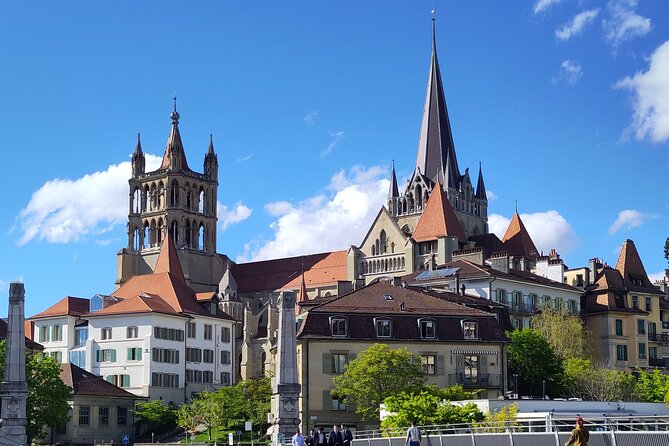
Lausanne clicks fast on foot. This 2.5-hour walking tour gives you a clear route through the city’s big landmarks, with a guide who explains what you are seeing and why it matters. I especially love the Cathedrale de Lausanne interior stop, including the stained-glass windows and the organ by Giugiaro. You also get a smart sense of direction early on, which makes the rest of your visit easier.
My second favorite part is the pacing and people energy. In practice, the walk is designed to keep you moving between sights but still pause where it counts, and the guide (often Ilona) is the type who keeps the mood light and finds shelter when weather turns. The main drawback to plan for is that this is real walking with some up and down, so it may feel tough if you do not handle hills well, and it is not recommended for people with walking disability.
In This Review
- Key highlights to look for
- Getting oriented in Lausanne, start at the History Museum
- How the 2.5-hour route flows downtown (and why that’s smart)
- Stop 1: Cathedrale de Lausanne interior, stained glass and the Giugiaro organ
- Stop 2: Palais de Rumine at Place de la Riponne
- Stop 3: Tour de l’Ale, built 1340, meant to defend the faubourg
- Stop 4: Chauderon Bridge, two parallel bridges from 1904-1905
- Stop 5: Casino de Montbenon and its garden setting
- Stop 6: Rue du Grand-Pont viewpoint, Pichard’s plan to fix traffic jams
- Stop 7: Lausanne train station and platforms, inaugurated 1856, building from 1916
- Price and value, including the one extra fee to watch
- When to go and what your start time means
- What to wear, and how to make the walk feel easy
- Should you book this Lausanne walking tour?
- FAQ
- How long is the walking tour in Lausanne?
- What is the price per person?
- What language is the tour offered in?
- Where does the tour start?
- What is included in the tour price?
- Are there entrance fees or extra costs?
- Who can join, and what fitness level is needed?
- What is the group size?
- What is the cancellation policy?
Key highlights to look for
- Cathedral interior access: A short stop focused on architecture and stained glass, plus time around the déambulatoire.
- Palais de Rumine context: Quick historical setup plus what the building does today.
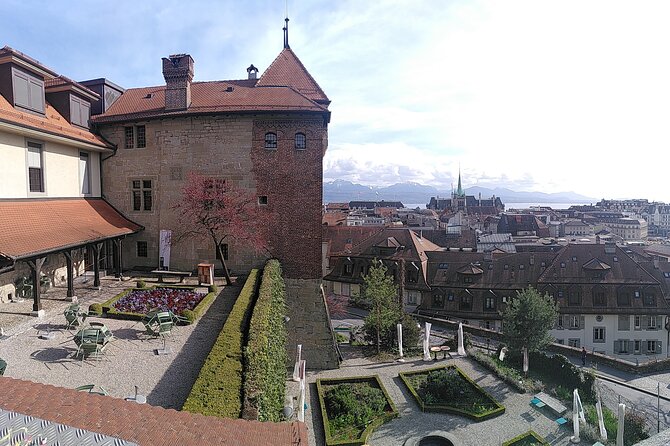
- Tour de l’Ale photo circle: A close walk around the 1340 defense tower, with its original military job explained.
- Two-bridge Chauderon Bridge: An easy crossing, with early 1900s construction details you will notice more once pointed out.
- Casino de Montbenon surprise: The name says casino, but the tour explains that it has never housed a games room.
- Grand Pont traffic-solution story: A bridge built to ease old-town congestion, finished in 1844 after safety concerns.
Getting oriented in Lausanne, start at the History Museum
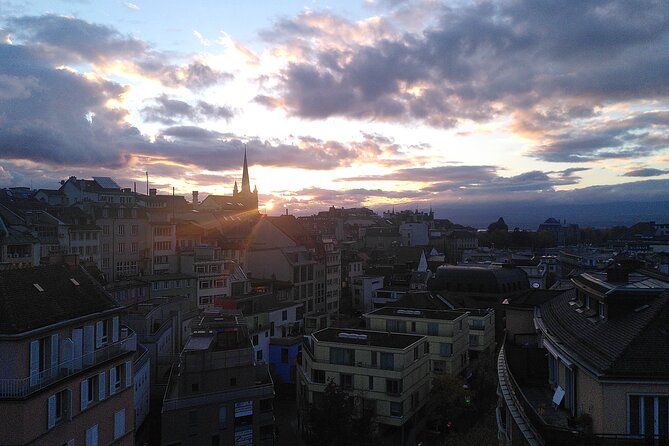
Your tour begins at the Lausanne History Museum, right by Pl. de la Cathédrale. That location matters because it puts you near the cathedral first, so you start with the biggest visual anchor and the oldest layers of the city. If Lausanne feels confusing at first, this helps you sort it quickly.
This is offered in English and uses a mobile ticket. It is also a small-group format, with a maximum group size of 15, which usually means less waiting and more time to ask questions when something catches your eye.
How the 2.5-hour route flows downtown (and why that’s smart)
The whole walk runs about 2 hours 30 minutes, and it is structured like a gentle descent through the city highlights. You do not just “see stuff.” You also get the story of how each place fits into Lausanne’s growth, defenses, and daily life.
You will move between stops that are mostly free to view, plus a couple of places where extra entry could come up. The route is designed so the explanations keep pace with what you are looking at, so you are not stuck hearing facts while you stare at a wall. And because the group is small, you tend to stay together without feeling rushed.
More Guided Walks in Lausanne
- Vine Stories: Lavaux & Lutry wine walk
★ 5.0 · 67 reviews - Gourmet Food and Wine Tasting Walk in Lavaux
★ 5.0 · 11 reviews - Lausanne: Private Walking Tour with a Local Guide
★ 4.8 · 10 reviews
Stop 1: Cathedrale de Lausanne interior, stained glass and the Giugiaro organ
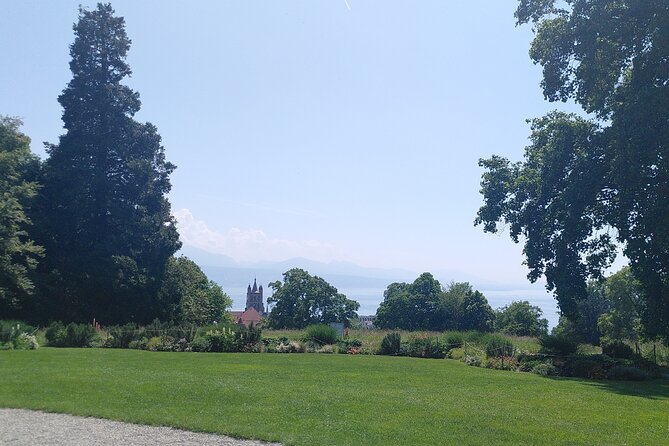
You start inside the Cathedrale de Lausanne for a brief visit. The focus here is practical and visual: you walk around the déambulatoire area and take in the stained-glass windows and gothic architecture from angles you likely would not pick on your own.
This is a good opener because it teaches you how to “read” the building in minutes. Once you understand the layout and what to notice, the cathedral becomes more than a pretty exterior. The organ by Giugiaro is a particularly strong detail, and it helps if you like architecture that has both craft and function.
Possible downside: this is a short interior window. If you want a long, quiet, deep look, you may still want extra time on your own later.
Stop 2: Palais de Rumine at Place de la Riponne
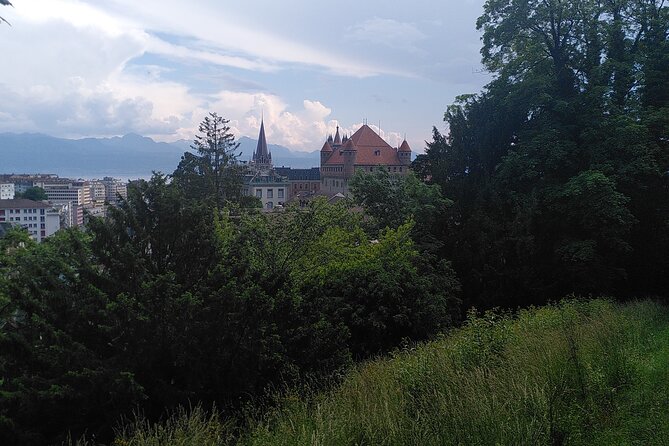
From the cathedral area you cross Place de la Riponne and head to the Palais de Rumine. The guide gives you a quick but useful explanation of what the building’s role used to be and what it does now, so it does not feel like a random big facade.
The story includes a clear construction timeline: the building began in September 1898, using plans by Lyon architect Gaspard André. That kind of detail makes the place feel grounded in real decisions, not just style.
This is also a nice “breather” stop in the flow. You get context without a lot of climbing, so it works well early in the walk.
Stop 3: Tour de l’Ale, built 1340, meant to defend the faubourg
Next comes the Tour de l’Ale, where the tour keeps it simple and focused: a walk around the tower with historical context. You learn that it was built in 1340 and that its main job was to defend the Faubourg de l’Ale, a district outside the earlier walls.
One tricky thing to know upfront: entry to this stop is listed as not included. That means you can still appreciate the tower from outside and around the area, but if you plan to go inside, you should be ready for that extra cost.
If you like fortifications or medieval city planning, this stop is the best “why did they build it here” moment on the route.
Stop 4: Chauderon Bridge, two parallel bridges from 1904-1905
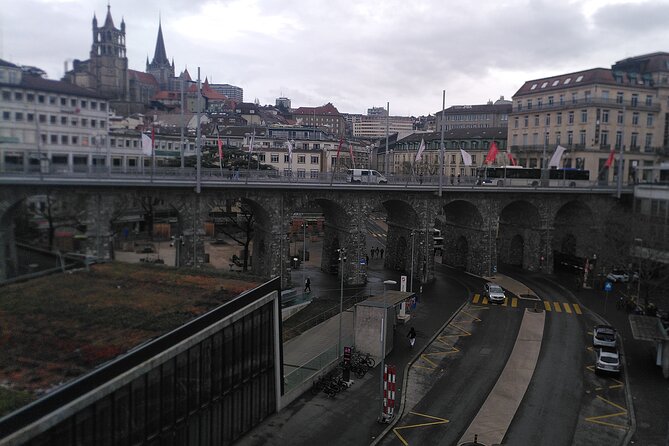
You cross the Chauderon Bridge, built between 1904 and 1905. The tour highlights an architectural detail that you can actually see right away: it consists of two parallel bridges.
This is one of those stops where the guide turns something you would normally treat as pure transit into a small lesson in engineering choices. Even if you do not know bridge vocabulary, you will understand what to look for once it is pointed out.
This stop is also helpful because it keeps the walk moving while the explanations stay short.
Higher up, or further along the lake:
- The Olympic Museum Entrance Ticket in Lausanne★ 4.5 · 211 reviews
- Lausanne: 3-Hour Riviera and Lavaux Region Cruise★ 4.2 · 185 reviews
- Lausanne: The Olympic Museum Entry Ticket★ 4.7 · 123 reviews
- From Lausanne: Glacier 3000 Experience Tour★ 4.6 · 96 reviews
Stop 5: Casino de Montbenon and its garden setting
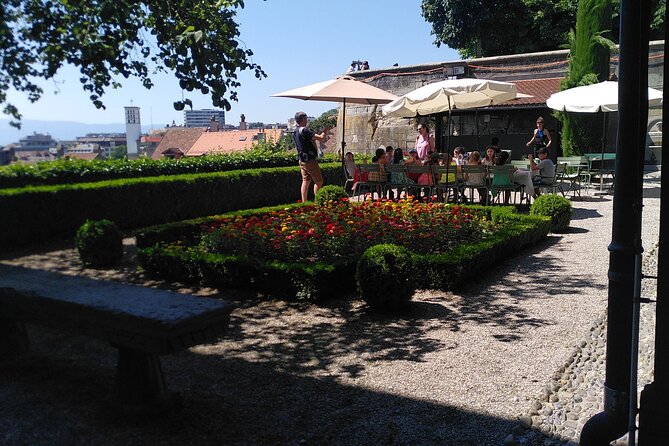
The walk then brings you to the Casino de Montbenon and its gardens. The building was built in 1908, and the tour gives you a specific clarification that helps avoid confusion: despite the name, the casino has never housed a games room.
That little correction is exactly why guided context is worth it. You are not just reading a sign or guessing at the past. You learn the mismatch between what the word suggests and what actually happened.
Also, the gardens give you a chance to slow down without losing momentum. If you are traveling with people who get tired easily, this is a good midpoint where everyone can catch their breath.
Stop 6: Rue du Grand-Pont viewpoint, Pichard’s plan to fix traffic jams
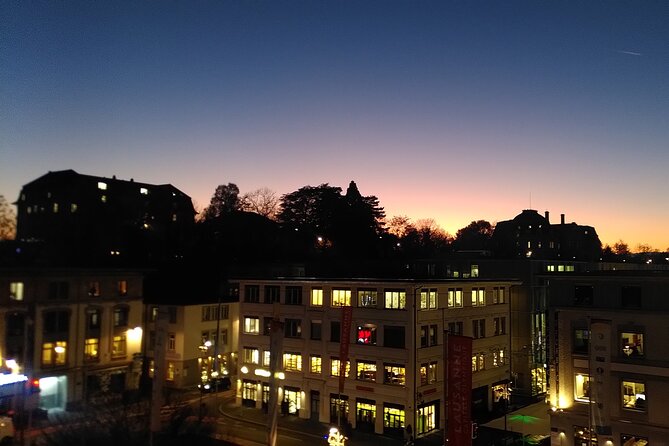
At Rue du Grand-Pont, you get a view of the Grand Pont, plus the story behind why it exists. The guide explains that engineer Pichard designed it to avoid traffic jams in the old town.
You also get a timeline that makes it feel surprisingly modern: work began in 1839 and finished in 1844, even with safety concerns that forced the pacing. The tour notes that the completion was celebrated with much pomp, which gives the bridge a bit of drama beyond engineering.
This is a great stop for photographers, and it is also a good place to reset your brain. You can look, listen, then look again with new context.
Stop 7: Lausanne train station and platforms, inaugurated 1856, building from 1916
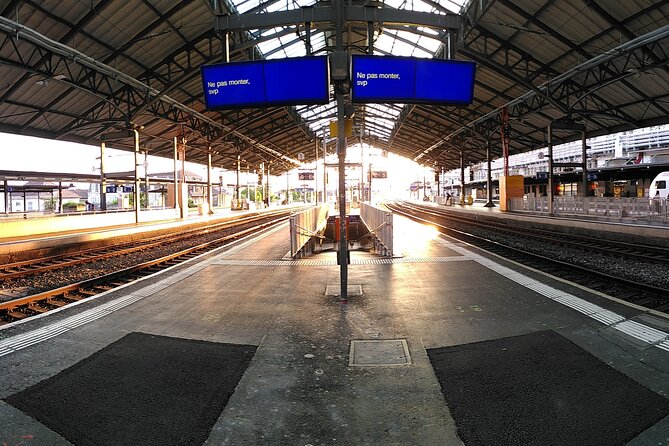
The final stop is the Lausanne train station, including time up on the platforms. You learn that the station was inaugurated in 1856 and changed Lausanne’s urban pattern, with the town starting to grow south. The tour also notes that the station building as you see it today dates to 1916.
This ending is smart for a practical reason. Once you understand where the station sits in the city’s story, it becomes more than a transit hub. It feels like part of Lausanne’s growth, and you leave with an easier sense of how to move around on your own.
If you plan to use trains during your trip, this is also a confidence boost.
Price and value, including the one extra fee to watch
The price is $79.31 per person for about 2 hours 30 minutes. For that, you get a professional guide and a mobile ticket, plus most of the stops are listed as free admission.
Your value check is mainly about optional or additional costs. Snacks are not included, and the tour suggests you may spend about CHF 12 total at one stop depending on what you order. Also, there is a noted entrance fee of MHL CHF12 per person, and the Tower de l’Ale stop lists admission as not included.
So here is the practical way to budget it: plan for the base price, then add a small buffer for one snack, plus the CHF12 items if they apply to what you actually enter.
Booking timing is another value factor. On average this is booked about 61 days in advance, so if you want a specific day or time window, you should not wait until the last minute.
When to go and what your start time means
The tour runs on set daily windows, depending on the season. From 11/01/2025 to 05/31/2026, it runs Monday through Sunday from 1:30 PM to 2:00 PM. From 06/01/2026 to 09/30/2026, it runs Monday through Sunday with two windows, 9:30 AM to 10:00 AM and again from 1:30 PM to 2:00 PM.
Those start times matter because Lausanne has a lot of vertical movement, even when you are not looking for it. A morning tour can be a good pick if you want cooler temperatures, but an afternoon tour can feel more relaxed if you like to start slow.
What to wear, and how to make the walk feel easy
The tour calls for moderate physical fitness, and it is not recommended for people with walking disability. That is a clear hint: you will want good shoes and a pace that works for you.
If it rains, you are not stuck staring at weather. The experience has a track record of the guide finding sheltered spots and stopping for something warm, like a hot chocolate, to keep morale up. I also like that there are natural “pause points” built into the landmarks themselves, so you are not just walking in silence between far-off sights.
Age minimum is 16 years old, and service animals are allowed. The tour is also near public transportation, which is handy since the tour ends at a different location than where it starts.
Should you book this Lausanne walking tour?
I think you should book if you want a first-day route that makes sense fast. This walk is built for orientation, with architecture and city planning clues at each stop, not just a list of names. It is also a solid choice if you like an organized route but still want to move at a human pace, especially with a guide like Ilona bringing humor and smart explanations.
You might skip it if you strongly prefer long independent sightseeing time, or if walking hills is tough for you. The route is short in total time, but it still asks for steady movement.
If your main goal is to understand Lausanne quickly, get your bearings, and leave with a clear sense of what to explore next, this is a good use of a half day.
FAQ
How long is the walking tour in Lausanne?
The tour lasts about 2 hours 30 minutes.
What is the price per person?
The price is $79.31 per person.
What language is the tour offered in?
The tour is offered in English.
Where does the tour start?
The meeting point is Lausanne History Museum, Pl. de la Cathédrale 4, 1005 Lausanne, Switzerland.
What is included in the tour price?
It includes a professional guide and uses a mobile ticket.
Are there entrance fees or extra costs?
Some stops are listed with free admission, but the Tour de l’Ale has admission not included. The tour data also notes an MHL entrance fee of CHF12 per person. Snacks are not included, and a snack stop is usually around CHF12 total depending on what you order.
Who can join, and what fitness level is needed?
Participants must be 16 years or older, and the tour calls for a moderate physical fitness level. It is not recommended for people with walking disability.
What is the group size?
The tour has a maximum of 15 travelers.
What is the cancellation policy?
You can cancel for a full refund up to 24 hours in advance. Confirmation is received within 48 hours of booking, subject to availability.
Added lately around Lausanne





Walking Tours, compared.
Zurich Walking Tour With Cruise and Aerial Cable Car
Read our review →
Lucerne Walking & Boat Tour: The Best Swiss Experience
Read our review →
3 in 1: Zurich Walking Tour – Cruise on the Lake – Cable Car Ride to Felsenegg
Read our review →Browse the lists this tour appears in