

Reviewed · SELF-GUIDED TRAILS IN ZURICH
Self-Guided Audio Tour to the Dark Side of Zurich
Zurich has a dark trail underfoot. This self-guided audio tour strings together witch-hunt and execution-history stops across the old town, guided by a professional deep-voice narration and clear photo-based directions. I also like that each stop is short, around five minutes, so you can keep moving without getting lost in long lectures. One possible drawback: the subject matter is grim, and if you are sensitive to human-rights atrocities, this may hit hard.
You start at Paradeplatz and finish at Herkulesbrunnen near Bahnhofstrasse. It’s priced at $13.22 per person for a walk of about 1 to 2 hours, with an optional extra fee only if you want to go inside the Fraumunster Church for the Chagall stained-glass windows.
In This Review
- Key highlights you will feel on the walk
- Witch-hunt Zurich, told by street corners
- Price and value for a $13.22 audio route
- How the self-guided audio actually works on your phone
- Route pacing: 1 to 2 hours, with built-in stops
- Stop 1, Paradeplatz: executioners, training, and the idea of a job
- Stop 2, Börsenstrasse: methods, frequency, and cold details
- Stop 3, the Limmat: torture stories and Elsbeth’s timeline
- Stop 4, Fraumunster Church: Chagall stained glass, and your optional CHF5
- Stop 5, Hans Waldmann Statue: a memorial with a story behind it
- Stop 6, Wasserkirche: Felix and Regula and the theme of belief
- Passing Grossmunster: the reformation backdrop
- Stop 7, Kirchgasse: signs, advice, and the machinery of suspicion
- Stop 8, Untere Zäune: the execution of a wealthy woman
- Stop 9, Neumarkt: the pillory site
- Stop 10, Obere Zäune: the judge’s house and revenge
- Stop 11, Zurich Town Hall: prosecution processes and a square for sentences
- Stop 12, Täufergedenkplatte: executions by drowning
- Stop 13, Rennweg: the baker and the last sip
- Stop 14, Herkulesbrunnen: where the condemned left the city
- Fraumunster inside is the only real “choose your own adventure”
- Who this tour suits best, and who should think twice
- My practical advice to get the most out of it
- Should you book this Dark Side of Zurich audio tour?
- FAQ
- How long is the Self-Guided Audio Tour to the Dark Side of Zurich?
- Where does the tour start and end?
- Is the tour available in English?
- Do I need a smartphone and headset?
- Is there a live guide during the tour?
- Is Fraumunster Church included?
- Are the other stops free to access?
- Is this tour private?
- Is public transportation nearby?
- Can I cancel for a full refund?
Key highlights you will feel on the walk
- A pro recorded track with a deep-voice delivery, made for headphones and pacing yourself.
- A step-by-step route with photos and directions, so you are not guessing at every corner.
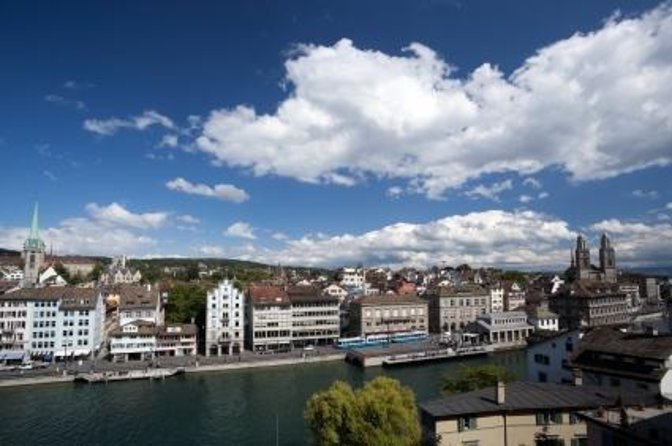
- Fourteen main witch-hunt related stops, plus a pass-by of the Grossmunster area.
- Short stop segments, about 5 minutes each, which keeps the tour from dragging.
- Most sights are free to view from outside, with one key interior option at Fraumunster.
- Private experience for your group, no live guide, so you can go at your own speed.
Witch-hunt Zurich, told by street corners
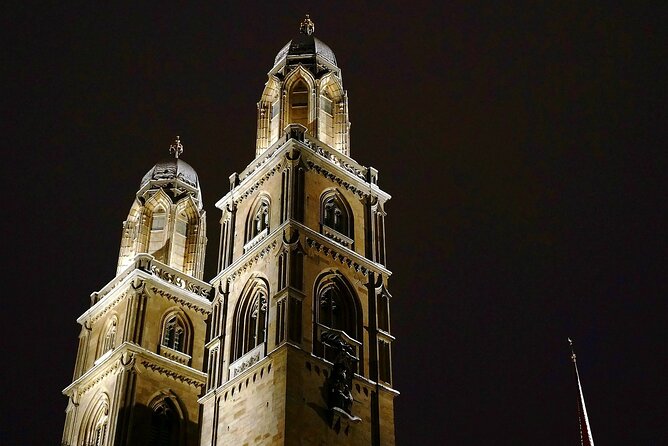
This is not a typical Zurich history walk where you mostly admire facades and call it a day. The whole point is to connect real locations you can stand in front of with the stories Zurich became famous for during witch-hunt and execution eras. You get the sensation of learning a city from the underside, where power, fear, and punishment were part of daily life.
The route is designed to work as an audio stroll. Instead of trying to memorize names or pages of facts, you follow the guide’s directions and let the narration attach meaning to what you see. It is a smart format for Zurich, because the city center is walkable, compact, and full of nooks you would otherwise miss.
Price and value for a $13.22 audio route
At $13.22 per person, you are paying for structure, storytelling, and navigation. You are not paying for museum tickets, because most stops are free to access from the street. That matters, because Zurich can get expensive when you start stacking paid attractions.
The tour also gives you time value. The schedule is built around lots of brief segments, about five minutes each. So you should feel like you used your hour, not like you spent it standing still waiting for the next chapter.
You also get a ticket that works on your phone, which keeps the whole thing low-friction. No paper maps, no meeting with a guide in a crowd, no worrying about which bus stop your guide meant. It is more like a playlist plus directions than a traditional walking tour.
More Self-Guided Trails in Zurich
- Zurich: City Bus Tour with Audio Guide and Lake Cruise
★ 4.3 · 1,195 reviews - Zurich City Tour with Audio Commentary
★ 4.0 · 372 reviews - Zurich: City Top Attractions Tour by Bus with Audio Guide
★ 4.3 · 282 reviews
How the self-guided audio actually works on your phone
This is self-guided, not live-guided. After booking, you get a link to use during the tour, and you explore at your own pace. You will need your own mobile phone with internet and a headset. Service animals are allowed, and the route is near public transportation, which helps if you want to hop on and off.
I like that the route instructions include photos and detailed directions. That is what turns “self-guided” from stressful into simple. Zurich streets can look similar if you are moving fast, so having visual cues reduces the chances you lose time.
There is one practical caution. If your connection is weak, the audio link can take longer to load. If you know you sometimes struggle in certain areas with reception, start the tour on your strongest signal spot near Paradeplatz, and keep your phone charged.
Route pacing: 1 to 2 hours, with built-in stops
The total duration is listed as about 1 to 2 hours. That range makes sense for two reasons. First, each stop is about five minutes of audio. Second, the walking time between points and the pace you choose can stretch or compress your schedule.
This tour is also a good fit for short attention spans, or for days when you still want to see Zurich but do not want a full-day plan. You can treat it like a controlled walk through the center, where you always know what is next.
If you want to make it more comfortable, pause when the story demands it. Some stops are more reflective than visual. Give yourself the extra seconds to read the surrounding space, not just to listen.
Stop 1, Paradeplatz: executioners, training, and the idea of a job
You begin at Paradeplatz, which is central and easy to reach. The narration frames the opening with the world of witches and executioners, starting with an executioner residence and how training worked.
This first stop matters because it sets the lens. Instead of jumping straight to sensational details, it explains the professional side of what happened in Zurich. You start to understand the system, not just the outcomes.
Practical tip: stand somewhere you can comfortably listen with headphones without crowd pressure. Paradeplatz can be busy, so pick a spot where you can stay in place for the five-minute segment.
Stop 2, Börsenstrasse: methods, frequency, and cold details

Next, you walk down Börsenstrasse to where medieval executioners once lived. The narration focuses on execution methods that were used, plus details like the executioner’s salary and how often events took place.
This stop is where the “work” framing continues. When you hear that punishment was frequent enough to build routines, the stories start feeling less like isolated tragedies and more like a system.
Drawback to consider: if you are expecting a light, ghost-story vibe, this is not it. The content stays firmly in the historical reality of punishment and control.
Higher up, or further along the lake:
- Lindt Home of Chocolate Museum Entry Ticket★ 4.7 · 9,329 reviews
- Zurich: Grindelwald, Interlaken & Lauterbrunnen Day Trip★ 4.6 · 7,123 reviews
- Zurich: City Tour, Cruise, and Lindt Home of Chocolate Visit★ 4.5 · 4,624 reviews
- From Zurich: Bus Day Trip to Heidiland and Liechtenstein★ 4.5 · 2,531 reviews
Stop 3, the Limmat: torture stories and Elsbeth’s timeline
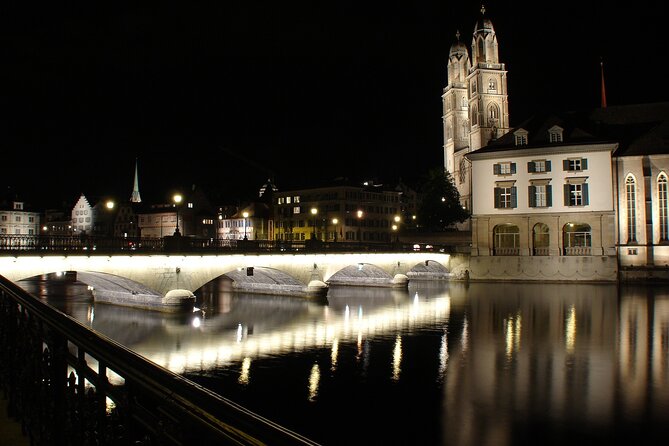
Then you reach the Limmat, where the audio turns toward the tortured witches of Zurich. You get the story of Elsbeth, described as enduring fifteen days of torment.
Even from a distance, the river area helps the narration land. Water is a natural divider in a city like Zurich, and the tone here becomes more personal and heavy.
Tip for pacing: at this stage, you may want to slow down. Let the five minutes finish before you start walking again, so you are not trying to hear while crossing busy areas.
Stop 4, Fraumunster Church: Chagall stained glass, and your optional CHF5
From there, you head to Fraumunster Church. This stop is not about the outside view alone. The narration points you toward Marc Chagall stained-glass windows connected to the crucifixion of Jesus Christ.
Here is the one place where “included” changes. The tour does not include admission. If you decide to see the windows inside, you will pay an entrance fee of CHF 5. The route still works if you skip the interior, but I would treat this as the main optional upgrade.
Why it is worth thinking about: it gives you an art-and-meaning moment. Even though the overall theme is dark, this is one of the few stops where you might step into a place that feels solemn, not chaotic.
Stop 5, Hans Waldmann Statue: a memorial with a story behind it
Next you pause at the Hans Waldmann Statue. This memorial was erected in 1489 to remember a historical figure who was executed. The audio focuses on his life and his demise.
This stop helps you connect dates and names to the places you are standing in. Statues are easy to treat like decoration. Here, the narration nudges you to see it as a checkpoint for a much larger political and judicial story.
Practical note: statues are great for photos, but keep your headphones on for the best experience. The important info is in the audio, not in the plaque you might skim.
Stop 6, Wasserkirche: Felix and Regula and the theme of belief
You continue to Wasserkirche, the Water Church. The narration includes the legend of Felix and Regula, who were beheaded for Christian beliefs.
This stop broadens the lens slightly. The witch-hunt theme is still present, but it also reminds you that punishment in historical Zurich was tied to belief and authority. It makes the overall story feel less like one isolated episode and more like a web of pressures.
If you like religious art and symbols, this could be one of the more meaningful moments. Even if you are not a church-goer, it is still worth listening.
Passing Grossmunster: the reformation backdrop
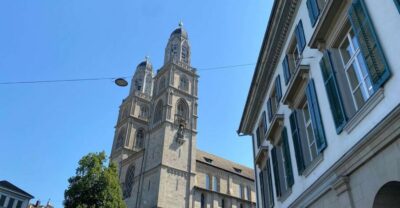
You pass by the Grossmunster, described as a symbol of the Swiss-German reformation and part of Zurich’s heritage. You do not have a long “stop inside” moment here, but the narration uses the location to frame the broader era.
I like pass-by segments when they are used like this. They keep you moving while still giving you context, so you do not feel like you are only absorbing one narrow story thread.
Stop 7, Kirchgasse: signs, advice, and the machinery of suspicion
Kirchgasse is next, and the tone turns chilling. You hear about ancient guidance related to witch recognition and torture.
This is where the audio tour really earns its name. The street itself becomes part of the story, because the narration connects ordinary urban space with methods of identifying and punishing people accused of witchcraft.
Consideration: the content is not gentle. If you are the type who likes crime-history stories but not the cruelty, you might find this section emotionally tough. You can pause, take a breath, or even adjust your pace.
Stop 8, Untere Zäune: the execution of a wealthy woman
At Untere Zäune, the narration focuses on the residence of a wealthy woman executed for witchcraft. The story centers on her life and what the accusation meant in practice.
This stop is important because it adds a social angle. It is easy for witch-hunt stories to feel like they were only about isolated outsiders. A wealthy residence changes the feel of the narrative and forces you to think about how accusations could reach into different social classes.
Practical tip: slow down here and look around. Zurich’s old lanes can be narrow, and the stories land better when you see how close everything is.
Stop 9, Neumarkt: the pillory site
You reach Neumarkt, the former place of the pillory. The audio uses this spot to talk about public punishment and how it was staged.
This stop is a reminder that punishment was not only carried out. It was shown. Public spaces turned trials into theater, and that social pressure was part of the goal.
If you prefer tours where the story includes the why, this is the kind of stop you will appreciate. It connects location with behavior.
Stop 10, Obere Zäune: the judge’s house and revenge
Next is Obere Zäune, where the narration points to the house of the judge working during the peak of the witch-hunt. You also hear a revenge story linked to him.
This section gives you a human face for the system. You are still dealing with historical facts as presented by the audio, but it helps to know the roles involved. Judge, decision-maker, enforcer.
Where to stand: pick a spot that lets you hear clearly. This tour works best when you do not have to half-listen while checking directions.
Stop 11, Zurich Town Hall: prosecution processes and a square for sentences
You then arrive at Zürich’s Town Hall. Here the narration explains medieval prosecution processes and identifies the square where death sentences were pronounced.
Town hall areas are usually busy and photo-friendly. That can make it hard to hold onto the heavier tone of what you are hearing. I recommend you consciously keep your attention on the audio, even if you want a quick photo.
This stop helps you understand the legal side of what happened. It is one thing to hear about accusations. It is another to see how institutions were built to handle them.
Stop 12, Täufergedenkplatte: executions by drowning
The Täufergedenkplatte memorial plate is next. The narration frames it as a reminder of executions by drowning.
Memorials do more than inform. They help you recognize that history is still present in how a city remembers. This stop feels like a pause for reflection in the route.
Practical idea: let the five minutes end before you move on. It is a good “reset” moment so the later stops do not blur together.
Stop 13, Rennweg: the baker and the last sip
At Rennweg, you learn about the house of a baker tasked with providing the last sip to those bound for execution.
That detail is small, but it lands. It shows how everyday services were pulled into the final phase of punishment. It is not just judges and executioners. It is the supply chain of cruelty, plain and human.
If you are wondering why the tour spends time on minor roles, this is the answer. Systems are made of people and routines.
Stop 14, Herkulesbrunnen: where the condemned left the city
You end at Herkulesbrunnen, near Bahnhofstrasse. The narration describes the city exit for the condemned and explains where burnings and hangings took place.
Ending here gives the walk a clear arc. You start at the center of attention and power, then the story moves toward the boundary where punishment becomes public finality.
This is a good finale for processing. You can sit, gather your thoughts, then continue your Zurich day with a more informed view of what shaped the city.
Fraumunster inside is the only real “choose your own adventure”
If you only take one practical decision from this whole experience, make it about Fraumunster Church. Going inside costs CHF 5, and it is clearly tied to the Marc Chagall stained-glass windows.
If you like art and religious symbolism, it is a worthwhile add-on because it gives you a contrast to the darker narrative. If you are short on time, you can still get the story without the interior visit, since the main value is in the audio plus street-level context.
Who this tour suits best, and who should think twice
This self-guided walk is best for you if you:
- Want a structured way to see Zurich’s center on foot
- Like audio storytelling and clear directions
- Prefer learning from place-based details, not just museum labels
- Can handle dark history in a direct, matter-of-fact way
It might be a rough fit if you:
- Feel overwhelmed by human-rights topics or graphic punishment themes
- Need a more general sightseeing format for a first Zurich trip
- Want lots of interior visits and guided explanations beyond the narration
Also note the format. There is no live guide. So if you like asking questions or want extra tailoring, you will not get that here.
My practical advice to get the most out of it
Bring headphones that work well with your phone. This tour is audio-first, and you want the narration crisp. Wear comfortable shoes because you are walking multiple city blocks across old lanes.
Plan your timing. With an approximate 1 to 2 hour window, I would schedule it earlier in the day when you are fresh, or pair it with a longer meal plan right after so you can decompress.
Finally, choose your listening mode. If the content starts feeling too heavy, slow down, stop for a minute, and just breathe. Self-guided means you control the pace.
The tour has a strong track record, with a 4.7 overall rating and 93% recommendation in its feedback history. That suggests the “clear instructions and interesting narration” formula is working for many people who want a different Zurich angle.
Should you book this Dark Side of Zurich audio tour?
Yes, if you want a walk with purpose and you are okay with uncomfortable history. The price is low for a well-structured, multi-stop audio route, and most of what you see is viewable for free from the street. The narration is professionally recorded, and the photo-based directions make this much easier than most self-guided city experiences.
Consider skipping or swapping to a gentler itinerary if you cannot handle human-rights and punishment themes. Also, if you need lots of indoor access and a conversational live guide, this format may feel limited. For the right mood, though, this is one of the more memorable ways to see Zurich, because it teaches you to look at the city as evidence, not just scenery.
FAQ
How long is the Self-Guided Audio Tour to the Dark Side of Zurich?
The tour duration is listed as about 1 to 2 hours.
Where does the tour start and end?
It starts at Paradeplatz, 8001 Zürich, Switzerland, and ends at Herkulesbrunnen, Bahnhofstrasse, 8001 Zürich, Switzerland.
Is the tour available in English?
Yes, it is offered in English.
Do I need a smartphone and headset?
Yes. You will need your own mobile phone with internet and headset.
Is there a live guide during the tour?
No. There is no live guide. You explore using a link provided after booking.
Is Fraumunster Church included?
Fraumunster Church is not included. If you want to visit inside, there is an entrance fee of CHF 5 per person.
Are the other stops free to access?
The tour lists admission ticket free for the main stops. Fraumunster is the exception noted as not included.
Is this tour private?
Yes. It is a private tour or activity, and only your group participates.
Is public transportation nearby?
Yes. The meeting area is near public transportation.
Can I cancel for a full refund?
You can cancel up to 24 hours in advance for a full refund. If you cancel less than 24 hours before the start time, the amount paid will not be refunded.
Audio-Guided Zurich
- Zurich: Audio Guided City Tour and Train to “Top of Zurich”
★ 4.2 · 65 reviews - The Dark Side of Zurich: Self-Guided Audio City Tour
★ 4.4 · 52 reviews - Zurich in the Mirror of the Past: Self-Guided Audio Tour
★ 3.8 · 15 reviews - Self-Guided Audio City Tour in Zurich
★ 4.0 · 15 reviews
Added lately around Zurich







Self-Guided Trails in Zurich, compared.
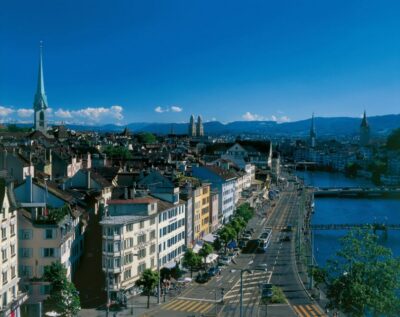
City Bus Tour with Audio Guide and Lake Cruise
Read our review →
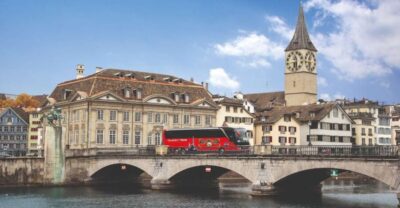
City Top Attractions Tour by Bus with Audio Guide
Read our review →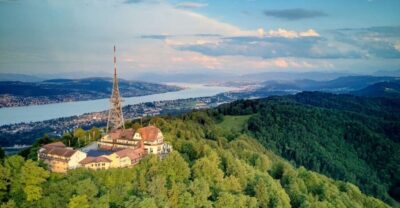
Audio Guided City Tour and Train to “Top of Zurich”
Read our review →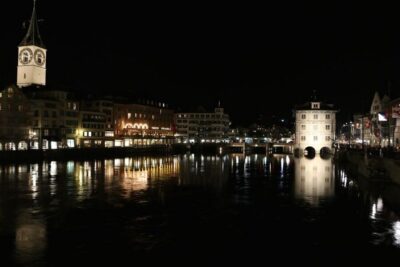
The Dark Side of Zurich: Self-Guided Audio City Tour
Read our review →
Einstein in Zurich: Walk in Time Exploration Game and Tour
Read our review →
Zurich in the Mirror of the Past: Self-Guided Audio Tour
Read our review →Browse the lists this tour appears in