
Reviewed · CITY TOURS
Self-Guided Audio City Tour in Zurich
Zurich changes when you hear the stories. This self-guided audio city tour strings together major sights with high-quality narration and clear photo directions, so landmarks like St. Peter’s Church and Cabaret Voltaire make sense fast. The main thing to consider is that the audio runs through a link and needs a working phone connection, so shaky internet can cause the playback to restart.
I love that this is a pick-up-and-go walk, not a rigid bus tour. You get a route you can follow at your pace, spending extra time on viewpoints like Lindenhof Hill or sweeping the Limmat area when you feel like it. And because most stops are free, your money goes mostly into the experience itself, not admission fees.
In This Review
- Key takeaways before you start
- How the self-guided audio format works in Zurich
- Route overview, timing, and where you begin and end
- Alfred Escher to Urania Observatory, where Zurich’s ideas became buildings
- Lindenhof Hill viewpoints, fountains, and the quieter side of Old Town
- St. Peter’s Church clock face, then Roman traces in Thermengasse
- Rathaus and squares: politics, commerce, and a sense of direction
- Cabaret Voltaire and Dada, where Zurich challenged the rules
- Lenin Apartment Zurich: political exile in the same city as art
- Grossmünster, Wasserkirche, and stained-glass light on the Limmat
- Opera House facade, Ganymed, and Hans Waldmann’s tragic arc
- Fraumünster and Chagall stained glass, plus a paid inside option
- Weinplatz guild buildings, Augustinerkirche, and Max Bill’s end point
- Practical tips so the audio actually stays on track
- Price and value: why $13.29 can work out well
- Who this Zurich audio walk is best for
- Should you book this Zurich self-guided audio tour?
- FAQ
- Is this tour fully self-guided, or is there a live guide
- What language is the audio tour in
- How long does the Zurich audio tour take
- Where does the tour start and end
- Do I need to bring anything
- Is Fraumünster Church admission included
- Can I cancel and get a refund
Key takeaways before you start
- A professional English audio track explains what you’re looking at, including Roman baths, guild buildings, and church art.
- Photo-based directions make it easier to find each stop, even when streets look similar.
- Most stops are free, with only Fraumünster charging if you want to go inside.
- Expect more walking than the label says, and build in extra time if you actually listen.
- Phone dependence is real, so keep internet and battery in good shape.
How the self-guided audio format works in Zurich

This is a self-guided tour, meaning there’s no live guide pacing you through Zurich. After you book, you use the link provided to access the audio on your phone, and you follow the route stop to stop.
You’ll want your own mobile phone with internet plus headphones. The tour is offered in English, and you’ll receive a mobile ticket.
One practical point: the format is built for audio playback while you walk, so you need your phone screen to stay active long enough to keep the track going. If your connection drops, the playback can reset.
Route overview, timing, and where you begin and end
The tour runs about 2 to 3 hours on paper, but in real life it can stretch to longer. That’s not a problem if you treat it like a morning or early afternoon stroll, not a clock-chasing checklist.
You start at Bahnhofplatz near the Alfred Escher Denkmal in central Zurich. You end at Bahnhofstrasse 47, next to the Pavilion-Skulptur von Max Bill (1983) (#KiöR). Since the start and end are close to transit and the central core, you can loop back to wherever you’re staying with minimal fuss.
Because you’re walking from Old Town viewpoints to churches and then into the more polished center, wear shoes you trust. You’ll be moving for long stretches, and you’ll still want time to read placards and look up.
More City Sightseeing in Zurich
- Zurich: City Tour, Cruise, and Lindt Home of Chocolate Visit
★ 4.5 · 4,624 reviews - Zurich: City Highlights Tour by Bus, Cable Car, and Ferry
★ 4.4 · 2,366 reviews - Zurich: City Bus Tour with Audio Guide and Lake Cruise
★ 4.3 · 1,195 reviews
Alfred Escher to Urania Observatory, where Zurich’s ideas became buildings

Stop 1 is the Alfred Escher Statue, a monument tied to Swiss politics and the railway system. Even if you don’t know Escher yet, the audio helps you connect why Zurich built so much of its modern momentum around rail, industry, and finance.
Stop 2 is Pestalozzianlage, focused on Johann Heinrich Pestalozzi. It’s a neat pause because it shifts the theme from money and power toward education and enlightenment.
From there, you’ll also get time for the Urania Observatory. It’s a different vibe from the statues, and that variety is part of why this route feels balanced. You’re not only seeing what Zurich looks like, you’re seeing how people tried to explain the world.
If you want a tip for pacing, take five minutes to stand still at the Urania stop. Looking up makes the narration land better.
Lindenhof Hill viewpoints, fountains, and the quieter side of Old Town
Lindenhof Hill is one of the best places to re-orient yourself in Zurich. You’re up above the Limmat River, with views that make the rest of the route easier to understand.
The tour calls out the Hedwig Fountain and also mentions the Masonic Lodge nearby. There’s also a stop for the Tombstone of Lucius Aelius, which adds a small but memorable “wait, Zurich goes way back” moment.
This section is great for first-timers because it gives you the city in one glance. From a practical angle, it’s also a good place to reset your phone before the church-heavy part of the walk.
St. Peter’s Church clock face, then Roman traces in Thermengasse
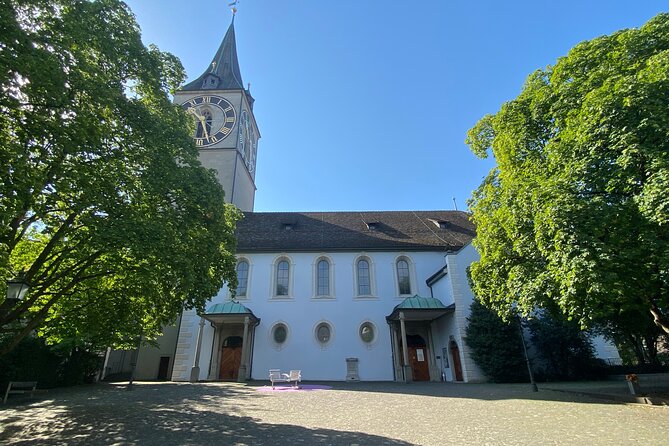
Stop 4 is St. Peter’s Church, described as Zurich’s oldest parish church. The star here is the iconic clock face, noted as one of the largest in Europe, which makes this an easy landmark to spot and a satisfying one to pause at even if you don’t go inside.
Next comes Thermengasse, the spot connected to Zurich’s ancient Roman baths. This is one of the route’s smartest choices because it connects the modern city center to layers of history you would never guess from street level.
If you like that “how old is this place, really?” feeling, don’t speed through Thermengasse. Stand close to the archaeological remnants and let the narration do its job.
Rathaus and squares: politics, commerce, and a sense of direction
At Town Hall (Rathaus), you get a quick read on Zurich’s political heritage. This stop works best as a hinge between churches and the civic center, so your brain shifts from religion and antiquity into how the city governs itself.
Later, you’ll also reach Paradeplatz, which is Zurich’s financial-district heart. It’s lively and modern, and it gives you contrast against the older corners of town.
I like including both Rathaus and Paradeplatz on the same walk. Zurich’s story isn’t only cathedrals and sculptures. It’s also decisions, money, and the institutions that still shape daily life.
More Self-Guided Trails in Zurich
- Zurich City Tour with Audio Commentary★ 4.0 · 372 reviews
- Zurich: City Top Attractions Tour by Bus with Audio Guide★ 4.3 · 282 reviews
- Zurich: Audio Guided City Tour and Train to “Top of Zurich”★ 4.2 · 65 reviews
- The Dark Side of Zurich: Self-Guided Audio City Tour★ 4.4 · 52 reviews
Cabaret Voltaire and Dada, where Zurich challenged the rules
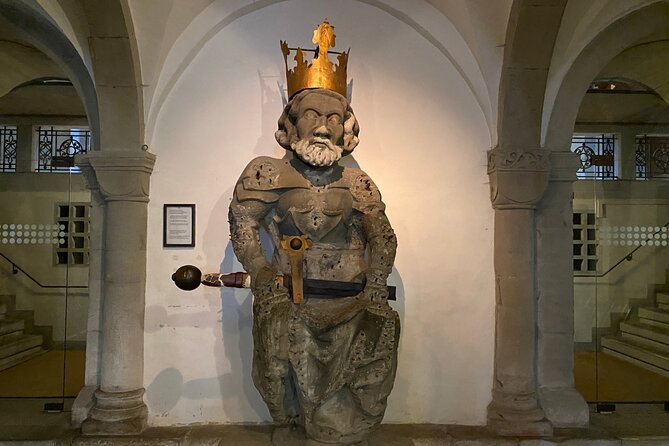
Stop 7 is Cabaret Voltaire, the birthplace of the Dada movement. This is a creative detour that keeps the route from feeling like a museum circuit.
Dada was built to upset expectations, and the audio frames Cabaret Voltaire as a meeting place for artists and writers looking to provoke. Even if you’re not a modern art superfan, it’s refreshing to end up somewhere with that kind of historical attitude.
When you’re finished here, you’ll feel like Zurich isn’t just preserving the past. It also invented new ways to think.
Lenin Apartment Zurich: political exile in the same city as art
Stop 8 is Lenin Apartment Zurich, tied to Vladimir Lenin’s time during political exile. This stop adds tension to the tour, shifting the story from artistic rebellion into ideology and power.
It’s also a reminder that Zurich wasn’t just a cultural stop on the map. It has long been a place where political refugees and ideas collided with local life.
Take a quiet moment here, because it’s one of the stops where the setting matters. You’ll get more from the narration if you slow down.
Grossmünster, Wasserkirche, and stained-glass light on the Limmat
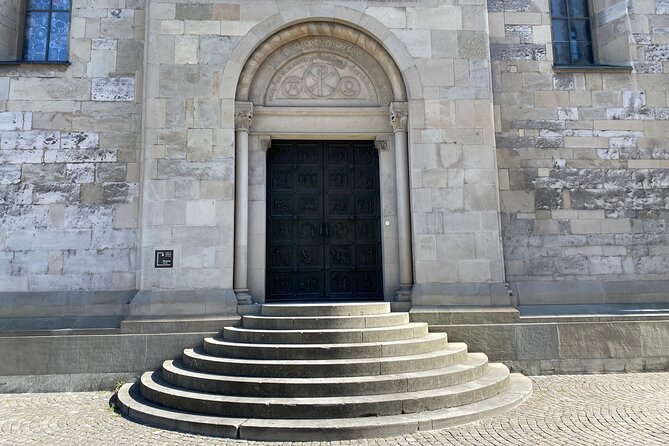
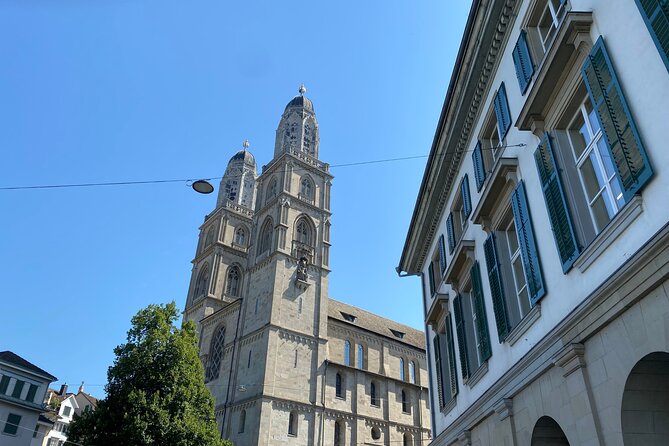
Stop 9 is Grossmünster, famous for its twin towers and for its role in the Swiss Reformation. If you like architecture, the towers are your visual anchor, even before you read about the church.
The audio also highlights stained glass windows by Augusto Giacometti. When you stand there, it’s easy to see why artists mattered to reform-era spaces, because light and storytelling worked together.
Stop 10 is Wasserkirche, another church stop with stained glass windows described as telling unique stories. Its riverside setting along the Limmat gives it a calmer tone than some of the busier central streets.
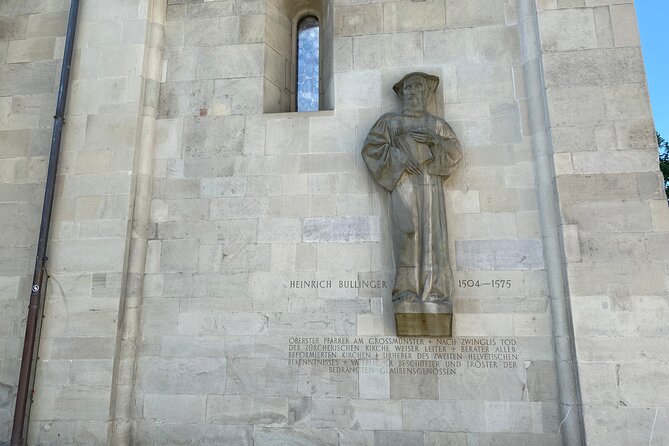
Stop 11 then shifts into memory with the Ulrich Zwingli Monument, honoring the reformer linked to shaping the Protestant Reformation. This sequence, church tower, stained glass, then a figure tied to reform, makes the whole religious storyline easier to follow.
Opera House facade, Ganymed, and Hans Waldmann’s tragic arc
Stop 12 is Opernhaus Zurich, the Opera House. The facade is noted for composer and writer busts, so even from outside you get a sense of the cultural identity Zurich wanted to display.
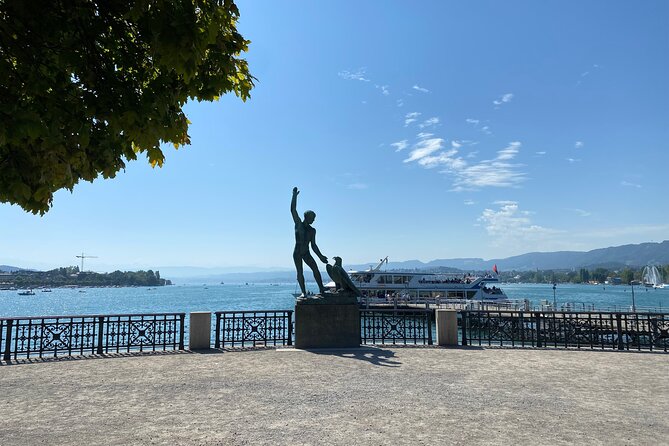
Stop 13 is Ganymed, a sculpture with mythological roots. It’s a quick stop, but it keeps the tour from becoming only religious and political.
Stop 14 is the Hans Waldmann Statue, which tells a life that rises fast and ends painfully. The audio context matters here, because knowing he was burgomaster and later sentenced to death turns the statue from “a nice form” into a real human story.
Fraumünster and Chagall stained glass, plus a paid inside option
Stop 15 is Fraumünster Church, with special attention on its stained glass designed by Marc Chagall. This is one of the big art payoffs on the route, and the narration sets you up to notice how the colors shape the space.
There’s a catch: admission to see Fraumünster from inside is not included. You should expect an entrance fee of CHF 5.00 per person if you want the interior.
If you’re planning your day, decide ahead of time whether you’ll go in. If you’re short on energy, you can still enjoy the exterior and narration. If you’re here specifically for stained glass, give it that paid inside time.
Weinplatz guild buildings, Augustinerkirche, and Max Bill’s end point
Stop 16 is Augustinerkirche, described as simple and quiet. After the intensity of Lenin’s story and the weight of reform-era sites, it’s a good palate cleanser.
Stop 17 is the Pavillon-Skulptur von Max Bill (1983) (#KiöR), which also serves as the tour’s end point. It’s tied to ideas like transparency, equality, and freedom, so the final note isn’t only visual. It’s thematic, and it lands well after you’ve seen how Zurich thinks, worships, and works.
Stop 18 is Weinplatz, which connects you to Millers’ and Bakers’ Guild Building stories. This is a practical reminder that cities run on trades and daily labor, not just famous names.
Practical tips so the audio actually stays on track
If you want this tour to feel smooth, manage three things: internet, battery, and headset comfort.
First, use internet that you trust. The tour needs a connection, and weak signal can cause the audio to restart at the beginning. If you’re on spotty Wi-Fi, consider switching to a mobile data plan.
Second, battery matters. One of the best bits of advice is simple: bring a charged phone power bank or keep charging as you move between stops. Long audio sessions plus GPS and a bright screen can drain a device faster than you expect.
Third, keep your headphones in a comfy setup. You’re listening constantly, so if the fit is annoying, you’ll rush instead of enjoying the stories.
Finally, if you feel you’re losing the route, pause and use the included photo directions to re-find your location. This walkthrough is designed to be flexible, but it works best when you let the step-by-step cues do the work.
Price and value: why $13.29 can work out well
At $13.29 per person, this is one of the more affordable ways to get structured context for major Zurich sights. The key value is that you’re not paying for entry at most stops, and you’re not paying for a live guide.
Most stops listed are free, including big names like St. Peter’s Church, Grossmünster, and the monuments in the route. Fraumünster is the one notable exception if you want the interior, with the CHF 5.00 fee called out.
You’re also getting a high-quality audio guide recorded by a professional speaker, plus photos and detailed directions. That mix helps a lot when you’re walking solo, especially in a city where the center has many similar streets.
One extra practical bonus: you can access the tour for up to a year. So if you don’t finish in one go, you’re not stuck with a single-use schedule.
Who this Zurich audio walk is best for
This tour is ideal if you want a self-paced Old Town route with context. If you like first-time orientation and prefer listening to learning as you walk, it’s a smart fit.
It also works well for couples and friends who want to move together without negotiating a live guide’s timing. The route covers viewpoints, churches, and culture stops, so you can choose how much time to give each.
If you dislike phone-based tours, or your data coverage is unreliable, consider a traditional guided option. This experience depends on your device working at each stop.
Should you book this Zurich self-guided audio tour?
Book it if you want a low-cost, well-structured way to understand Zurich beyond postcard photos. The price is reasonable because so many stops are free, and the audio brings meaning to places like Cabaret Voltaire, Grossmünster, and Chagall’s stained glass.
Skip or think twice if your internet access is spotty or you hate relying on your phone while walking. The tour shines when your audio stays steady and you give yourself time for viewpoints like Lindenhof.
If you do book, come with a plan: charge your phone, use a reliable connection, and budget more time than the 2 to 3 hour label. When you do that, the route feels like a guided day without the hurry.
FAQ
Is this tour fully self-guided, or is there a live guide
It is self-guided. You follow the route using the link provided after booking, and there is no live guide.
What language is the audio tour in
The audio guide is offered in English.
How long does the Zurich audio tour take
It is listed as about 2 to 3 hours, but it can take longer depending on how much time you spend at each stop.
Where does the tour start and end
It starts at Bahnhofplatz at the Alfred Escher-Denkmal area, and it ends next to the Pavilion-Skulptur von Max Bill (1983) at Bahnhofstrasse 47.
Do I need to bring anything
Yes. You need your own mobile phone with internet and your own headset to listen to the audio guide.
Is Fraumünster Church admission included
Inside admission for Fraumünster is not included. If you want to go in, you’ll need to pay CHF 5.00 per person.
Can I cancel and get a refund
Yes, you can cancel for a full refund up to 24 hours in advance of the experience start time. If you cancel less than 24 hours before, the amount paid is not refunded.
Audio-Guided Zurich
- Zurich in the Mirror of the Past: Self-Guided Audio Tour
★ 3.8 · 15 reviews - Self-Guided Audio Tour to the Dark Side of Zurich
★ 4.5 · 14 reviews - Historical Zürich: A Self-Guided Audio Tour Through the city of 1,000 Fountains
★ 5.0 · 11 reviews - Zurich Scavenger Hunt and Highlights Self Guided Audio Tour
★ 4.5 · 3 reviews
Added lately around Zurich




City Tours, compared.
City Tour, Cruise, and Lindt Home of Chocolate Visit
Read our review →
City Highlights Tour by Bus, Cable Car, and Ferry
Read our review →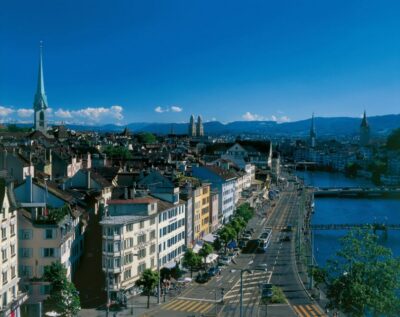
City Bus Tour with Audio Guide and Lake Cruise
Read our review →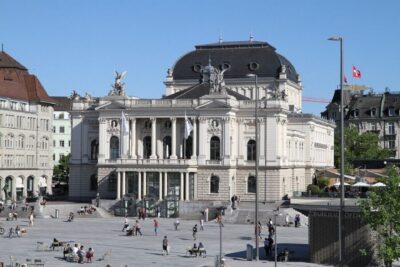
City Tour with Lake Cruise + Optional FIFA Museum
Read our review →
Best of Geneva City Tour: International Area and Old Town
Read our review →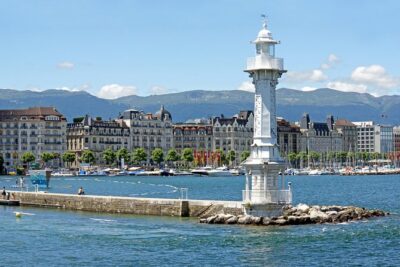
Best of Geneva City Tour with optional boat cruise
Read our review →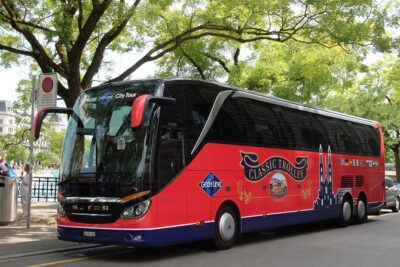
Browse the lists this tour appears in