Reviewed · GUIDED
Zurich Highlights Private Guided Tour
Zurich can feel shiny and serious. This private walk makes it make sense fast. You get a tight route through the old town, the financial core, and the university district, with a guide who can tailor pacing to your schedule. I like that the stops are practical and varied, from photo-worthy bridges and church towers to the kind of corners locals actually pause for.
Two things I especially liked: the city views at Lindenhof Hill and along the Münster bridge corridor, and how the walk blends architecture with everyday Zurich life. Even better, the tour can fit real-world timing, including last-minute changes like a layover, where the guide (Anora) met right at my location and made sure we were back on schedule.
One consideration: with 2 to 5 hours and a long list of sights, it is still a walking tour. If you hate moving nonstop, wear comfy shoes and plan for short stops rather than long hangs in each place.
In This Review
- Key highlights
- Price, timing, and what makes this Zurich walk worth it
- Lindenhof Hill to Münster Bridge: the fastest way to understand Zurich
- Paradeplatz and Grossmünster: finance, faith, and a tower you may want to climb
- Bellevue promenade and Sechseläutenplatz: lake time plus a smart public space
- Niederdorf and Predigergasse: old town lanes at walking speed
- Law faculty library, University of Zurich, and ETH Polyterrasse: modern Zurich with real structure
- Polybahn funicular and the nostalgia of moving around town
- Augusto Giacometti entrance hall: art you might miss in plain sight
- Zurich HB, Bahnhofstrasse, and a controlled approach to shopping
- Schanzengraben Canal: the tranquil local break in a business district
- Who this private Zurich Highlights tour is best for
- Should you book this Zurich Highlights Private Guided Tour?
- FAQ
- How long is the Zurich Highlights Private Guided Tour?
- What does the tour cost?
- Is this a private tour?
- Is pickup included, and how does it work?
- Do I need public transport tickets?
- What language is the tour offered in?
- Can I cancel for a full refund?
Key highlights
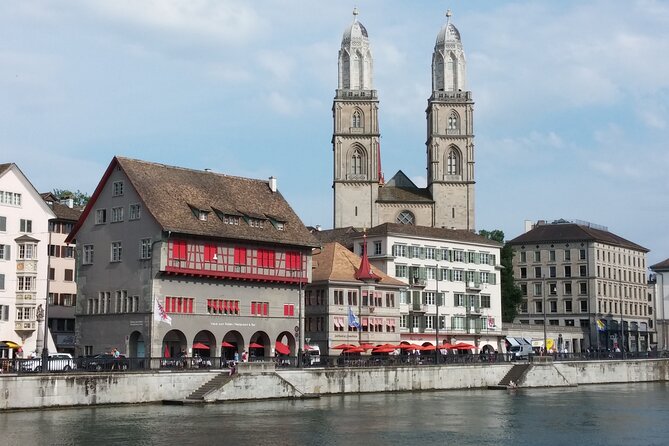
- Views first, Lindenhof Hill and the Münster bridge give you a quick mental map of the old town and the Limmat River
- Paradeplatz to Grossmünster, you get both the financial heart and a major church in one smooth arc
- Old town lanes with fewer crowds, Niederdorf and Predigergasse are made for wandering at human speed
- Calatrava and ETH in the same day, the law faculty library and Polyterrasse bring modern Zurich into view
- A classic ride, the Polybahn funicular adds a fun, local transport slice to the route
- Local lunch vibes, Schanzengraben Canal feels like a break inside the business district
Price, timing, and what makes this Zurich walk worth it
At $93.06 per person for a private guided experience, the value comes from two things: hotel pickup and drop-off plus a guide who can keep the day efficient. This is not a random collection of stops. It is a designed route that strings together big viewpoints, recognizable landmarks, and a few quieter alleys and corners.
The duration is listed as 2 to 5 hours, so you can treat it like a half-day orientation. On a trip where you only have limited daylight, this structure helps you see the “main scenes” without spending hours figuring out where everything is.
There are a couple of practical details worth noting. It is a walking tour, and the plan is built so you do not need public transport tickets. You can also usually start with pickup, and the standard way of reaching you is on foot, with the guide able to come by foot or by public transport if needed. It is private, so only your group joins, which makes it easier to ask questions and adjust pace.
Lindenhof Hill to Münster Bridge: the fastest way to understand Zurich
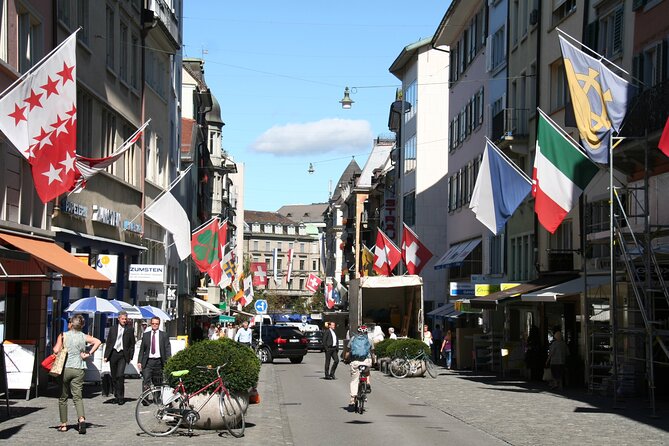
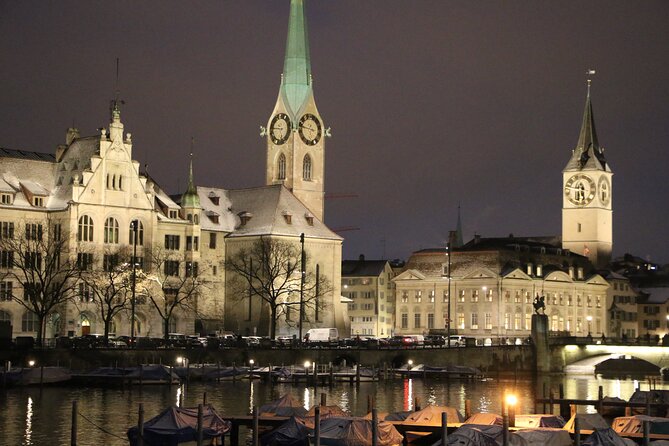
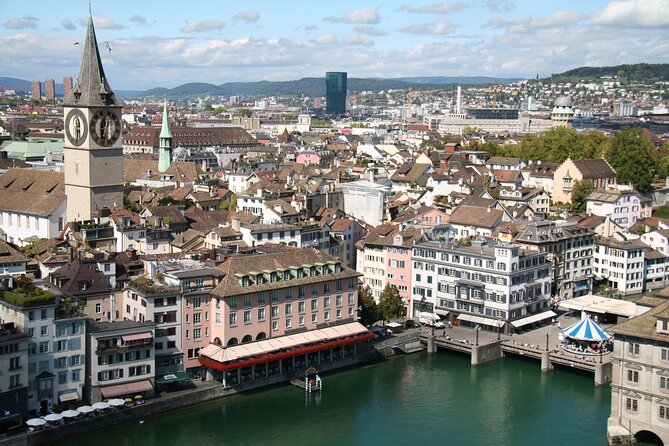
The route starts with Lindenhof Hill, a calm lookout area that feels like a little breath of quiet above the old town. From Lindenhof Square, you get a clear view over the historic center, and I love using this stop as my “anchor point.” Once you see the skyline layout from here, the rest of the walking feels less like a list and more like a path.
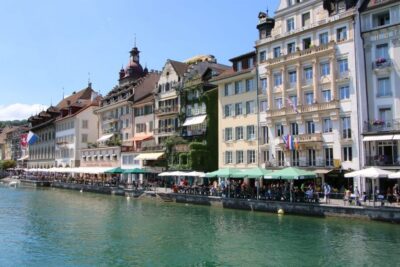
A few minutes later you reach the Münster bridge, one of the best photo spots in the city. It connects two key landmarks, Grossmünster and Fraumünster, and the bridge framing makes the old town feel organized. You also get strong views over the medieval guild houses and the Limmat River.
If you go early or later in the day, the light can be kinder for photos and for reading the architecture. And even when you do not take pictures, this is one of those spots where the city clicks into place.
A few more departures worth comparing in Zurich
- Lindt Home of Chocolate Museum Entry Ticket
★ 4.7 · 9,329 reviews - Zurich: Grindelwald, Interlaken & Lauterbrunnen Day Trip
★ 4.6 · 7,123 reviews - Zurich: City Tour, Cruise, and Lindt Home of Chocolate Visit
★ 4.5 · 4,624 reviews
Paradeplatz and Grossmünster: finance, faith, and a tower you may want to climb
Paradeplatz is the financial heart of Switzerland, and it is hard to miss once you arrive. This is where you see the big-bank presence and a very Zurich mix of commerce and everyday life. It is also a practical stop because it puts you right in the rhythm of the city center. Want a quick chocolate break? Confiserie Sprüngli is right there.
Then comes Grossmünster, the Romanesque-style Protestant church that is one of Zurich’s best-known buildings. Admission to the church itself is listed as free, which is great for a no-stress stop. The “optional” pay moment is the clocktower climb, and if you like views, this is the kind of small fee that can be worth it because you are going up above the core streets.
One smart way to enjoy this stop is to choose what you care about most. If churches are your thing, spend time inside. If views are your thing, prioritize the tower and come back down for the next leg.
Bellevue promenade and Sechseläutenplatz: lake time plus a smart public space
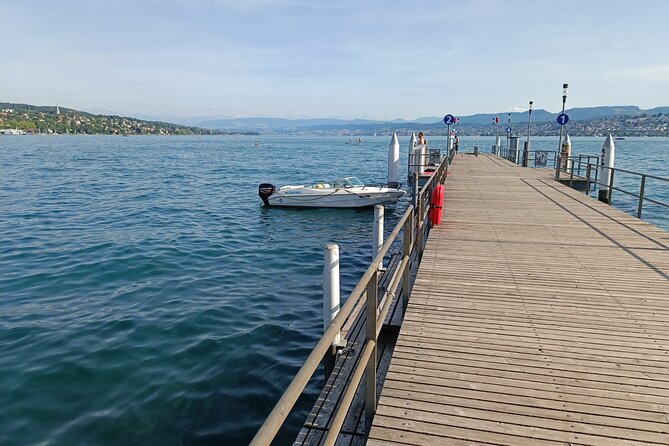
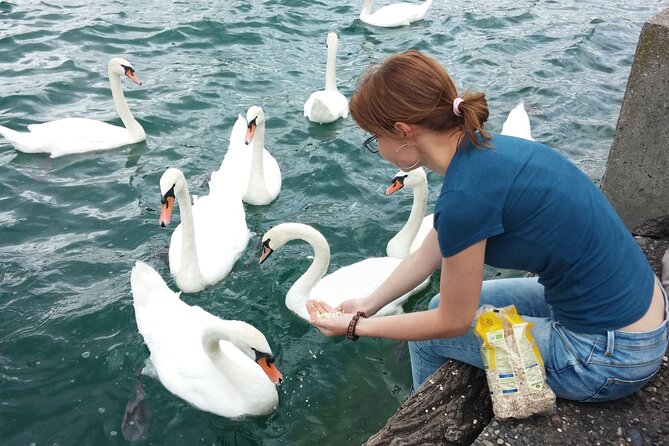
From the center, the walk shifts to Bellevue, where the lakeside promenade gives you a clean break from buildings. This is where I like to slow down for a few minutes, partly because it is visually open, and partly because you can see how people actually use the lake edge. Feeding ducks is part of the scene, and in summer and spring this spot becomes a popular hangout for relaxing, running, and even swimming.
Next is Sechseläutenplatz, positioned between Bellevue and the Zurich Opera House. This square is more than a pretty pause. It is built as an urban hangout space with a large footprint (16,000 square metres) and a material base described as Vals quartzite. I also like that it has trees, seating, and water elements, so you get shade and a calmer feel than you might expect in a central district.
This combo works well because it gives you two different “public space” vibes. Bellevue is open and lake-focused. Sechseläutenplatz is more about staying put and watching the square life.
Niederdorf and Predigergasse: old town lanes at walking speed
Now the route turns into the parts of Zurich that reward wandering. Niederdorf is the old town district with winding, car-free alleys. You also get easy access to the Grossmünster area again through the neighborhood’s web of streets, plus small boutiques, antiquarian bookshops, and craft studios. This is the section of the day where your guide can help you spot what matters, like which lanes are worth a slow walk and where the best street-level details are.
Just off that area is Predigergasse, a narrow alley that is mostly missed because its entrance is easy to overlook. That is exactly why I like it. When your guide knows where to turn, you avoid the dead-end feeling of self-guided wandering and you get right into the character street fabric.
If you want a simple rule for this part: take your time at eye level. The charm is not just big landmarks. It is doorways, shop signs, street corners, and the way these lanes feel designed for people.
Law faculty library, University of Zurich, and ETH Polyterrasse: modern Zurich with real structure
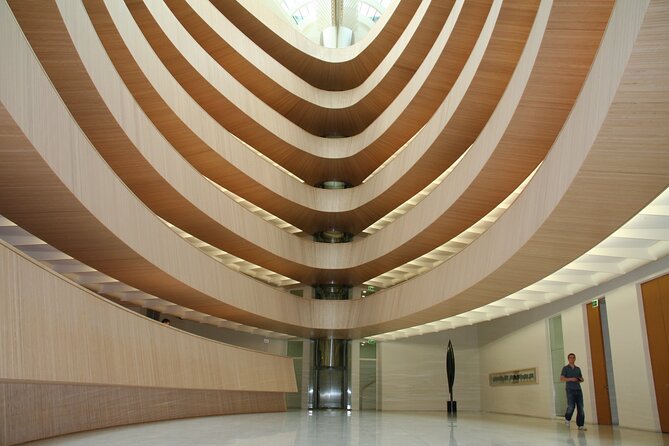
After the old town, the tour pivots into a more modern Zurich, and it does it in a way that does not feel like a detour. The law faculty library of the University of Zurich is described as the most impressive library in Zurich. There is a specific detail here that I think matters: you take an elevator to the top floor. That turns it from a quick look into a purposeful architecture visit.
The modern architecture is attributed to Santiago Calatrava, and seeing it in person helps you understand why the building attracts attention. Even if you are not a design buff, it is a memorable stop because it feels made, not just old.
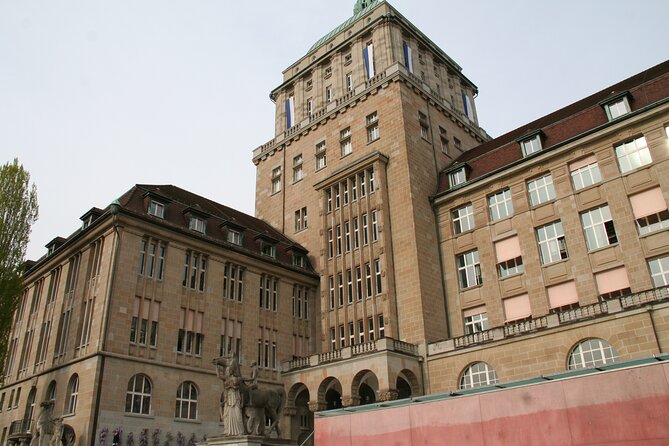
Next is the University of Zurich main building. The university is Switzerland’s largest by enrollment, and you hear about its foundation roots in earlier colleges going back to theology, law, and medicine. For visitors, the practical value is that the campus area gives you a sense of scale and institutional Zurich, not just the tourist center.
Then you reach Polyterrasse at ETH Zurich, where the view over Zurich comes from the terrace. ETH Zurich, the Swiss Federal Institute of Technology in Zurich, is described as considered the best university in Switzerland, and the tour includes exploring the main building from the inside. The founding year (1854) and the school’s mission to educate engineers and scientists are part of the story, plus the tour notes the breadth of subject areas through its departments.
One thing I like about pairing these stops is that you get variety in architectural language. You move from historic church and lanes into modern institutional buildings and a viewpoint terrace, all without wasting time.
Higher up, or further along the lake:
- From Zurich: Bus Day Trip to Heidiland and Liechtenstein★ 4.5 · 2,531 reviews
- Zurich: City Highlights Tour by Bus, Cable Car, and Ferry★ 4.4 · 2,366 reviews
- From Zurich: Stein am Rhein and Rhine Falls★ 4.6 · 2,206 reviews
- Mount Titlis and Lucerne Day Trip from Zurich★ 4.5 · 1,960 reviews
Polybahn funicular and the nostalgia of moving around town
At Polyterrasse, the plan includes the Polybahn funicular. This is not only a charming old transit detail. It is described as part of Zurich history and, importantly, it is still actively used, transporting more than two million people each year between Zurich Central Square and the ETH Polyterrasse and back.
If you are wondering why that matters on a tour, here is the practical answer. Transit choices reveal a city’s habits. On a walking tour, the Polybahn gives you a small ride that breaks up the legs and shows you how people actually move between levels in Zurich.
Augusto Giacometti entrance hall: art you might miss in plain sight
The next stop is Augusto Giacometti Entrance Hall at the police station. This sounds like a random place to include until you learn the key detail: the entrance hall was painted in the 1920s by Swiss painter Augusto Giacometti, and it is described as an artwork of national importance.
I like stops like this because they reward a good guide with local knowledge. You do not need to be an art expert to appreciate that you are looking at something deliberate and protected, right in the middle of a place you would never plan to visit on your own.
Zurich HB, Bahnhofstrasse, and a controlled approach to shopping
Zurich HB, the main station, is the biggest railway station in Switzerland. The tour suggests checking out the spotless Swiss trains and getting a feel for why public transport gets such a strong reputation here. Even if you do not ride trains during the tour, stations are still a good “read” on a city: efficient movement, clear signage, and a sense of order.
From there, you walk along Bahnhofstrasse, stretching for 1.4 kilometres from the main railway station to the lake. This is one of the most famous and also most expensive shopping streets in the world, and the tour describes how boutiques and department stores line it like pearls. If your budget says no, you can still enjoy it as a city walk. Window browsing here is almost an activity by itself.
A simple tip: treat this section as a timing tool. It connects the station energy to the lakeside direction. If you want to cut time, your guide can usually help adjust pacing because the walk is flexible within the time window.
Schanzengraben Canal: the tranquil local break in a business district
The final stop is Schanzengraben Canal. It is described as an oasis of tranquillity in the middle of the financial district, and I love that framing. This is not a tourist “must do” in the way churches and towers are. It is a place locals use for lunch breaks, with picnics and easy wildlife viewing like ducks and fish.
What makes this a strong finish is that it changes your mood. After the station and shopping street, the canal gives you a calmer landing. If you are the type who likes to end a walking tour with a sensory payoff, this one works.
Who this private Zurich Highlights tour is best for
This tour is a great match if you want a fast, guided orientation and you like getting architectural context without doing a lot of research on your own. It is also smart for time-limited visits, including last-minute situations like a layover, since the guide worked with tight scheduling and met directly at the meeting location, as in the example involving Anora.
It is also ideal for small groups or couples who want flexibility. Because it is private, you can ask questions, linger at viewpoints, and adjust within the stated time range.
It may feel less ideal if you prefer a slow travel pace and hate moving from stop to stop. The route packs many sights into a single walk, so you will do best if you accept that some stops are quick and some are deeper, based on what you choose.
Should you book this Zurich Highlights Private Guided Tour?
I think you should book this tour if you want a guided “Zurich in one walk” overview that mixes views, major landmarks, and modern university architecture, without complicated transport planning. The hotel pickup and drop-off add real convenience, and the route is built to show both big-ticket sights and quieter city corners like Predigergasse and Schanzengraben Canal.
Skip it only if you already know Zurich extremely well or you want a very slow, stay-a-long-time itinerary. The trade here is efficiency. You get a lot of highlights, but not every stop is a long, sit-and-chat experience.
If you are the kind of traveler who likes to get your bearings fast and then explore further on your own, this is a strong starting point.
FAQ
How long is the Zurich Highlights Private Guided Tour?
The tour duration is listed as about 2 to 5 hours.
What does the tour cost?
The price is $93.06 per person.
Is this a private tour?
Yes. It is a private tour/activity with only your group participating.
Is pickup included, and how does it work?
Hotel pickup and drop-off are included. Pickup is offered, and the standard way of pickup is by foot, meaning the guide can come by foot or by public transport to your location.
Do I need public transport tickets?
No. Public transport tickets are not necessary because this is a walking tour.
What language is the tour offered in?
The tour is offered in English.
Can I cancel for a full refund?
Free cancellation is available. You must cancel at least 24 hours in advance for a full refund, and if you cancel less than 24 hours before the experience starts, the amount paid will not be refunded.
Added lately around Zurich




Guided, compared.
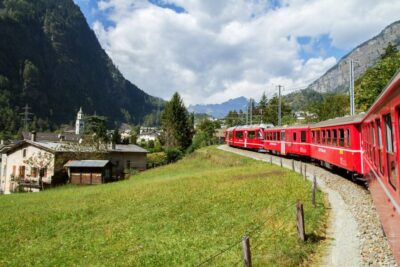
Milan to St. Moritz: Scenic Bernina Train Tour with Guide
Read our review →
Chamonix & Mont Blanc Panoramic Sky-Glass Bus Guided Day Trip
Read our review →
City Bus Tour with Audio Guide and Lake Cruise
Read our review →
Lindt Home of Chocolate Guided Tour & Entry Ticket
Read our review →