
Reviewed · WALKING TOURS
Zermatt 2-Hour Small Group Village Walk
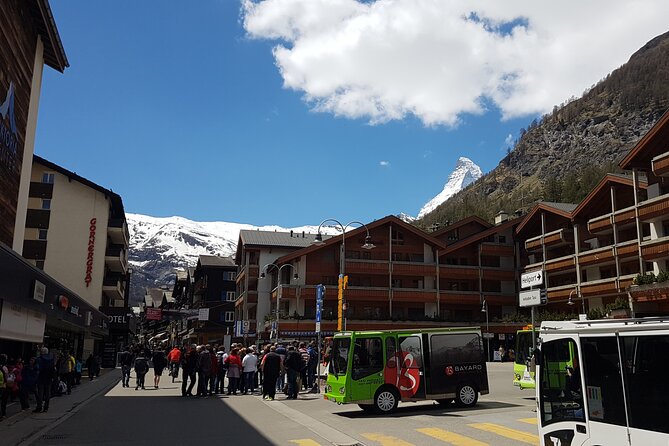
Zermatt is best understood at walking speed. This 2-hour small-group village walk gets you oriented fast, then leads you into quieter lanes and Matterhorn climbing stories that you would likely miss on your own. I like how the route keeps shifting settings, from Bahnhofplatz to the old village and back along the Vispa river.
Two things I especially like are the small group size and the way the guide builds context. With a maximum of 15 people, you can ask questions, pause for photos, and actually hear the stories tied to the streets, buildings, and peaks. I also like the strong Matterhorn thread, from the first ascent history tied to the Monte Rosa Hotel to the mountaineers’ cemetery.
One consideration: this is a short walk, so if you want a deep, stop-by-stop museum day, you’ll still need to add time later. Also, it requires good weather, and poor visibility can reduce how much you see from viewpoint points like the Kirchbrucke bridge.
In This Review
- Key highlights worth your time
- Zermatt in two hours, at the pace that makes sense
- Bahnhofplatz: your orientation happens at the train station
- Bahnhofstrasse: a quick look at the famous shopping street, then you duck away
- Gourmetweg and Hinterdorfstrasse: old rooftops, quiet alleys, and a seasonal trick
- Monte Rosa Hotel and the Matterhorn story you can’t get from a postcard
- Mountaineers’ Cemetery: a sobering pause with strong local meaning
- Kirchbrucke bridge viewpoint: the classic Matterhorn photo, timed by the weather
- Uferweg and the Vispa river return: a smooth ending to the loop
- Price and value: what $140.55 means for a 2-hour guided walk
- The guides and the vibe: what you can expect in English
- Walking comfort, timing, and how to travel smart
- Weather matters for the Matterhorn, and for your mood
- Should you book this Zermatt village walk?
- FAQ
- How long is the Zermatt 2-Hour Small Group Village Walk?
- Where do I meet for the tour?
- Where does the tour end?
- What is the maximum group size?
- What language is the tour offered in?
- Is there a mobile ticket?
- Are the stops free in terms of admission tickets?
- What is the price per person?
- What happens if the weather is bad?
- What is the cancellation policy?
- Can children join the tour?
- Is it close to public transportation and can service animals attend?
Key highlights worth your time
- Start at Bahnhofplatz, the rail gateway that effectively controls life in Zermatt
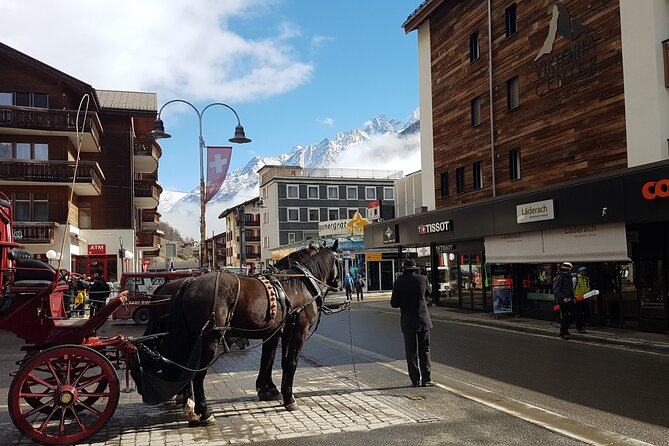
- Bahnhofstrasse orientation, then turning away from crowds to quieter streets
- Gourmetweg in two seasons, tennis court by day, natural ice rink in winter
- Hinterdorfstrasse old Zermatt details, including centuries-old building patterns and flat-stone rooftops
- Matterhorn climbing history on the ground, from Monte Rosa Hotel to the mountaineers’ cemetery
- Kirchbrucke bridge and Vispa riverside, the classic background shot plus an easy return toward town center
Zermatt in two hours, at the pace that makes sense
Zermatt is car-free inside the village, so walking is the real default. This tour is timed for that reality, giving you just enough time to get your bearings and still feel like you explored something beyond the obvious streets. It is a practical first-day activity, especially if you want to plan the rest of your stay with confidence.
The route is also designed like a story. You move from the arrival hub to the shopping street, then away from the crowd into the older village fabric, and finally back along the river. That flow helps you understand where the scenery comes from and why certain corners feel different from each other.
Bahnhofplatz: your orientation happens at the train station
You meet at the Zermatt Tourist Information Center on Bahnhofpl. 5, then start at Bahnhofplatz. The guide begins at the entrance point for Zermatt, because the train station is the only practical way for travelers and goods to reach the village.
This matters more than it sounds. When you start your walk here, everything else feels connected, like you’re learning the village’s rules first. It also sets expectations for walking logistics, since your whole day in Zermatt revolves around rail access.
More Guided Walks in Zermatt:
- Zermatt Village Walk and Mt. Gornergrat Private Day Trip
★ 4.5 · 12 reviews - Zermatt Village Walk and Mt. Gornergrat Private Day Trip
★ 5.0 · 7 reviews - Zermatt Village Walk and Glacier Paradise Private Day Trip
★ 5.0 · 4 reviews
Bahnhofstrasse: a quick look at the famous shopping street, then you duck away
Next you head along Bahnhofstrasse, Zermatt’s best-known shopping street. You’ll get a feel for the commercial heart of town, then you turn left away from tourists and crowds.
I like this balance because it saves you time. You see the iconic main drag without getting stuck in it for long, then you transition to smaller streets where the details actually show themselves. It’s a good reminder that Zermatt has layers, not just a single polished façade.
Gourmetweg and Hinterdorfstrasse: old rooftops, quiet alleys, and a seasonal trick
From Bahnhofstrasse you continue to Gourmetweg, where you walk past a tennis court that becomes a natural ice rink during winter. Even if you’re traveling in summer, this seasonal shift helps you picture how Zermatt changes with the months.
Then you move into Hinterdorfstrasse, entering the older part of Zermatt. Here you get to see how buildings were built centuries ago, including the secret behind the flat-stone rooftops. You also encounter barns that date back more than 200 years, plus small alleyways that help you understand how the village kept moving forward without losing its core shape.
A possible drawback: this part is full of small turns and tucked-in streets. If you’re the type who hates stopping for photos, it can feel like you’re constantly reorienting. But if you like walking slowly and soaking up architecture, these are the stops that make the tour worth it.
Monte Rosa Hotel and the Matterhorn story you can’t get from a postcard
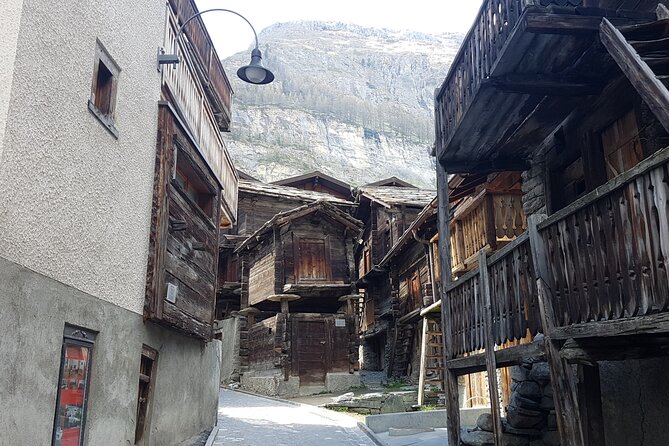
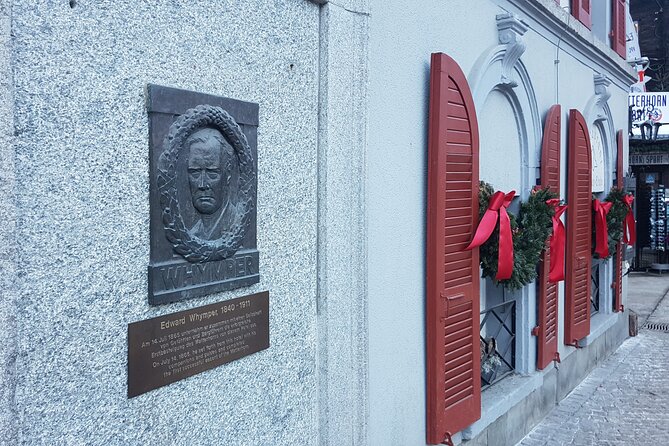
One of the most meaningful stops is the Monte Rosa Hotel area. The guide brings you here to connect the early growth of tourism in Zermatt with insights about the first ascent history of the Matterhorn.
This is where the walk becomes more than geography. You start seeing the village as part of a larger mountain story, not just a resort town with shops. I also like that this stop is short but focused, so you get context without losing the momentum of the stroll.
Some tours in this same theme also point out the climbers’ Walk of Fame while discussing Matterhorn climbing culture. If your guide includes it, it’s a neat way to connect names, attempts, and the idea of fame earned the hard way.
Mountaineers’ Cemetery: a sobering pause with strong local meaning
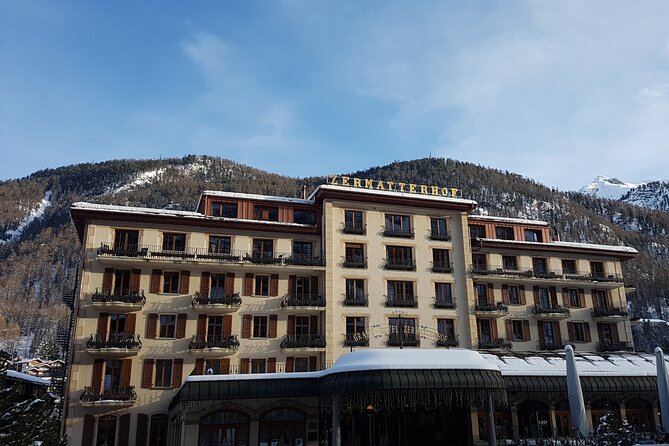
Next comes the mountaineers’ cemetery. This stop is about the reality of alpine ambition, where many attempts ended in failure while climbing the Matterhorn or nearby alpine peaks.
You should expect a quiet, reflective moment. It’s not the kind of story that stays abstract when you’re standing in the place. If you’re traveling with kids, this is one of those stops where the guide can steer the tone toward curiosity and local understanding, but you may still want to keep your expectations realistic.
A few more departures worth comparing in Zermatt
- Zermatt: Gornergrat Railway Cogwheel Train Ticket★ 4.7 · 580 reviews
- Private Ski Lessons – 3 hours Zermatt★ 5.0 · 279 reviews
- Matterhorn Paragliding flight in Zermatt (20-25min)★ 5.0 · 207 reviews
- FLYMATTERHORN VIP Paragliding from Zermatt, With Matterhorn View★ 5.0 · 192 reviews
Kirchbrucke bridge viewpoint: the classic Matterhorn photo, timed by the weather
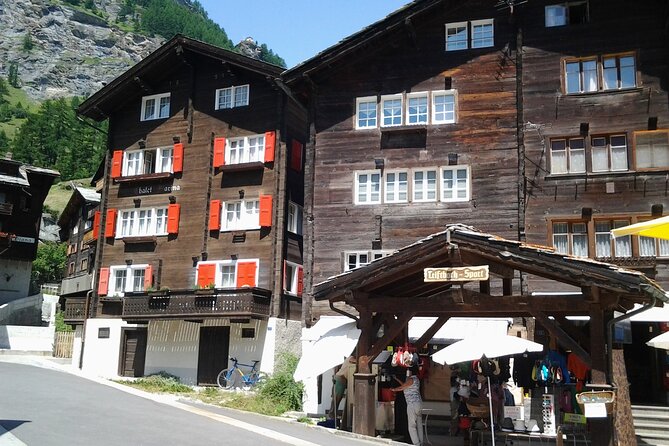
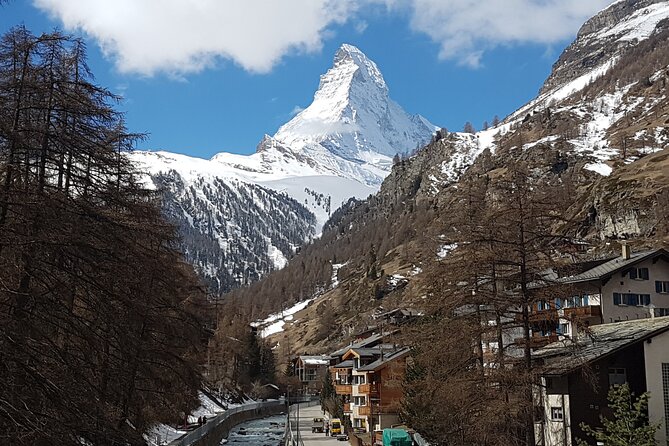
You then reach the viewpoint at Kirchbrucke bridge, one of the best places to capture the typical Zermatt picture with the Matterhorn in the background. This is where timing matters, since cloud cover can change what you can actually see.
If the peak is hidden, you can still use the viewpoint to understand sightlines and village framing. But if visibility is good, this is a payoff stop after all the history, turning your walk into a real image you’ll remember.
Uferweg and the Vispa river return: a smooth ending to the loop
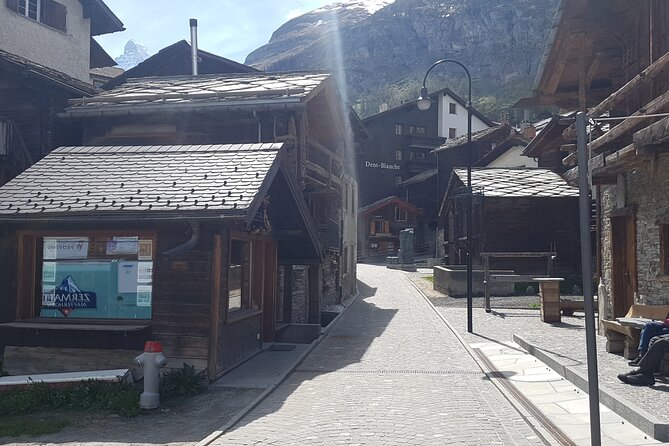
After the viewpoint, you walk along Uferweg, passing the Vispa river. You’ll see hotels and newer apartment buildings alongside the water, which helps you connect Zermatt’s old village core with its modern growth.
You also pass the Sunnegga cablecar station, then head back along the Getwing street toward the train station. The tour ends back at the meeting point, so you don’t have to worry about transport math at the end of your walk.
I like this ending because it feels like a loop. You get the sense that Zermatt’s story moves with the village, and the river is a natural spine for that idea.
Price and value: what $140.55 means for a 2-hour guided walk
At $140.55 per person for about 2 hours, this is not a bargain-supermarket price. But it is also not trying to be one of those “just show up and wander” tours.
You’re paying for two main things: a local guide who can connect street-level details to Matterhorn and village history, and a route that steers you away from the densest tourist lanes. With small group limits and a guide who can pause for photos and questions, the time feels used well rather than just measured.
If you’re on your first day, you may also get a hidden value: orientation. Learning where the quiet alleys, viewpoints, and old village sections are can help you plan your next walks without backtracking.
The guides and the vibe: what you can expect in English
This tour is offered in English, and it runs as a small group with a maximum of 15 travelers. The guides for this experience have a strong reputation for being open to questions and for stopping frequently for pictures.
In terms of named examples, local guide styles that show up in this kind of walk include people like Abraham, Remi, Tony (Anton Imoberdorf), and Mike. While each guide tells the story in their own voice, the common thread is practical town knowledge plus Matterhorn context.
One more note: you can expect a walk that works for many people. The tour also allows service animals, and children must be accompanied by an adult.
Walking comfort, timing, and how to travel smart
The tour runs about 2 hours, so plan it as a focused block rather than a flexible hour-by-hour day. It’s also designed to be walked, not raced, with multiple short stops adding up to a full understanding of the village fabric.
If you’re sensitive to uneven cobblestones or frequent turns, Hinterdorfstrasse may be the section that feels most like “real village streets.” Still, the overall route is short enough that you can regroup easily at the meeting point after the loop.
A practical tip: bring layers. Zermatt weather can shift, and winter highlights like the Gourmetweg ice rink clue you in that conditions can be chilly. The tour requires good weather, so if visibility is poor, accept that the Matterhorn viewpoints may be reduced.
Weather matters for the Matterhorn, and for your mood
This experience requires good weather. If conditions are poor, you’ll be offered a different date or a full refund.
For planning, that means you should pick a day when you have at least one backup option in your schedule. If you only have one day in Zermatt, you may still book, but build in flexibility so a change won’t derail your bigger plans.
Should you book this Zermatt village walk?
Book it if you want a first-time Zermatt orientation that also brings real substance. This walk is ideal when you care about history tied to the Matterhorn, like why the village grew, how early climbing changed everything, and what the old village streets can teach you at human scale.
Skip it or swap it for something longer if you already know Zermatt well and you only want a quick shopping-and-picture loop. Also consider whether you’d rather spend your limited time inside a museum. This is a street-level experience, and its value is in the walking, the stops, and the guide’s connections.
If you’re traveling in a small group or just prefer personal attention, this one makes sense. With a maximum of 15 people and a route that avoids crowding, you get a guided walk that feels closer to local storytelling than a scripted conveyor belt.
FAQ
How long is the Zermatt 2-Hour Small Group Village Walk?
It lasts about 2 hours.
Where do I meet for the tour?
You meet at the Zermatt Tourist Information Center, Bahnhofpl. 5, 3920 Zermatt, Switzerland.
Where does the tour end?
It ends back at the meeting point.
What is the maximum group size?
The tour has a maximum of 15 travelers.
What language is the tour offered in?
The tour is offered in English.
Is there a mobile ticket?
Yes, this experience uses a mobile ticket.
Are the stops free in terms of admission tickets?
Each listed stop notes admission ticket free, and the tour includes those free stops as part of the walk.
What is the price per person?
The price is $140.55 per person.
What happens if the weather is bad?
This experience requires good weather. If it is canceled due to poor weather, you will be offered a different date or a full refund.
What is the cancellation policy?
Free cancellation is available. You can cancel up to 24 hours in advance for a full refund, and changes less than 24 hours before the start time are not accepted.
Can children join the tour?
Children must be accompanied by an adult.
Is it close to public transportation and can service animals attend?
It is near public transportation, and service animals are allowed.
Added lately around Zermatt





Walking Tours, compared.
Zurich Walking Tour With Cruise and Aerial Cable Car
Read our review →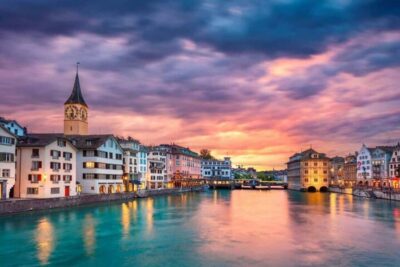
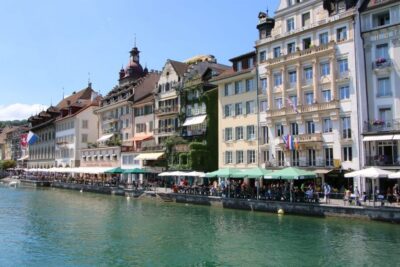
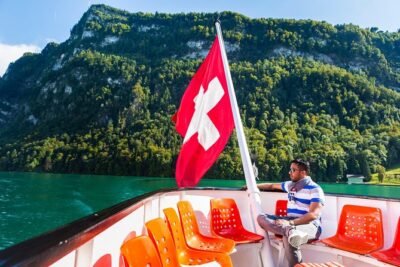
Lucerne Walking & Boat Tour: The Best Swiss Experience
Read our review →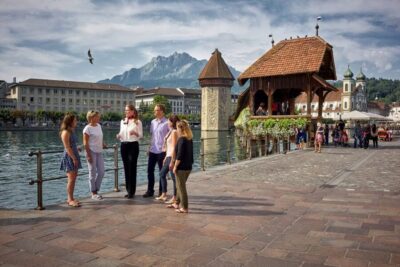
3 in 1: Zurich Walking Tour – Cruise on the Lake – Cable Car Ride to Felsenegg
Read our review →Browse the lists this tour appears in