
Reviewed · WALKING TOURS
Private 1.5-Hour Nightwatchman Walk in Medieval Lucerne
Lucerne at night has its own soundtrack. This private, English-language walk turns the Old Town into a Middle Ages storybook, with a costumed local guide and visuals used on the street. I love the way it connects places you can still see today with the daily life and rumors that once shaped the city.
What really works is the private format. You get to ask questions and slow down at details most walks skip, like the guild symbols and the way maps and buildings overlap across centuries. The second standout is the guide’s performance style, with projector slides and small props that help the legends land, not just the dates.
One thing to plan for: a few stops note that admission tickets are not included, so if you want interiors, you may need to pay extra. Also, you’ll be walking outdoors in all weather, so bring shoes you can trust on cobblestones.
In This Review
- Key things you will notice on this nightwatchman walk
- Why a medieval nightwatchman walk feels different in Lucerne
- Meeting at Rosengart Platz, then settling into nightwalk rhythm
- Peterskapelle and the Martiniplan, Lucerne’s first city map from 1597
- Chapel Bridge versus the Water Tower, two medieval timelines at once
- Furrengasse and Kapellplatz, where medieval legends borrow a street address
- Kornmarkt and Brandgässli, civic power plus everyday symbols
- Weinmarkt, pharmacy signs, and the Latin line about a broken heart
- Im Zöpfli and Reussbrücke, law and punishment by the river
- Alte Suidtersche Apotheke and Ritterscher Palace, from medieval pharmacy glass to Dance of Death
- The Church of the Jesuits and the final return across Chapel Bridge
- Price and what you actually get for $165.26 per person
- Should you book the private Nightwatchman walk in Lucerne
- FAQ
- How long is the private Nightwatchman walk?
- Is this tour private?
- What language is the tour offered in?
- Where does the tour start and end?
- Do I need admission tickets for the sights?
- Does the tour use a mobile ticket?
- Does it run in all weather?
- Are service animals allowed?
- Is free cancellation available?
Key things you will notice on this nightwatchman walk
- A private nightwatchman in medieval dress who tells the city like a character, not a lecturer
- Projector storytelling that makes the Martiniplan and projected scenes easier to follow at street level
- Your route hits the oldest anchors first, starting at Peterskapelle and looping through Chapel Bridge
- Legends with real place names, from Kapellplatz lore to the Toggeli (incubus) myth
- Not just pretty buildings, you also learn about punishments, law, and medieval institutions you can still spot
Why a medieval nightwatchman walk feels different in Lucerne
Most Lucerne walks show you the famous postcard views, fast. This one does something smarter. It uses darkness, silence, and a role-based guide to make medieval details feel closer and more human. You’re not just looking at stone. You’re watching a story unfold where it happened.
I like that the tour keeps you grounded in specific sites you can point to: St. Peter’s Chapel dating to the 12th century, the Water Tower from the late 1200s, Chapel Bridge from 1365, and a string of old market squares. The guide also helps you read the city, like why buildings line up the way they do on Lucerne’s first city map, the Martiniplan.
The tone is part entertainment, part education. You’ll hear legends and odd beliefs, but you’ll also get the practical civic context, like measurements, town hall symbolism, and how law and order worked in medieval streets.
Meeting at Rosengart Platz, then settling into nightwalk rhythm
The tour starts at Rosengart Platz in Lucerne and ends back at the same meeting point. That matters more than it sounds. You can pace yourself without worrying about getting stranded in the dark, and the route is designed to bring you back over the river area when the walking is done.
It’s private, so only your group goes with your guide. That also means you can adjust to your pace. If you want extra time at a doorway, mural, or bridge detail, you can ask for it.
Timing is also flexible. Expect about 1 to 1.5 hours, with shorter timing in winter months (November to March). The tour runs in all weather conditions, so you should dress for damp streets and cool air, not a bright afternoon.
If you’re traveling with teens or adults who like stories, this format tends to click. One family-friendly angle from real bookings: the range of ages works because the guide mixes humor with clear explanations.
More Guided Walks in Lucerne
- Lucerne: Private Walking Tour with a Local Guide
★ 4.6 · 450 reviews - Lucerne Walking & Boat Tour: The Best Swiss Experience
★ 4.5 · 417 reviews - Lucerne: Guided Walking Tour with an Official Guide
★ 4.7 · 321 reviews
Peterskapelle and the Martiniplan, Lucerne’s first city map from 1597
You begin at Peterskapelle (Peter’s Chapel), and the atmosphere sets the tone right away. You hear the fire horn followed by an invocation-style start, as the nightwatchman describes the hard realities of his job in the Middle Ages. It’s a small moment, but it frames everything that follows.
Then you get the centerpiece: the Martiniplan, Lucerne’s first city map, dating from 1597. With help from a projector, you get a detailed look at the route lines and how many buildings on that map still relate to structures you can see today. This is one of the reasons the walk feels worth it. You’re not just collecting trivia. You’re learning how to compare a historic plan with modern streets.
From there, the route checks key medieval touchpoints. You see St. Peter’s Chapel, described as the first church in town, with origins in the 12th century. You also hear about one of the early private stone houses of Lucerne and the origin of the phrase stone rich, tied to wealth that could be read in building materials.
A possible snag: this stop notes that an admission ticket is not included. You can still learn the story at street level, but if you want to go inside, plan for extra time and cost.
Chapel Bridge versus the Water Tower, two medieval timelines at once
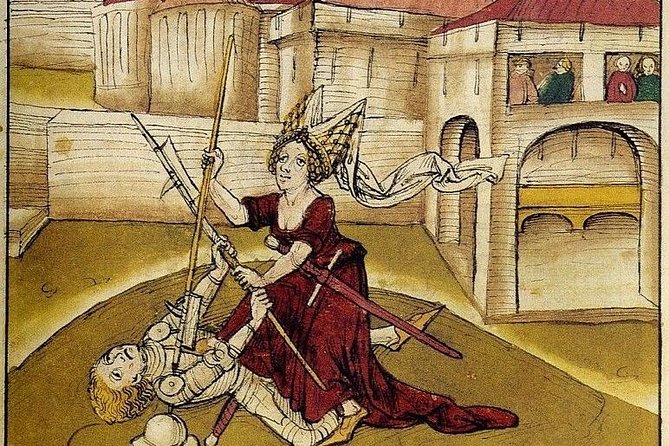
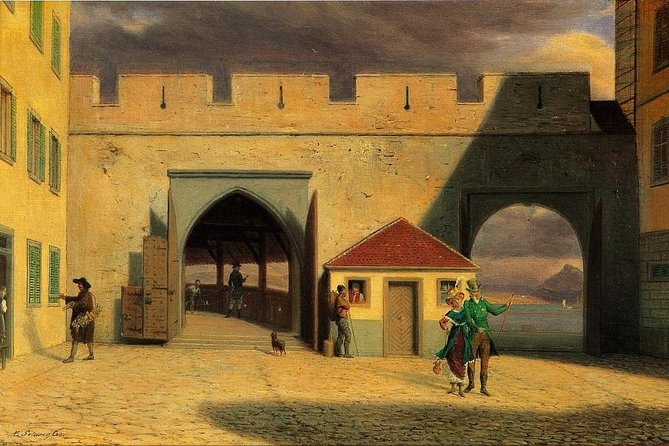
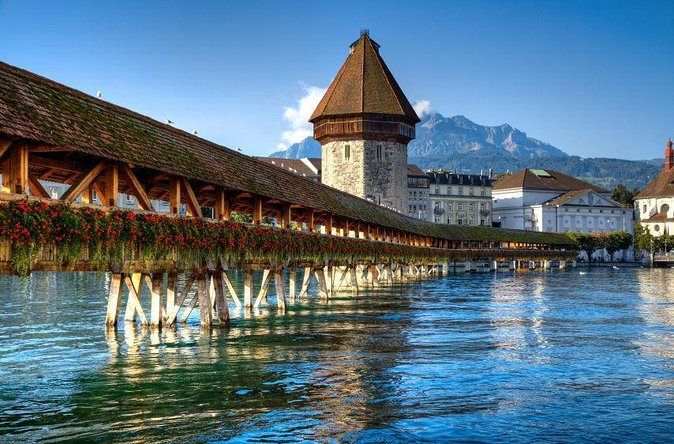
Next comes the classic riverside area: Chapel Bridge. But the tour nudges your thinking by putting the Water Tower first in the timeline. You hear that the Water Tower was built in the late 13th century, while Chapel Bridge dates to 1365.
At the Water Tower, the guide uses projected imagery to show the inside spaces, including references to a torture chamber, dungeon, and a secret room. It’s not pleasant, but it’s historically grounded. And it helps you understand why fortifications, water access, and control of movement mattered so much.
Then you learn about Chapel Bridge’s name. Even if you’ve walked across it in daylight, this explanation gives you a different lens. You stop treating it like a photo spot and start seeing it as infrastructure with cultural meaning.
This stretch is short on purpose, so you keep momentum and you don’t lose the nightwatchman vibe. One practical tip: bring your walking energy here. Cobblestones can be slippery if it’s damp, and the tour continues to lane turns soon after.
Furrengasse and Kapellplatz, where medieval legends borrow a street address
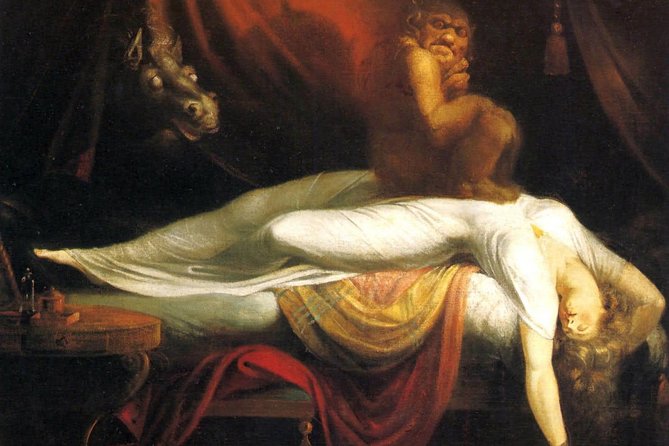
You turn through narrow streets toward Kapellplatz, and the guide shifts from civic facts to folk stories. In Furrengasse, the stories get specific and strange in a good way. You’ll hear about the area’s ghost and about the Toggeli, described as an incubus, also linked to the idea of the love robber.
These aren’t abstract myths. The point is place-based storytelling. The guide ties legend to street corner, so your brain has an actual location to store the tale. That’s why you leave with a feeling for the city, not just a set of highlights.
You also learn about life in Lucerne during the period of the blooming Republic, with the tour using those civic references to explain why people might invent, fear, and repeat stories. It’s medieval social psychology, wrapped in local lore.
Most of these stops are free of additional admission notes, so you can focus on listening and looking. If you’re the kind of traveler who likes to guess what a wall painting means before the guide explains it, this is a fun match.
Kornmarkt and Brandgässli, civic power plus everyday symbols
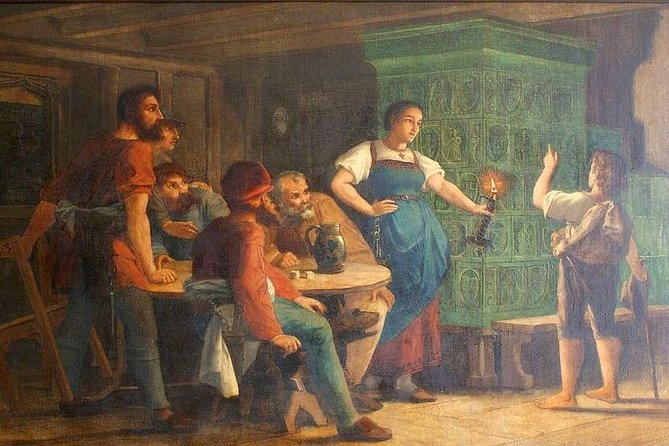
Now you reach Kornmarkt, the town hall area. This is where Lucerne starts talking like a government. You learn about the Renaissance town hall and its tower, including the clock detail described as having no minute hand. Small, but it’s exactly the kind of feature that helps you spot differences between eras.
Two other things you’ll hear here:
- The story of the Giant of Reiden
- The official measures of old Lucerne, the Lucerne Foot and Elle, basically standards people used when buying and trading
From Kornmarkt you continue into Brandgässli alley. Here the tour shifts to social tension, with the Riot of Lucerne. Then you continue toward what used to be the fish market, known today as the wine market. It’s a reminder that cities recycle their geography. What was a daily market becomes a different daily market, just with new products and new labels.
This segment is also one of the best times to ask questions. The guide can connect measurements, town hall authority, and market space to the way medieval residents organized daily life.
Some stops on this stretch are marked as not including admission tickets, so if you want to go inside a building, you may want to plan that decision early rather than hoping it works out last minute.
Higher up, or further along the lake:
- From Zurich: Mount Titlis with Ice Flyer & Lucerne Day Tour★ 4.7 · 3,899 reviews
- Lucerne: Mt. Pilatus Cable Car, Cogwheel Train & Lake Cruise★ 4.7 · 2,338 reviews
- Mount Pilatus Summit from Lucerne With Lake Cruise★ 4.5 · 1,260 reviews
- Lucerne: Round-Trip Catamaran Cruise on Lake Lucerne★ 4.4 · 1,169 reviews
Weinmarkt, pharmacy signs, and the Latin line about a broken heart
At Weinmarkt, the tour leans into visual details that many passersby miss. You see old guest house signs and frescos on houses. Those are the small layers that turn a street from pretty to readable.
One highlight involves a former pharmacy house of Renward Cysat. You’re shown a Latin sentence: Amor medicabillis nullis herbis, which the guide explains as There is no cure for a broken heart. It’s the kind of line that feels both poetic and practical, because it also fits what a pharmacy building symbolized in a city where medicine, illness, and emotion all lived side by side.
Weinmarkt also gives you a softer pace in the walk. It’s still about the Middle Ages, but you’re looking at art and signage rather than moving fast from one civic point to another.
If you’re short on time in Lucerne, I’d rather you do this stretch slowly than rush it. The guide’s explanation makes the old marks meaningful, and that’s what you’ll remember when you’re back in your hotel.
Im Zöpfli and Reussbrücke, law and punishment by the river
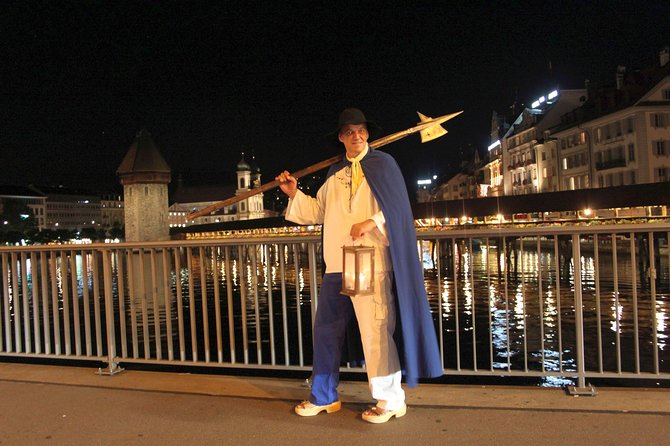
At Im Zöpfli, right by the riverside square, the tour turns darker again, focused on law and order in old Lucerne. You see projected paintings about prosecution methods, interrogation, and corporal punishment. It’s blunt, and the guide keeps it in context, so it doesn’t feel like shock value.
This part is valuable because it reframes the city’s “pretty” look. Medieval streets were not only for trade and celebrations. They were also spaces where rules were enforced visibly, and often painfully.
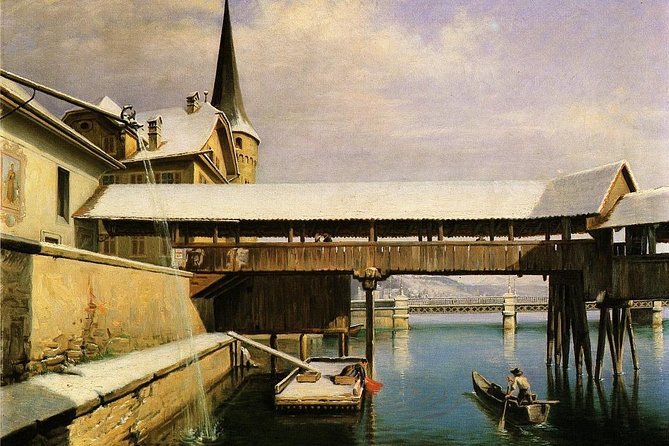
Next you move to Reussbrücke, and you pass the bridge area while the guide points out the Spreuerbruecke (Mill Bridge), the Needle Dam, and parts of the Musegg Wall. The river here is more than scenery. It’s connected to how the city defended itself and how it managed crossings and water control.
You’ll feel the tour’s structure through this segment. It alternates between street-level story, projected explanation, and then physical city orientation. That rhythm helps you keep track of where you are, even when the night makes everything feel slightly different.
Alte Suidtersche Apotheke and Ritterscher Palace, from medieval pharmacy glass to Dance of Death
One of the most visually striking moments comes at Alte Suidtersche Apotheke, where the guide points out a medieval pharmacy window described as breathtaking. This is a great stop if you love material details, like how windows, signage, and house fronts served as both business proof and community identity. This stop also notes admission tickets are not included, so again, you can treat it as a story stop from outside unless you decide to pay for an interior.
Then comes Ritterscher Palace Lucerne area, where the guide introduces guardian demons and stops at the legendary house of Lux Ritter. You hear why the first two floors look different from the third one, and then you get the story of Hans von Trient, an unlucky stonemason. It’s the kind of local narrative that makes the architecture feel less abstract.
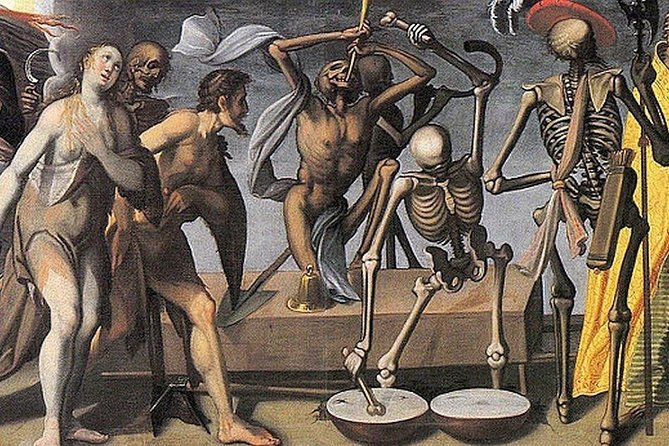
The tour’s top artwork moment is the Dance of Death, described as seven paintings. The guide has the visuals projected on a house wall, then walks you through details. Even if you’ve seen death-themed art elsewhere, this version feels tightly linked to Lucerne’s streets rather than a museum room.
This is also where the guide performance really matters. When a guide can guide your attention, the art and the legend stop competing. You start noticing how the stories are arranged on the wall, not just what they say.
The Church of the Jesuits and the final return across Chapel Bridge
Near the end, you pass the Church of the Jesuits, described as the first baroque building in Switzerland dating back to 1677. That’s a smart final note because it gives contrast. After medieval darkness and medieval punishment, you get a move toward a different architectural era.
Then the tour returns to Chapel Bridge for the finishing point. You cross and you see the paintings again, and you learn why the bridge is built diagonally over the river. When the guide explains it, the bridge stops being only a crossing and becomes a construction choice that shapes how you experience the river in motion.
Crossing at the end also helps you internalize the route. You’re not just ending. You’re revisiting a key reference point after you’ve learned how the city’s timeline layers overlap.
Expect the walk to end back at Rosengart Platz. It’s a clean wrap, and it leaves you free to keep exploring nearby Old Town streets on your own.
Price and what you actually get for $165.26 per person
At $165.26 per person, this is not a budget stroll. But it’s priced like what it is: a private 1.5-hour nightwatchman experience with a professionally costumed local guide, plus taxes and handling included. You’re paying for access to a guide who can perform, explain, and keep you oriented while telling a connected story across multiple landmarks.
The value gets better when you share the cost. The tour is private, and group discounts are offered, which usually means you’ll see better per-person value with at least a couple of people. If you’re solo and you’re deciding between this and a larger group walk, know that your refund is in attention and flexibility. In a private format, the guide can tailor pacing and repeat points when you want clarity.
Also, the guide uses a projector and offers stops across multiple key buildings and squares. That’s not just talk. It’s guided interpretation aimed at making the city legible.
Booking tends to happen well in advance, averaging around 107 days, so if your dates matter, reserve earlier rather than gambling on last-minute availability.
Should you book the private Nightwatchman walk in Lucerne
Book it if you like history that acts like a story, not a slideshow. This walk is ideal when you want to see familiar Lucerne landmarks through a medieval lens: the Water Tower and Chapel Bridge timeline, the Martiniplan map overlay, the old market squares, and the arts like frescoes and the Dance of Death.
I’d also recommend it if your group enjoys a guide with strong English and a confident performance. Past experiences with guides named Rolf and Ralph highlight exactly why this tour works: costume acting, humor mixed with solid explanation, and a habit of pointing out details you’d miss on your own. In at least one case, the guide also shared cost-conscious ideas for where to eat nearby, which is a practical bonus.
Skip it only if you hate dark, crime, and punishment themes. This tour includes projections about interrogation and corporal punishment, plus dungeon references. If that’s not your thing, you might prefer a lighter day walk focused on architecture and art.
If you want your Lucerne trip to feel personal and specific, this nightwatchman route is a strong choice.
FAQ
How long is the private Nightwatchman walk?
It runs about 1 hour to 1 hour 30 minutes. In winter months (November to March), the duration is 1 hour.
Is this tour private?
Yes. This is a private tour, meaning only your group participates.
What language is the tour offered in?
The tour is offered in English.
Where does the tour start and end?
It starts at Rosengart Platz, 6004 Luzern, Switzerland, and it ends back at the same meeting point.
Do I need admission tickets for the sights?
Some stops note that admission tickets are not included. Expect that if you want to enter certain places, you may need a separate ticket.
Does the tour use a mobile ticket?
Yes. A mobile ticket is included.
Does it run in all weather?
Yes, it operates in all weather conditions. Dress appropriately for the conditions.
Are service animals allowed?
Yes, service animals are allowed.
Is free cancellation available?
Yes. Free cancellation is available, and you can cancel up to 24 hours in advance for a full refund.
Added lately around Lucerne






Walking Tours, compared.
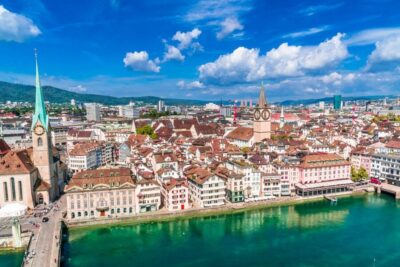
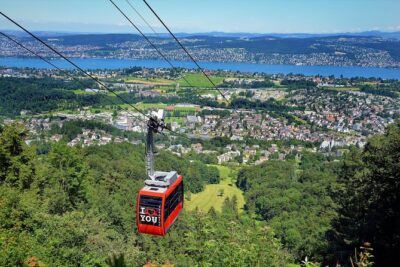
Zurich Walking Tour With Cruise and Aerial Cable Car
Read our review →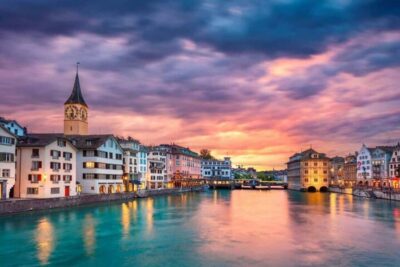
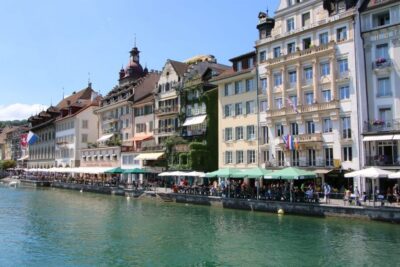

Lucerne Walking & Boat Tour: The Best Swiss Experience
Read our review →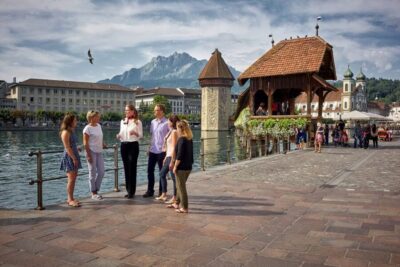
3 in 1: Zurich Walking Tour – Cruise on the Lake – Cable Car Ride to Felsenegg
Read our review →Browse the lists this tour appears in