
Reviewed · FULL-DAY
Lugano and Bellinzona private full-day tour
Two cities, one guided sweep. You get Lugano’s landmarks, then head to UNESCO-protected Bellinzona without the usual hassle. I like how the day is built around a private guide who explains the art and the social side of Ticino, not just dates and names. I also love that the main stops are free to enter as listed, from Lugano Cathedral to Castelgrande. One watch-out: lunch is not included, and you’ll want to budget for the Lugano to Bellinzona round trip train tickets (10 CHF), plus a bit of steady walking.
This is a practical “get your bearings fast” day. It starts at 11:00 am in Lugano and ends back at Lugano Stazione, so you can still keep your evening flexible. You’ll spend short, focused chunks at each sight, with a pace that suits most people with moderate physical fitness.
One more reality check: the tour needs good weather. If conditions are poor, you’ll be offered a different date or a full refund, so keep an eye on the forecast the morning of.
In This Review
- Key things to know before you go
- Lugano and Bellinzona in 8 hours: a smart, packed overview
- Price and value: what $399.12 per person really buys
- Where you start, where you end, and how the day flows
- Stop 1: Cattedrale di San Lorenzo, the bishop’s seat in Lugano
- Stop 2: Church of S. Maria degli Angioli and Bernardino Luini frescoes
- Stop 3: LAC Lugano Arte e Cultura, the city’s cultural engine
- Crossing the Swiss-Italian feeling into Bellinzona
- Stop 4: Palazzo Civico di Bellinzona, civic power made stone
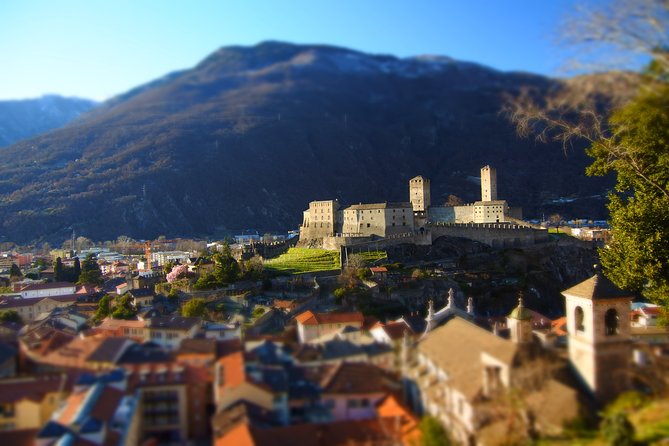
- Stop 5: Castel Grande, UNESCO medieval fortress from 2000
- Stop 6: Castello di Montebello and the Rusca family defense story
- What I think makes this tour work so well
- Who this private Lugano and Bellinzona day tour is best for
- Should you book the Lugano and Bellinzona private full-day tour?
- FAQ
- How long is the Lugano and Bellinzona private full-day tour?
- What time does the tour start, and where is the meeting point?
- Where does the tour end?
- Is the tour private?
- What language is the tour offered in?
- Is lunch included?
- Are admission tickets included for the stops?
- Do I need train tickets to get between Lugano and Bellinzona?
- What is the cancellation and weather policy?
Key things to know before you go
- A private, personalized day that follows your guide’s explanation style, not a one-size script
- Free entry stops as listed, including Lugano’s cathedral and Bellinzona’s UNESCO sites
- Ticino in context, with history, art, and social details tied together
- Bellinzona UNESCO focus, including Castelgrande (UNESCO since 2000)
- Fast pacing, smart stops, most lasting 15 minutes, with longer castle time blocks
Lugano and Bellinzona in 8 hours: a smart, packed overview
If you want a clean introduction to southern Switzerland, this type of day tour is exactly the tool. Lugano gives you the lake-city feel and its religious and cultural anchors. Bellinzona then adds the medieval punch, with castle architecture that actually explains how power worked in Ticino.
The big advantage is that you’re not wandering alone. You’re moving from one landmark to the next with a guide who can point out what matters, then connect it back to the region. That turns a “checklist day” into something that feels like a story.
The itinerary is structured around several short orientation visits, then deeper time at the castle sites. That means you get breadth, not a slow crawl. If you love lingering in museums for an hour at a time, plan for the fact that you’ll be doing quick stops unless your guide adjusts the pacing.
Price and value: what $399.12 per person really buys
At $399.12 per person, this isn’t a budget day out. You are paying for private guiding and a full-day schedule that hits major sights across both cities. For many people, the value comes down to one question: do you want interpretation and logistics handled, or do you prefer DIY wandering?
Here’s what helps the math work. The tour includes a private guide and is built as a walking tour in UNESCO heritage sites. Also, the listed admissions for the specific stops are free, including Castelgrande and the city hall visits. That can reduce extra costs that often sneak up on you during a sightseeing day.
What is not included is also clear. Lunch is not included, and you’ll need round-trip tickets Lugano to Bellinzona (10 CHF). If you’re planning to eat nearby during the day, that’s the place to budget.
So, the real deal is this: you’re paying for a guided overview that covers religious art, civic buildings, and medieval fortress history in one day. If you’d rather spend less and go slower, look for group options or plan two half-days on your own. If you want one high-impact day with a teacher at your side, this price starts to make sense.
A few more departures worth comparing in Lugano
- Skip the Line: Falconeria Locarno Ticket
★ 4.5 · 155 reviews - Lugano: 4.5-Hour Monte Bré Visit w/ Funicular Ride
★ 4.6 · 114 reviews - Lugano: 3-Hour Monte San Salvatore Tour with Funicular Ride
★ 4.6 · 77 reviews
Where you start, where you end, and how the day flows
You meet at Piazza Riforma, 6900 Lugano, with a tour start time of 11:00 am. You end at Lugano Stazione 6900 Lugano. That round-trip routing is convenient because it keeps you in the same travel zone at the start and finish.
The tour is near public transportation, which matters because Ticino runs on practical connections. Also, since this is a private tour, it’s only your group. That tends to make questions easier and stops less awkward, especially when your guide is adjusting the explanation level to your interests.
Expect a steady walking rhythm. The physical requirement is moderate, not strenuous, but you are on your feet. Wear comfortable shoes you trust for uneven sidewalks and curbs.
Finally, plan around the weather. The experience requires good weather, so if rain or strong wind is likely, it can affect comfort on the outdoor parts near the castles.
Stop 1: Cattedrale di San Lorenzo, the bishop’s seat in Lugano
You begin with Cattedrale di San Lorenzo, also known as St. Lawrence Cathedral. This is not a random church stop. It’s described as the seat of the Bishop of Lugano, and that role explains why it matters for the city.
What I like about starting here is that it sets the tone for Lugano. Religious buildings often reflect how cities organized themselves, and the cathedral gives you a clean entry point into Lugano’s identity.
You’re there for about 15 minutes, and admission is listed as free. That short timing means you’re not in a “read every panel” mode. Instead, you’ll get a guided orientation, so you know what to pay attention to instead of guessing.
A good consideration: if church interiors are your thing, you might want to arrive ready to look closely fast. If your main goal is architecture photos, bring a steady hand and expect a quick photo window as you move through.
Stop 2: Church of S. Maria degli Angioli and Bernardino Luini frescoes
Next comes Church of S. Maria degli Angioli, famous for conserving a Renaissance fresco by Bernardino Luini. That name is the key. Luini is strongly associated with Renaissance mural work, so this stop is less about broad civic landmarks and more about specific art you can anchor your memory to.
You get another 15 minutes here, with admission listed as free. The time is short, but it can work well if your guide points out what makes Luini’s fresco style worth seeing. Even in a brief visit, knowing where to look changes everything.
The practical downside is that frescoes are often best appreciated with calm viewing. If the church is busy, you may need to accept a quick look rather than a long stare. Still, having an expert explain what the fresco conservation means and why it’s prized in Ticino is the point of a guided stop like this.
Stop 3: LAC Lugano Arte e Cultura, the city’s cultural engine
After the religious art focus, you shift to a modern cultural venue: LAC Lugano Arte e Cultura. It’s described as the city’s cultural center, with a big concert hall and a museum.
This is a smart palate cleanser between the older stone and fresco stories. LAC helps you connect Lugano’s past with its present, showing how the city invests in arts and public culture.
You’ll spend around 15 minutes and admission is listed as free. That suggests an orientation stop rather than a full museum session. If there is an exhibit you care about, you may want to plan a separate return later on your own.
One more tip: if you’re the type who loves architecture, pay attention to how LAC feels compared to the older church spaces you just visited. The contrast helps the overall day click into place.
Higher up, or further along the lake:
- From Lugano: Lake Lugano Cruise to Morcote & Sightseeing★ 4.5 · 64 reviews
- Monte Brè Tour from Lugano by funicular★ 4.5 · 61 reviews
- Lugano: Guided Walking Tour to Gandria with Boat Cruise★ 4.5 · 35 reviews
- Lugano Region Guided Excursion from Lugano to Monte San Salvatore by funicular★ 4.5 · 30 reviews
Crossing the Swiss-Italian feeling into Bellinzona
Then you move from Lugano into Bellinzona, with round-trip train tickets (10 CHF) not included. The reason this matters is simple: this isn’t a “drive from stop to stop in a vehicle” tour. You’re expected to use public transport for the link between cities.
Bellinzona is a different vibe. Lugano feels like a lake city with culture venues and cathedral gravity. Bellinzona is about fortifications and civic structures, and that medieval focus is what makes it worth visiting.
Your guide will likely help you see Bellinzona as more than castles. Think of it as a system: defense, administration, and who had the authority to protect or tax the region.
Stop 4: Palazzo Civico di Bellinzona, civic power made stone
You’ll visit Palazzo Civico di Bellinzona, the city hall. This is a good anchor stop because it reminds you that cities weren’t just protected by walls. Someone needed to govern, record decisions, manage trade, and run public life.
The visit is about 15 minutes, and admission is listed as free. That timing is ideal for a quick “what this building represents” look. You’re not expected to do paperwork in the corridor, thankfully.
If you like understanding how everyday institutions shape life, you’ll probably enjoy this stop. It’s the kind of place your guide can connect back to history and social context in a way that feels practical, not academic.
Stop 5: Castel Grande, UNESCO medieval fortress from 2000
Now you get the castle everyone talks about: Castel Grande. This medieval castle is UNESCO heritage since 2000, and you spend around 30 minutes here with free admission listed.
This is your UNESCO moment of the day. UNESCO sites often feel like a label until someone gives you the “why.” In a guided setting, Castel Grande becomes a case study in defense, authority, and how fortresses were built to survive both conflict and time.
A possible drawback is that castles can be weather-sensitive. If it’s gusty, slippery, or hot, your pace might slow down. That’s not the tour’s fault. Just plan for comfort and keep water in mind, especially since lunch is not included.
If you want the most out of this stop, keep your eyes moving. Look at the fortress form, then listen for how your guide explains its purpose. The story turns stone into strategy.
Stop 6: Castello di Montebello and the Rusca family defense story
You finish with Castello di Montebello, described as a defense castle built by the family Rusca. You’ll have about 30 minutes there, again with free admission listed.
This stop adds variety to the UNESCO emphasis. Instead of repeating the same fortress idea twice, Montebello shifts you toward the idea of who built defenses and why. Families mattered. Control of a region meant control of the ability to protect routes and resources.
The time is generous enough for a guided explanation, but not long enough to turn it into a full independent exploration. That works well if your priority is understanding the big picture across both Lugano and Bellinzona.
My practical advice: take one photo, then pause and listen. Castle audio is often better than camera shots for remembering why a place matters.
What I think makes this tour work so well
The strongest theme here is clarity. You’re not just seeing spots. You’re learning why they matter in Ticino, with emphasis on history, art, and social context. That teaching style is what can turn a day that could have been rushed into a day that feels satisfying.
You also avoid a common travel trap: spending half your day figuring out what to do next. With a guided itinerary, the sequence makes sense. You start in Lugano with religious and cultural anchors, then shift to civic structures and defensive architecture in Bellinzona.
There is still one self-check you should make. This is a day with multiple stops, so you may not get the slow personal exploration you’d get on a longer stay. If you want to shop, linger in cafes for an extra hour, or do extra museum time, you’ll need to build that into your own schedule before or after.
Who this private Lugano and Bellinzona day tour is best for
This tour is ideal for you if:
- you want a one-day overview that covers major landmarks in both cities
- you appreciate a guide who connects art and history to the bigger story of Ticino
- you like moving through places with focused time blocks, rather than half days of aimless wandering
It may be less ideal if:
- you want a relaxed day with long museum hours
- you are highly sensitive to walking and outdoor conditions
- you need lunch included to stay on budget and timing
If you’re visiting on a tight schedule or you want a structured introduction before deeper exploring, this fits well.
Should you book the Lugano and Bellinzona private full-day tour?
Book it if you value guided context and you want to hit Lugano’s cathedral and fresco stop, then land in Bellinzona for UNESCO medieval fortresses, all in one clean day. The pricing feels heavy until you factor in private guiding, free-listed admissions at major stops, and the fact that you are covering both cities without the stress of building the plan yourself.
Skip it or consider alternatives if lunch cost control and long solo time are priorities for you. Also, if weather is questionable, make sure you’re flexible, since the experience requires good weather.
If you like your travel days organized and explanatory, this one is a strong pick. You’ll walk away with a much clearer sense of what makes Ticino tick, from church art to castle defense.
FAQ
How long is the Lugano and Bellinzona private full-day tour?
It runs for about 8 hours.
What time does the tour start, and where is the meeting point?
The start time is 11:00 am, and the meeting point is Piazza Riforma, 6900 Lugano, Switzerland.
Where does the tour end?
The tour ends at Lugano Stazione, 6900 Lugano, Switzerland.
Is the tour private?
Yes. It’s a private tour, and only your group participates.
What language is the tour offered in?
The tour is offered in English.
Is lunch included?
No. Lunch is not included.
Are admission tickets included for the stops?
For the listed sights, admission ticket is free as shown in the itinerary items (including the cathedral, church, LAC, and the Bellinzona castles).
Do I need train tickets to get between Lugano and Bellinzona?
Yes. Round-trip tickets Lugano to Bellinzona are not included and are listed at 10 CHF.
What is the cancellation and weather policy?
You can cancel for a full refund up to 24 hours in advance. The tour requires good weather, and if it is canceled due to poor weather, you’ll be offered a different date or a full refund.
Added lately around Lugano

Full-Day, compared.
Full-Day Trip to Riviera Col du Pillon & Glacier 3000
Read our review →


Full-Day Hiking Swiss Alps and Lake swim with Pick-up
Read our review →
Full-Day Tour To Interlaken from Zurich (KTZ361)
Read our review →Browse the lists this tour appears in