
Reviewed · WALKING TOURS
Lucerne: Classic City Walking Tour
Lucerne reads like a storybook on foot. I love how this walk anchors you with the Lion Monument and turns it into a clear lesson about the French Revolution and Swiss mercenaries. I also like that the guide keeps you moving through real alleys and landmark crossings, not just a checklist of photos.
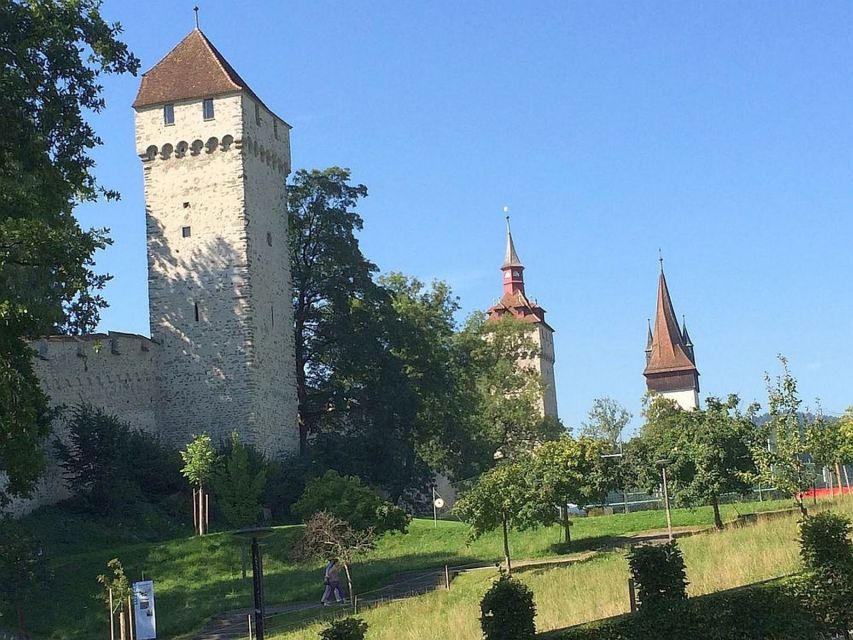
My favorite part is the Musegg Wall section, especially the Schirmerturm and Zeitturm clockwork, where medieval defense logic links to Switzerland’s long-standing armed neutrality. You’ll also get a focused look at the historic center, from fountains and painted details to quiet corners you might miss alone.
One consideration: access depends on the calendar. The Ritter’s Palace is closed on Saturdays, Sundays, holidays, and special events, and the Musegg Wall towers are closed from November through April, so you may see less from inside those spots.
In This Review
- Key points worth your attention
- A 2-hour walking loop that helps Lucerne click
- Bourbaki Museum to the Lion Monument: start with meaning, not scenery
- Musegg Wall towers and the big idea of Swiss neutrality
- Wine market, fountains, and Pilatus spring water you can taste
- Furrengasse to Peterskapelle, then Chapel Bridge in full context
- Jesuit Church and the practical trick of timing interiors
- Ritter’s Palace courtyard, loggias, and Hans von Trient stonework
- Danse Macabre at Ritter’s Palace, seven paintings explained
- What the guide experience feels like in practice
- Price of $323 per person, and when it’s worth it
- Opening times and weather: the two real planning constraints
- Should you book the Lucerne Classic City Walking Tour?
- FAQ
- How long is the Lucerne Classic City Walking Tour?
- Where does the tour start, and is pickup included?
- What languages are available on this tour?
- Can I visit Ritter’s Palace and the Musegg Wall towers from the inside?
- Do I need a bus ticket to get to and from the old town?
- What is the cancellation policy?
Key points worth your attention
- Lion Monument story: Learn what the dying lion commemorates and why it was created.
- Schirmerturm and Zeitturm: See preserved towers with clockwork from the late Middle Ages.
- Pilatus spring water stop: Drink pure Pilatus spring water and hear why the old town well flows best.
- Chapel Bridge route: Walk through Furrengasse to Peterskapelle and cross the famous bridge.
- Jesuit Church interior timing: Visit the first baroque church in Switzerland from the inside, except during services.
- Danse Macabre at Ritter’s Palace: Hear a guided presentation of the seven paintings by Jakob von Wyl.
A 2-hour walking loop that helps Lucerne click
This is a tight, efficient Lucerne orientation that still feels like you’re getting inside the city, not just passing through it. In two hours you move from major monuments to the smaller street textures that make the old town feel lived-in. If you’re visiting Lucerne for a short time, that compact focus is the big win.
The tour is a private group, so you’re not stuck listening to silence while someone catches up. The pace works well for photos too, since the route includes stops where you can pause without feeling like you’re holding everyone back.
Bourbaki Museum to the Lion Monument: start with meaning, not scenery
You begin with a hotel pickup that meets you at the reception area. Your guide gives you a route briefing on a city map before you head out, which is a smart move because Lucerne can feel complex once you’re on the streets.
The first stop is the Bourbaki Museum, where your guide provides background so the later monuments make sense. It’s a helpful staging moment, because once you learn the setting, you read the old town with better eyes.
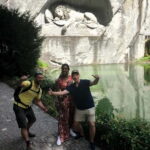
Then you move on to the Lion Monument, one of Lucerne’s most recognized symbols. You don’t just look at a carved lion. You learn the connection to Swiss mercenaries who died in the turmoil surrounding the French Revolution, during the storm of the Royal Palace. That context turns the monument from a postcard into a specific historical moment.
More City Sightseeing in Lucerne
- Lucerne: eTukTuk City Tour
★ 4.9 · 268 reviews - City Tour Plus Lucerne by Etuktuk
★ 5.0 · 120 reviews - Tony`s private city tour with picnic & chocolate degustation
★ 5.0 · 80 reviews
Musegg Wall towers and the big idea of Swiss neutrality
After the Lion Monument, you have about a 10-minute walk to the hill of the Musegg Wall. This preserved stretch of medieval outer fortification is one of those places where the city’s physical layout tells you how people thought about safety.
You’ll visit the Schirmerturm and the Zeitturm. The Zeitturm’s clockwork from the late Middle Ages is the kind of detail that makes the tour feel hands-on, even if you’re not climbing far. The guide also ties this architecture to the broader Swiss story, including wars of liberation, territorial expansion policy, and the armed neutrality that still applies today.
This is where I think the tour earns its guided format. If you wander on your own, you might notice the tower structures, but you might not connect them to why the Swiss political approach mattered. Here, you get that link, explained in plain terms while you’re standing where it happened.
Wine market, fountains, and Pilatus spring water you can taste
Once you reach the city center, you get a chance to visit the wine market. It’s not just a scenic stop, because you’ll also see the city’s oldest fountain. That’s the kind of detail that makes Lucerne feel old without turning it into a museum-only experience.
You’ll drink pure Pilatus spring water, and your guide explains why the old town well flows the best water in the city of Lucerne. Even if you don’t care about water history, it’s a fun, practical moment. It also breaks up the walking so the rest of the route feels easier.
I like this stop because it’s low effort and high reward. You’re not adding a long detour, but you still get a sensory experience and a local explanation you’re unlikely to pick up on a self-guided loop.
Furrengasse to Peterskapelle, then Chapel Bridge in full context
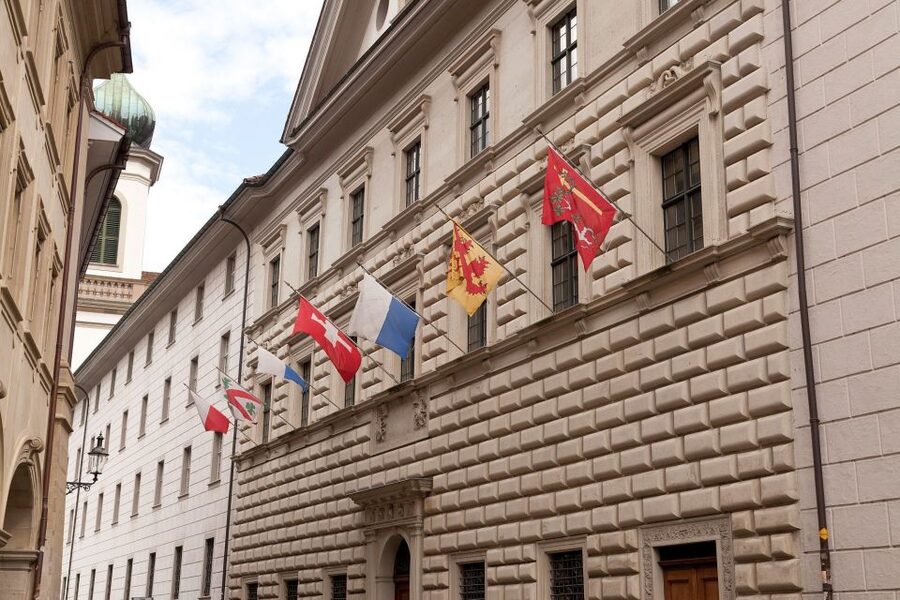
Next comes Furrengasse, a legendary lane name that you’ll walk through as you continue toward Peterskapelle. Your guide takes you to Peterskapelle, described as the first church in Lucerne dating back to the city’s founding in the 12th century. That dating matters, because it frames what you’re seeing as a foundation, not a random old building.
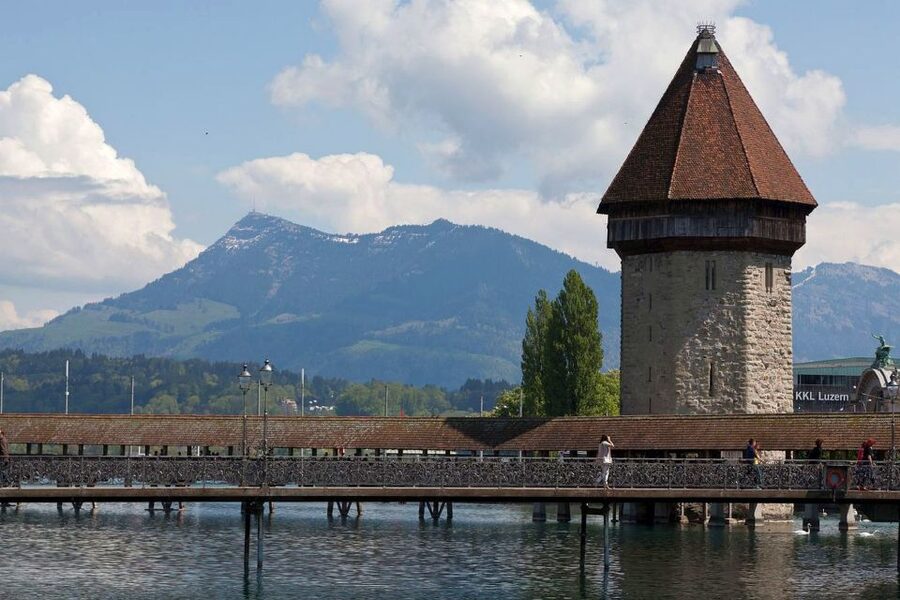
From there, you cross the world-famous Chapel Bridge to the other side of the historic center. Chapel Bridge is one of those places where it’s easy to get stuck just taking pictures from one angle. With a guide walking with you, you get a steadier sense of the geography, plus the confidence to keep moving instead of hovering.
If you’ve only got a morning or early afternoon in Lucerne, this portion helps you understand how the river and streets organize the old town. You’ll feel oriented for the rest of your visit.
Jesuit Church and the practical trick of timing interiors
After Chapel Bridge, you visit the Jesuit Church. Your stop is specifically for the interior, which is important because baroque interiors can feel very different from exteriors.
The tour notes that the Jesuit Church is the first baroque church in Switzerland from the inside, except during church services. That’s a real-world consideration. If you’re hoping for maximum interior time, it helps to choose days and times when services are less likely to block access.
This stop adds variety to the route. Up to this point you’ve seen monuments, fortifications, and street-level historic spaces. The church interior shifts you from “city layers” to “art and worship spaces,” which makes the walking tour feel more complete.
More Guided Walks in Lucerne
- Lucerne: Private Walking Tour with a Local Guide★ 4.6 · 450 reviews
- Lucerne Walking & Boat Tour: The Best Swiss Experience★ 4.5 · 417 reviews
- Lucerne: Guided Walking Tour with an Official Guide★ 4.7 · 321 reviews
- Exclusive Private Lucerne Walking Tour with Local Guide 3 Hours★ 5.0 · 80 reviews
Ritter’s Palace courtyard, loggias, and Hans von Trient stonework
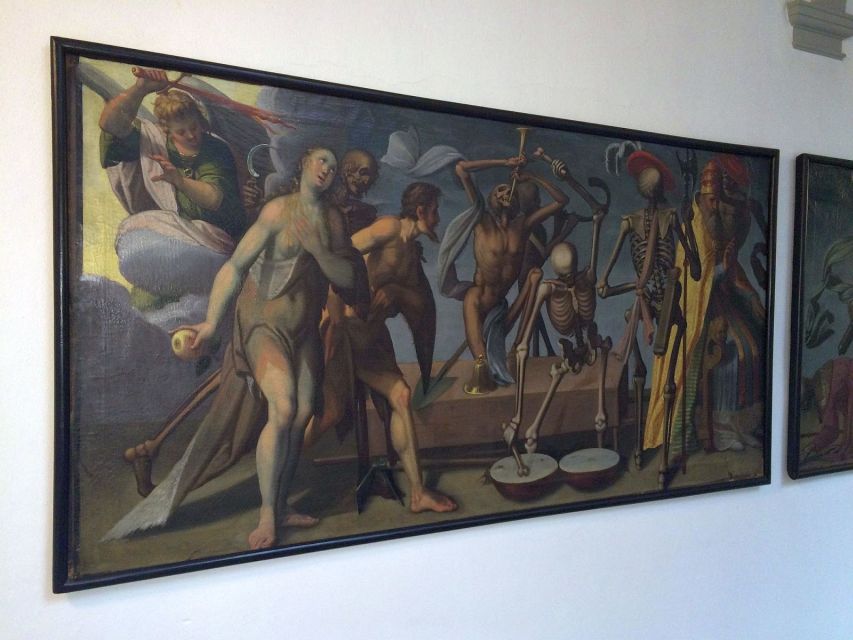
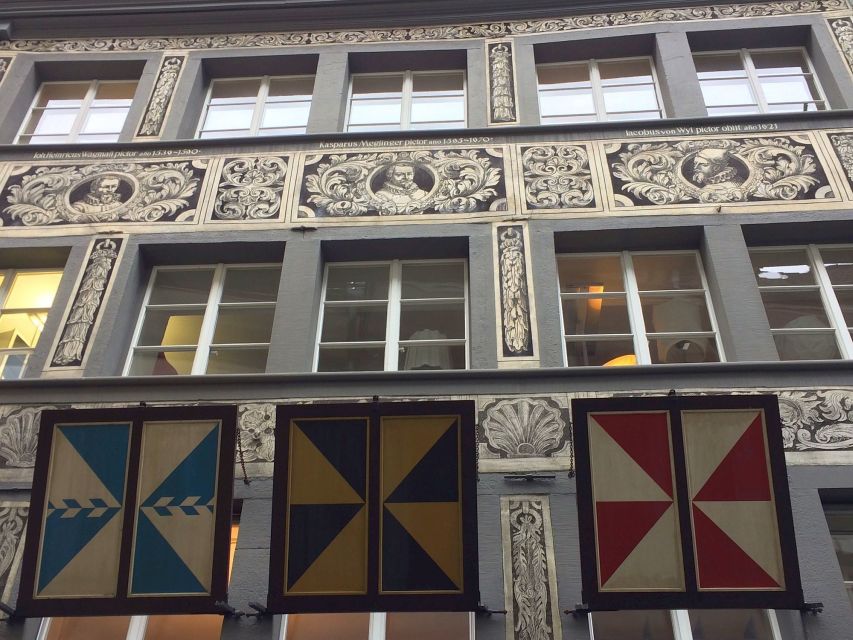
A few steps further, you reach the cantonal government building, the former Ritter’s Palace, and some of the city’s most imposing Renaissance palazzos. This is where the architecture starts to feel like it has weight, not just age.
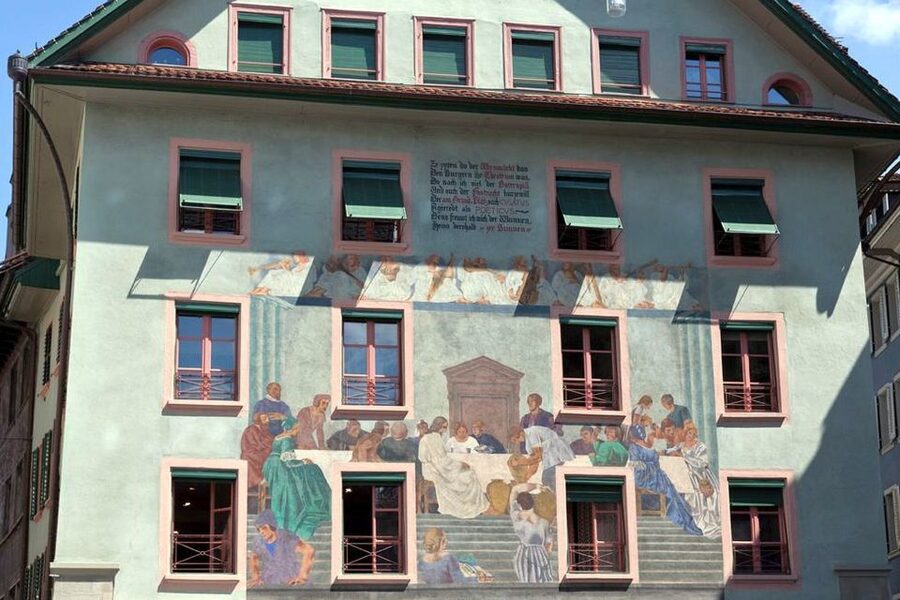
Your guide leads you through the courtyard with the loggias and points out beautiful stone carvings tied to the unfortunate stonemason Hans von Trient. That name detail is exactly the kind of story that changes how you look at carvings. It’s no longer decorative. It becomes a human tragedy rendered in stone.
Keep in mind the inside-access note: the Ritter’s Palace is closed on Saturdays, Sundays, holidays, and special events, so you may not get the full courtyard and interior experience. Even if the inside part is closed, you’ll still learn the significance of what you see from outside, but the impact is generally stronger when you can stand within the spaces the guide describes.
Danse Macabre at Ritter’s Palace, seven paintings explained
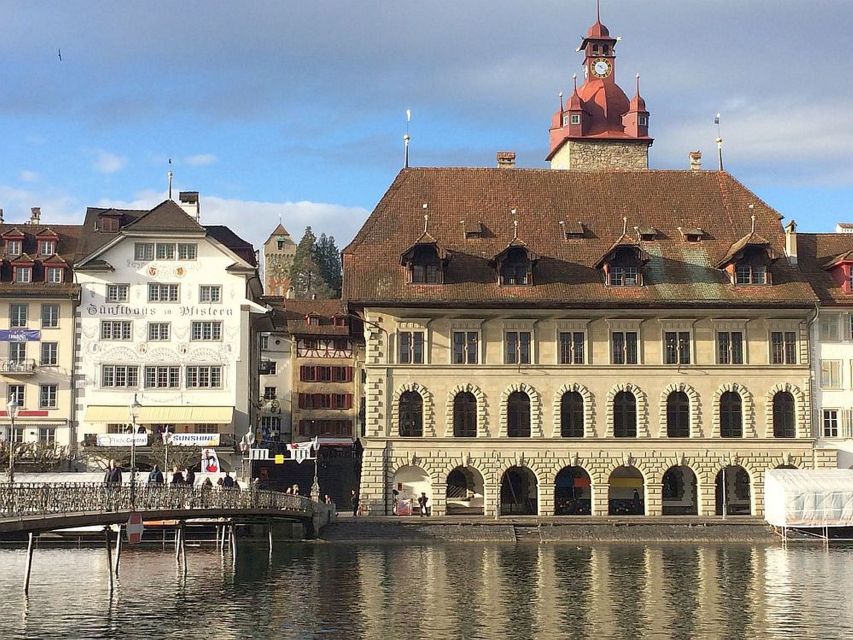
Then comes the presentation of the Dance of Death (Danse Macabre) painting series. You’ll be guided through the seven paintings, created around 1610 by Jakob von Wyl.
What I like about including this isn’t the shock value. It’s that the guide gives you a way to read Renaissance symbolism while you’re still in the building. Dance of Death art can feel confusing if you just spot it from afar. On this tour, it becomes a guided “how to look” lesson.
This stop also gives emotional variety. Earlier you’ve learned about political events and medieval defense. Here, the tone shifts to the moral and cultural idea of mortality that Renaissance artists explored in different ways. It gives your Lucerne visit a deeper, more human layer.
What the guide experience feels like in practice
This tour is offered in English and German with a live local guide, and that matters. Even when you already know a few Lucerne facts, hearing the context out loud helps you connect the pieces as you walk.
I also appreciate that the tour starts with a map briefing at your hotel reception. It’s a small thing, but it reduces decision fatigue. You don’t have to figure out where you are headed next, and you’re less likely to miss a connection between stops.
One note for your own expectations: a guide’s social style can affect the vibe right at the start. In at least one experience, the group launch at the hotel lobby could have been smoother, with the guide not checking quickly enough that everyone was present. Once the walking began, the tour improved. So, for the smoothest start, be ready at the meeting point a few minutes early, and make sure you have the guide confirmation details handy in case timing gets messy.
If you’re booking a German-language run, you might even recognize the name Ralf in the feedback around this tour. That suggests there are guides who aim for thoughtful, detailed explanations, not just rapid facts.
Price of $323 per person, and when it’s worth it
At $323 per person for a two-hour private walking tour, you’re paying for three things: time with a local guide, a structured route across several key sights, and access to interior moments when open.
Is it cheaper than walking on your own? Yes. But it’s also not trying to be the cheapest option. You’re buying a reasoned route that links monuments to political events, architecture to defensive logic, and art to meaning. That’s hard to replicate reliably if you’re doing it solo with only signage.
Where the value can slip a bit is on days when access is limited. If you’re traveling on a Saturday, Sunday, holiday, or special event day, the Ritter’s Palace interior is closed. If you travel between November and April, the Musegg Wall towers are closed for interior visits. On those days you still get the route and explanation, but the “inside” payoff is smaller.
For travelers who want the most value, I’d plan this tour for a weekday and a season when towers are open. If that’s not possible, it still can be a strong use of time, but go in with the mindset of enjoying context more than collecting interior stops.
Opening times and weather: the two real planning constraints
The tour runs in all weather conditions, so you’ll want proper walking shoes and rain protection. Two hours in Lucerne can feel shorter than you expect, but wet cobblestones make it more important to stay stable and comfortable.
For access, watch these two calendar rules:
- Ritter’s Palace is closed on Saturdays, Sundays, holidays, and special events for inside visits.
- Musegg Wall towers are closed between November and April for inside visits.
If you’re deciding between dates, these details matter more than the weather forecast. A drizzle day is annoying but manageable. A closed interior stop changes the tour’s content.
Should you book the Lucerne Classic City Walking Tour?
Book it if you want a guided Lucerne walk that connects landmarks to specific stories, especially the Lion Monument, the Musegg Wall towers and their clockwork, and the Danse Macabre art at Ritter’s Palace. This is a good fit for first-time visitors who want a fast grasp of how the city is organized and why key monuments were made.
Skip or adjust expectations if your main goal is interior access every stop. Depending on your travel day and month, you may not get inside Ritter’s Palace and you may not get inside the Musegg Wall towers. If you travel during the winter closure window or on a weekend, plan for a slightly more exterior-focused experience.
FAQ
How long is the Lucerne Classic City Walking Tour?
The tour lasts 2 hours.
Where does the tour start, and is pickup included?
Your local guide meets you at the reception of your hotel in Lucerne. Pickup is included from all hotels in Lucerne.
What languages are available on this tour?
The tour is offered with a live guide in English and German.
Can I visit Ritter’s Palace and the Musegg Wall towers from the inside?
Ritter’s Palace is closed on Saturdays, Sundays, holidays, and special events, so the interior cannot be visited then. Between November and April, the Musegg Wall towers are also closed for inside visits.
Do I need a bus ticket to get to and from the old town?
You may require a bus ticket from your hotel to the old town and back, if needed. If you stay in a Lucerne hotel, you receive a free public transport ticket for your entire stay at the reception.
What is the cancellation policy?
You can cancel up to 24 hours in advance for a full refund.
Added lately around Lucerne





Walking Tours, compared.
Zurich Walking Tour With Cruise and Aerial Cable Car
Read our review →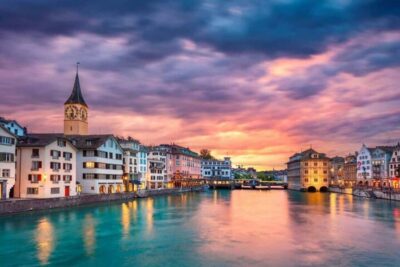
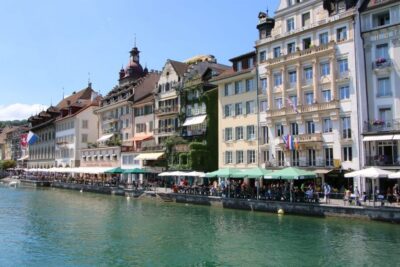

Lucerne Walking & Boat Tour: The Best Swiss Experience
Read our review →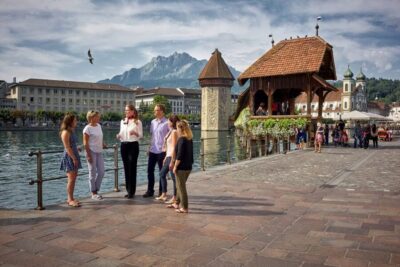
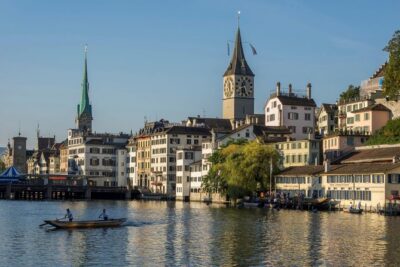
3 in 1: Zurich Walking Tour – Cruise on the Lake – Cable Car Ride to Felsenegg
Read our review →Browse the lists this tour appears in