
Reviewed · BASEL EXPERIENCES
Hydrofoil and surfing on the Rhine behind a motorboat
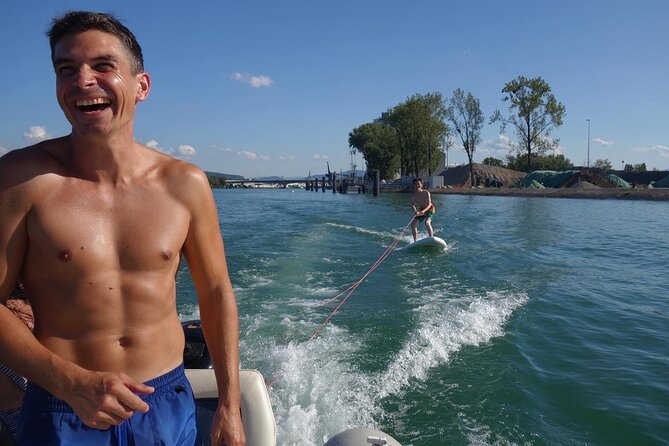
Fly over the Rhine, then chase a wave. This private water-sports session in Basel mixes a hydrofoil training ride with an optional Rhine border triangle cruise, so you get motion, scenery, and real skill-building. I like how they practice after the French border, where the Rhine is wider and easier for learning.
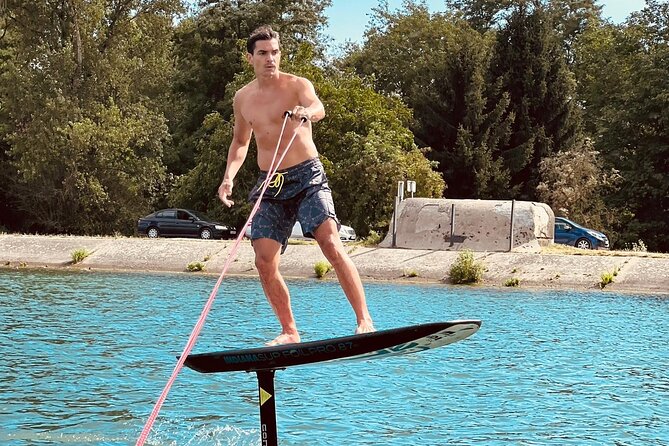
I also love the hands-on setup for first-timers. You start with a foil board that’s built for stability, the foil SUP pro carbon board with an 87-liter volume and a 5’9 length, and the tow-line method is designed to help you get up even at low speed. When learning for the first time, a guide like Milan, who is known for being patient with a 12-year-old beginner, makes this feel much less intimidating.
One drawback to plan around: this experience is weather dependent. If conditions are off, you may need to reschedule or take a full refund, and you’ll want to be ready for a change.
In This Review
- Key highlights you’ll actually care about
- Why Basel’s Rhine makes a great hydrofoil playground
- From the Regioport to the training stretch, what happens in that hour
- Foil SUP behind the boat: how the tow-line technique really helps
- What you should focus on during the first minutes
- Choosing the right board and stance for your experience level
- Surfing behind the motorboat: wakeboarding-like, but different
- Coaching style and how patience makes a huge difference
- Who this session suits, and the fitness reality check
- Price and value: what $96.38 buys you on the Rhine
- Meeting at Westquaistrasse 39, and the convenience factor in Basel
- Weather, water conditions, and your best day plan
- Should you book this Rhine hydrofoil and surfing session?
- FAQ
- How long does the Basel Rhine hydrofoil and surfing session last?
- Where do we meet for the activity?
- Is this activity private?
- What sports do you do on this experience?
- How does foiling work during the session?
- What board is used for beginners?
- Is there a board option for advanced riders?
- What fitness level do you need?
- Do you need good weather?
- Can I get a full refund if I cancel?
Key highlights you’ll actually care about
- Basel start, border triangle route, then a calmer stretch for practice
- Foil SUP learning using a tow line at low speed
- Stability-focused first board: 87-liter volume, 5’9 length
- Surfing behind the boat option, feet not attached to the board
- Private group format, so coaching can stay focused on your crew
Why Basel’s Rhine makes a great hydrofoil playground
Basel is one of those places where a “big river day” can feel like a mini adventure. You’re on the Rhine, and you get that sense of openness right away, not a cramped dock-to-dock routine. The experience also uses the river’s natural change near the border area, so training happens where conditions are more forgiving.
What matters for you is not just the thrill, it’s learning. Foiling is a skill, and skills need space and smoother water. The operator takes you downstream first, then starts practice after you’ve crossed into the stretch where the Rhine is wider and the current is less intense.
That means fewer stressful moments when you’re standing up, shifting your weight, and trying to control the board. You spend less time fighting the water and more time learning how it reacts when the foil starts lifting you.
From the Regioport to the training stretch, what happens in that hour
Your session starts at the Regioport area near the border triangle in Basel. Then you head a little downriver, and an early highlight is simply the ride: you pass the border triangle area before training starts. It’s a nice way to get warmed up without feeling like you’re jumping straight into the toughest part.
A key detail is the sequence. The coaching begins after crossing the French border, because that section is described as having very good conditions: the Rhine is wider and there’s less current. They also aim you outside the channel used by the biggest ships, which helps keep the learning zone calmer.
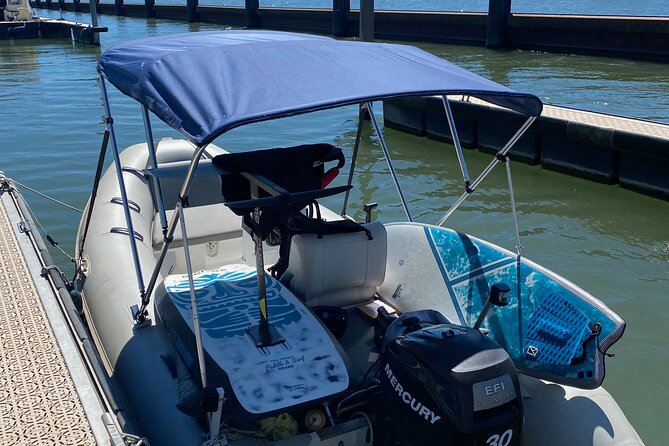
Once you’re in the practice area, the session shifts into skill mode. Foiling training runs first using the tow line method. Then, if you’re doing both, you switch from foil practice to the surfing session, where the sensations are different even though you’re still being pulled by the boat.
The whole thing is about an hour, so it’s not a long expedition. It’s designed for momentum and repetition, not for leisurely sightseeing. If you want a fast, high-energy water-sports hit, that shorter time window is a feature.
A few more departures worth comparing in Basel
- Walking Tour through Basel Old Town
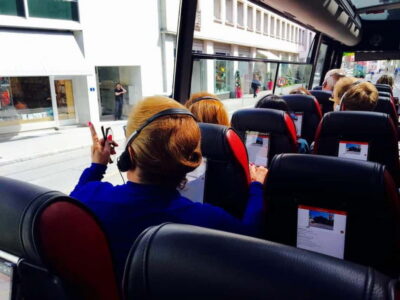
★ 4.7 · 1,040 reviews - Basel: Sightseeing Bus Tour with Audio Guide
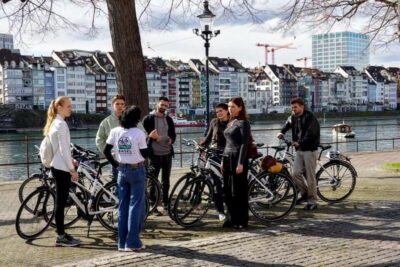
★ 4.1 · 377 reviews - The Best of Basel: Guided Bike Tour
★ 5.0 · 223 reviews
Foil SUP behind the boat: how the tow-line technique really helps
Foiling sounds like magic until you try it. The operator’s approach makes it more manageable: you’re pulled by their boat using a tow line, and the underwater wings lift the board even at low speed. That low-speed start matters because it gives you time to balance before the sensation becomes intense.
When you lift onto the foil, you feel like you’re flying just above the water surface. That mental switch is why this sport hooks people. Your brain has to adjust to the fact that the board isn’t behaving like a normal board floating on top of the water.
Here’s the practical coaching logic you can count on. Standing or kneeling is easier when the board has enough buoyancy and a predictable feel. That’s why the first-time option uses a foil sup pro carbon board from Indiana with a generous 87-liter volume and a 5’9 length. With that setup, you get more stability while you learn the stance and weight shifts.
If you’re more advanced, they switch to a smaller board with less buoyancy. That’s a useful split because it prevents beginners from struggling on gear that’s designed to be lively, and it prevents advanced riders from feeling held back.
What you should focus on during the first minutes
You’ll get the best results if you treat those opening runs like balance training, not like a race. Keep your stance controlled. Stay calm even if it feels strange to float above the water.
Also, pay attention to how the tow line changes your speed. The goal is to find that sweet spot where the foil lifts you smoothly and you can keep your balance steady. Once you do, your confidence rises fast.
Choosing the right board and stance for your experience level
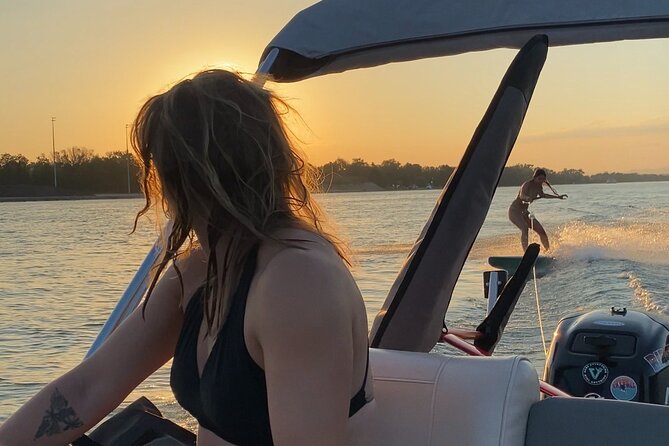
The board details are not random specs. They’re the difference between learning quickly and spending the whole session stumbling.
For first-time riders, the described foil SUP has:
- 87 liters of volume, which helps with buoyancy
- 5’9 length, which adds stability compared to shorter, narrower boards
If you’re new, that larger, stable platform is what lets you attempt standing or kneeling without feeling like the board will slip out from under you. You’re basically buying yourself extra margin while you learn.
If you’re more advanced, the smaller board with less buoyancy shifts the ride. It can feel more responsive, but you’ll need more balance discipline. That’s why the operator matches boards to experience level, instead of handing out the same equipment to everyone.
As for stance, you may start kneeling or standing. The operator frames it as relatively easy to get up with the beginner board. That’s a good sign for people who want an active day without needing advanced athletic skills right away.
Surfing behind the motorboat: wakeboarding-like, but different
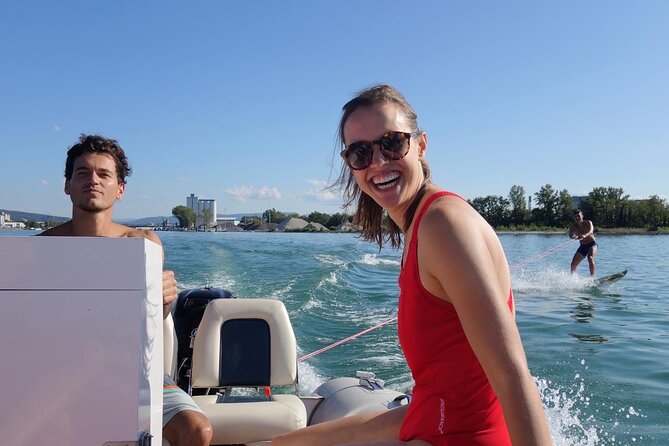
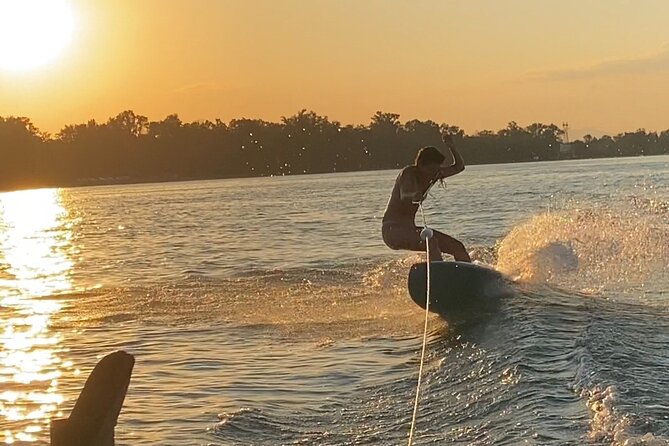
After foiling, the session can switch to surfing. The concept is simple: you’re pulled off the boat on a surfboard, similar to wakeboarding where you hold on to the tow line. The key difference is your feet are not connected to the board.
That changes everything. Without foot straps, you have more freedom, but you also need to keep control. Expect the board to respond quickly to your shifts, and expect that you’ll spend time finding the right angle.
If you like variety, this is the payoff. Foiling gives you that hovering sensation. Surfing gives you a more familiar board-in-water feel, with the extra challenge of pulling dynamics.
The great part is that both activities are part of one flow. You’re not transferring to a whole different operator or location. You stay in the same overall river learning zone, and the boat becomes your consistent “engine” for both sports.
Higher up, or further along the lake:
- Stories of Basel’s Old Town★ 4.5 · 203 reviews
- Basel Farmer’s Market, Cheese, Chocolate & Pastry Tour★ 4.5 · 171 reviews
- Swiss Cheese Tasting Experience | Basel★ 4.3 · 166 reviews
- Basel City Sightseeing Bus Tour★ 3.5 · 104 reviews
Coaching style and how patience makes a huge difference
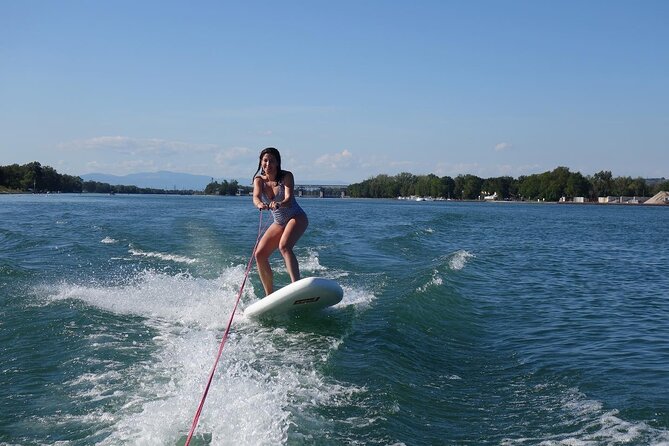
One of the best clues about a good water-sports operator is what happens when someone is learning for the first time. The experience description includes a clear beginner-friendly gear choice, and the guiding approach is known for patience with new riders.
Milan, specifically, is highlighted for being kind and patient with a beginner who was learning a foil board for the first time, including a 12-year-old. That matters because foiling can be intimidating at first. A calm coach helps you focus on technique rather than panic.
You should plan to ask questions early and keep listening during adjustments. If you keep changing everything at once, you’ll feel frustrated. If you make one small correction at a time, you’ll learn faster.
Even if you’ve done water sports before, foiling is its own trick. The best results come when you treat it like a skill lesson, not a stunt attempt.
Who this session suits, and the fitness reality check
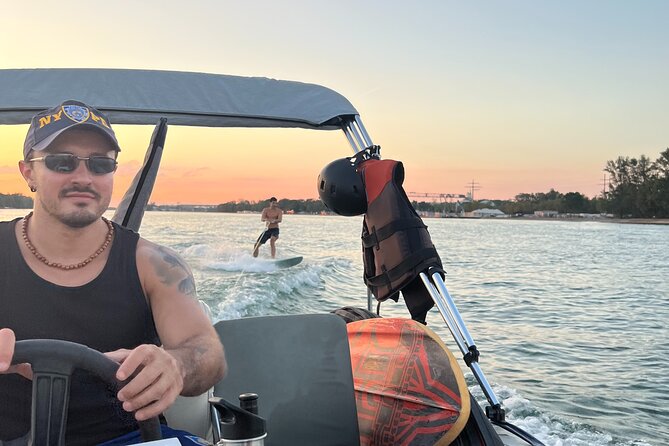
This activity is for people with moderate physical fitness. That’s a fair call. You’ll be standing, balancing, and moving with the motion of the boat and water, even if the tow speed is low.
It’s also private, so it’s tailored to your group. Private format can be a big deal for water sports because the operator can adapt the pace and coaching to your comfort level.
This is especially good if:
- you want to try a new sport, without a huge time commitment
- you like a hands-on lesson format
- you’re traveling as a couple, friends group, or family unit
- you want both foiling and a surf-style option in one outing
If you hate motion or get nervous when you’re not fully in control, you should think carefully. The upside is that the operator practices in a calmer section of the Rhine outside big-ship channels, which can reduce stress. Still, you should go with realistic expectations and a calm mindset.
Price and value: what $96.38 buys you on the Rhine
At $96.38 per person, you’re paying for equipment, a trained coaching setup, boat time, and the use of specific foil boards. The price can feel steep if you’re comparing it to renting a boat for an hour. But you’re not renting. You’re learning a technical sport with guidance and sport-specific gear.
Also, the session is around 1 hour, which compresses the learning into a short, action-packed window. That can be excellent value if you want to try something big without turning it into a half-day commitment.
There’s also a practical value angle: the operator takes you to a learning zone with better conditions, wider river water, less current, and practice outside the main ship channel. That reduces the chance that you lose time to rougher water. In learning sports, minutes matter.
One more subtle value point: it’s described as booked about 29 days in advance on average. That signals demand. If you wait too long, the slots you want might not be available on your preferred date.
Meeting at Westquaistrasse 39, and the convenience factor in Basel
You meet at Westquaistrasse 39, 4057 Basel. The session ends back at the same meeting point, which makes planning simpler, especially if you’re pairing this with a city stroll.
It’s also listed as near public transportation. That matters because you want to arrive without a parking headache. Basel can be easy, but water activities often make timing tight, so transit access is genuinely useful.
You’ll have a mobile ticket. That’s one less thing to manage on a day when you might be changing plans if weather shifts.
Because it’s private and only your group participates, you’re not sharing attention with a huge mixed crowd. That’s not a small detail in water sports, where the coach-to-learner ratio affects how fast you progress.
Weather, water conditions, and your best day plan
This experience requires good weather. If conditions are poor, you’ll be offered a different date or a full refund. That’s important because foiling and surfing rely on stable conditions to keep learning safe and smooth.
Before you go, check the forecast and avoid planning anything that requires rigid timing right before or after. If your session shifts, you’ll want flexibility.
On the water, the operator also builds the safety logic into the location choice. They start practice after the French border where the Rhine is wider and there is less current. They also practice outside the shipping channel of big ships. That combination usually means fewer disruptive water factors while you’re learning.
Still, the sport involves balance, water contact, and a tow-line pulling force. Dress for the water, be ready to get wet, and treat the first few runs as a technique session, not as a performance.
Should you book this Rhine hydrofoil and surfing session?
Book it if you want a real step into two water-sports experiences in one short outing: hydrofoil foiling and surf-style towing. The learning-friendly setup, including the beginner-stable 87-liter, 5’9 board and low-speed tow-line technique, makes this feel approachable even if you’ve never done foiling before.
Consider passing or adjusting expectations if you’re not comfortable with balance-based sports or you know your body does not handle motion well. Also, go in with weather flexibility, because good conditions are required.
If you’re traveling to Basel and want something more active than another museum stop, this is a strong fit. It’s hands-on, coached, and quick enough to fit into a travel schedule without turning your whole day into logistics.
FAQ
How long does the Basel Rhine hydrofoil and surfing session last?
It lasts about 1 hour.
Where do we meet for the activity?
The start point is Westquaistrasse 39, 4057 Basel, Switzerland.
Is this activity private?
Yes. It’s a private tour or activity, and only your group participates.
What sports do you do on this experience?
You can try hydrofoil and also surfing behind the motorboat.
How does foiling work during the session?
You’re pulled by the boat with a tow line. Underwater wings lift the board, so you seem to be flying above the water surface.
What board is used for beginners?
The beginner option is a foil sup pro carbon board from Indiana with 87 liters of volume and a length of 5’9.
Is there a board option for advanced riders?
Yes. For more advanced participants, there is a smaller board with less buoyancy.
What fitness level do you need?
A moderate physical fitness level is recommended.
Do you need good weather?
Yes. This experience requires good weather. If it’s canceled due to poor weather, you’ll be offered a different date or a full refund.
Can I get a full refund if I cancel?
Yes, you can cancel for a full refund if you cancel at least 24 hours before the experience’s start time. Confirmation is received at the time of booking.
Added lately around Basel




Basel Experiences, compared.



Basel Farmer’s Market, Cheese, Chocolate & Pastry Tour
Read our review →

Mt. Pilatus & Lake Lucerne Cruise Small Group Tour | From Basel
Read our review →Browse the lists this tour appears in