

Reviewed · HISTORICAL TOURS
Geneva’s Time Capsule: Private tour A Historic Journey
Geneva has a way of telling stories. This private, time-capsule walk strings together major sights in about two hours, with free-entry stops and a guide who keeps the explanations human, not textbook.
I especially like how guides such as Olga and Shiva answer questions and translate big events into something you can actually picture while standing in the street. You end with a clearer sense of where Geneva’s ideas came from, and where they still show up today.
The only real drawback is the pace. With roughly 20 to 30 minutes per stop, you will need to be comfortable moving on quickly, even if you want to linger for one more photo.
In This Review
- Key highlights to look for
- A 2-hour private route through Geneva’s historic landmarks
- Starting at Musée d’Art et d’Histoire (MAH): architecture first, then meaning
- Cathedral Saint-Pierre Genève: religious roots and city-view angles
- Reformation Wall: the ideas that changed Geneva’s direction
- Grand Théâtre de Genève: an exterior lesson in civic pride
- L’Usine ending: finishing in Geneva’s alternative arts scene
- The guides matter: Olga and Shiva bring Geneva to life
- How the schedule and free-entry stops affect your day
- Price and value: what $503.93 per person buys you
- Who this tour fits best (and who might want something else)
- Should you book Geneva’s Time Capsule?
- FAQ
- How long is Geneva’s Time Capsule?
- Where does the tour start and where does it end?
- Is this a private tour?
- What language is the tour offered in?
- Do I need admission tickets for the stops?
- Do you provide a mobile ticket?
- Can I cancel for a full refund?
- Is the tour easy to reach using public transportation?
- Is the tour suitable for most people?
Key highlights to look for
- Private group only means you can ask your questions without crowd pressure
- Free-entry stops help you spend time listening instead of budgeting time for tickets
- Reformation Wall + Saint-Pierre give you Geneva’s turning points in one compact loop
- Opera house exterior time lets you appreciate design and civic pride without rushing indoors
- Finish at L’Usine so you can continue into arts culture right after the tour
A 2-hour private route through Geneva’s historic landmarks
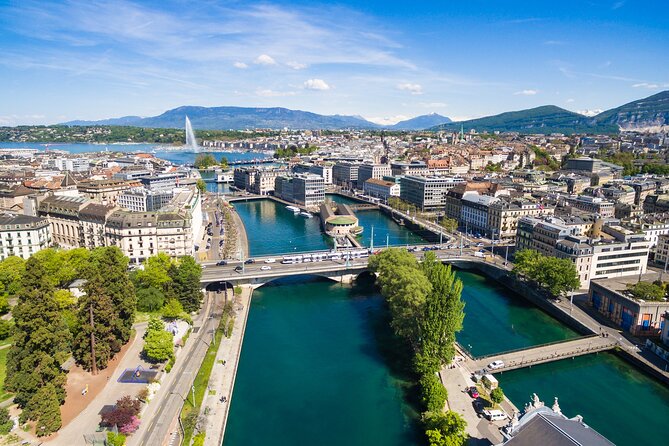
This is a focused, walking-style tour that feels like a guided “then and now” map. Instead of trying to cover every corner of Geneva, you hit five meaningful places connected by one theme: how the city became the Geneva people recognize today.
The big win is that the tour is private, so it adapts to your pace and interests. If you want more time on the architecture or want to zoom in on the religious or political ideas, you have the space to do that. And since the tour is offered in English, you get full context without relying on sketches or guesswork.
You should also know what kind of “touring” this is. Several stops are mainly exterior viewing, which can be a positive if you prefer fresh air and street-level understanding. It is not a long museum marathon. Plan for a brisk walk between sites and about 20 to 30 minutes at each stop.
Starting at Musée d’Art et d’Histoire (MAH): architecture first, then meaning
You begin at Musée d’Art et d’Histoire, MAH, at Rue Charles-Galland 2. The plan here is simple: take in the building’s elegance from outside and let your guide frame why this place matters to Geneva’s identity as a city that values culture and learning.
Even from the street, MAH signals something important. Geneva is not only about lakes and money. It’s also about institutions that collect, preserve, and interpret human stories, from art to artifacts to historical themes.
The practical advantage is timing. You get your first orientation moment fast, about 20 minutes. That helps you settle in early and understand the route you are about to follow. If you are arriving in Geneva and trying to get your bearings without thinking too hard, this opening stop does the job.
One small note: since you are starting with an exterior look, you will not get the same satisfaction as someone who wants a deep interior museum visit. If MAH’s collections are your number-one interest, you might want to schedule a separate museum time later, after this tour gives you the big picture.
More History Tours in Geneva
- Highlights of Geneva: Dark History Quest Experience
★ 4.0 · 16 reviews - Gruyere Village Historic Full Day Tour
★ 5.0 · 4 reviews
Cathedral Saint-Pierre Genève: religious roots and city-view angles
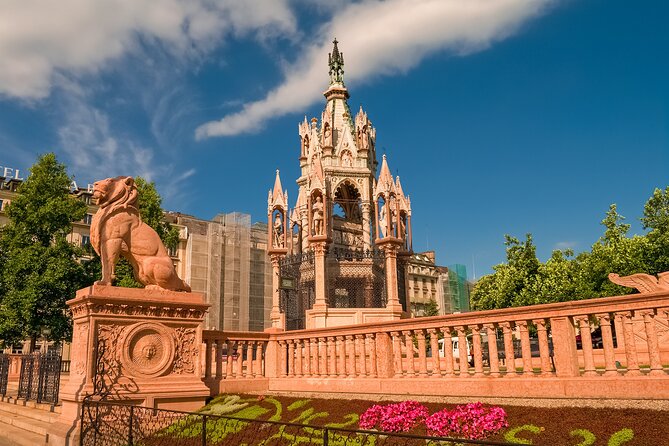
Next up is Cathédrale Saint-Pierre Genève. Your time here is about 30 minutes, with the focus on learning the cathedral’s religious significance and appreciating the setting around it.
Saint-Pierre is one of those places where Geneva’s “serious side” becomes visible fast. The building and the surrounding area help you connect the dots between belief, civic life, and how the city shaped itself over time. Your guide also points out elements that make it easier to understand what you are looking at, instead of just taking generic photos and moving on.
This stop is also a good place to slow down for a moment. Even if you are not climbing anything, the cathedral area tends to give nice sightlines across parts of the city. Your guide’s job is to show you the viewpoints that make the story feel real, not abstract.
The drawback to keep in mind: because the tour is timed, you might not get long, quiet contemplation. If you want extended time for sketching or sitting in the area without moving, you will likely need to add personal time after the tour.
Reformation Wall: the ideas that changed Geneva’s direction
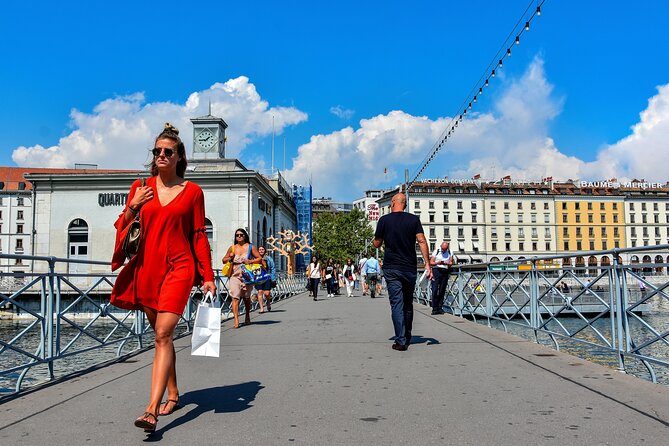
After the cathedral, you stand at the Reformation Wall, with about 20 minutes here. This is a memorial to key figures of the Reformation movement, and it highlights Geneva’s major role during that period.
What I like about this stop is that it turns history into something you can read with your feet. Instead of just hearing names and dates, you see how public space can carry political and religious messages. The Reformation Wall makes it easier to understand why Geneva’s identity is so tightly connected to ideas about faith, governance, and community.
If you enjoy “how it happened” explanations, this part is usually where the tour clicks. It gives you context for later cultural sites too, because the city’s choices were not only artistic. They were also ideological.
Keep your expectations realistic. This is not a museum-style exhibition. It is a monument stop, so the value comes from your guide’s explanation and the time you spend looking closely enough to recognize the key themes.
Grand Théâtre de Genève: an exterior lesson in civic pride
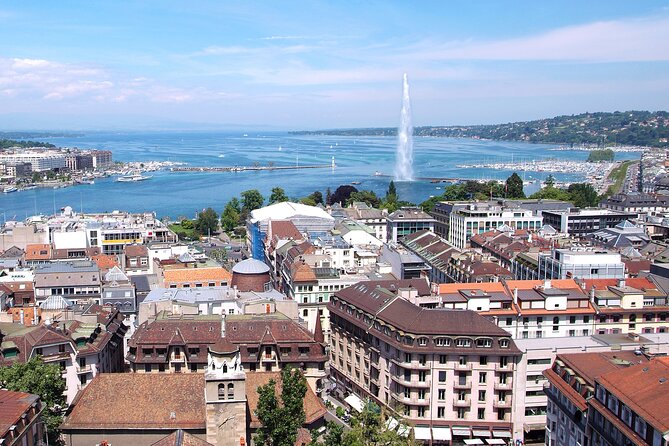
Then you head to the Grand Theatre de Geneve for about 20 minutes. You are admiring the architecture of Geneva’s premier opera house, and that makes sense because the building itself communicates a message.
Theatre buildings are never only about performance. They also reflect what a city wants to be known for. In Geneva, the opera house is part of the story of a place that invests in culture and public life.
You get time to appreciate details from outside, which is perfect if you are short on time but still want to understand the city visually. You can also use this stop as a gentle bridge from the heavier Reformation and cathedral themes to a more creative, cultural side of Geneva.
If you are the kind of person who loves interiors, you might find yourself wanting more. But since the tour is structured for walking efficiency, that urge is not a failure of the tour. It’s a signal to plan a follow-up outing if you want to go inside on your own schedule.
L’Usine ending: finishing in Geneva’s alternative arts scene
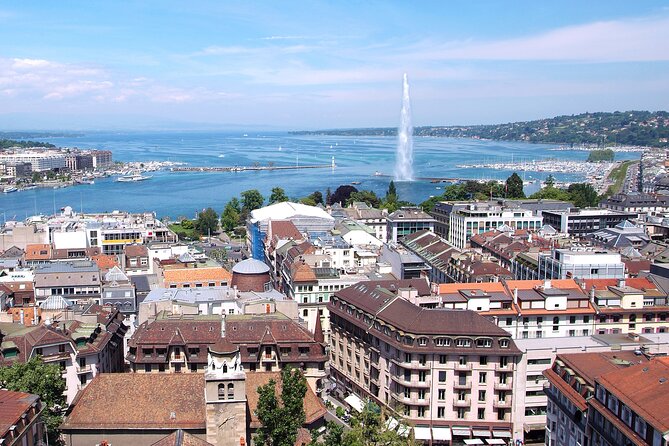
The tour concludes at L’Usine, at Pl. des Volontaires 4, with about 30 minutes. This is one of the most practical and fun parts of the route because it gives you a clear “what to do next” zone right after you finish.
L’Usine is set in a former factory and has become a lively center for contemporary arts and entertainment. Ending here helps you shift from historical messaging to today’s creative energy without having to travel across the city again later.
I like how this finish point supports smart trip planning. You are not just leaving with facts. You are leaving with a direction. After a history-heavy tour, it’s nice to land somewhere that feels active and modern.
If you have evening plans, you can use L’Usine as a starting hub. If you have extra time, it is the kind of place where you can wander at a comfortable pace, then decide whether you want to see something specific or just enjoy the atmosphere.
Higher up, or further along the lake:
- Geneva: 50-Minute Lake Geneva Cruise★ 4.3 · 4,063 reviews
- Award-Winning Geneva Chocolate &Old Town Tour with Boat Ride (3h)★ 5.0 · 3,721 reviews
- Geneva: Scenic Lake Cruise with Snacks and Wine★ 4.4 · 1,503 reviews
- Chamonix & Mont Blanc Panoramic Sky-Glass Bus Guided Day Trip★ 4.0 · 1,324 reviews
The guides matter: Olga and Shiva bring Geneva to life
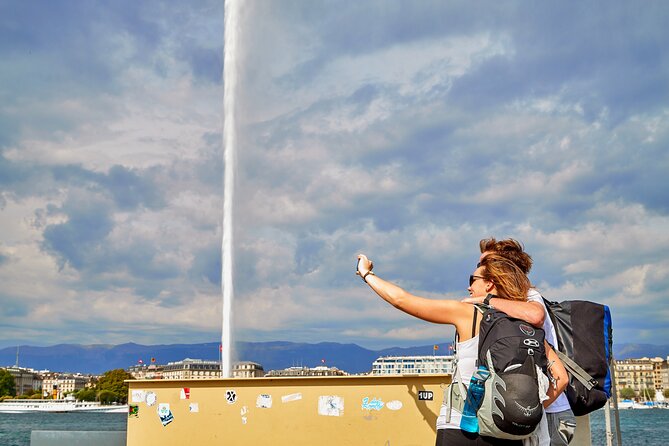
A lot of walking tours sound good on paper. What makes this one special is the human connection. People who have done it with guides such as Olga and Shiva often highlight the same strengths: they are clear, they answer questions, and they make the city feel more understandable while you are standing in place.
Another useful detail from real experience: one guide, Shiva, was accommodating when someone had to reschedule due to illness. That matters because it signals service that respects your time and your health. Travel plans do not always go smoothly, so it helps to know the tour can handle changes responsibly.
If you want a tour that feels like a conversation, not a lecture, this is the style to choose. And if you are traveling with multiple interests, history plus architecture plus culture, the guiding approach helps keep everything connected.
How the schedule and free-entry stops affect your day
The whole loop takes about 2 hours total, with five stops timed at roughly 20 to 30 minutes each. That makes it a great option when you want structure but still want breathing room later.
Here’s why the timing matters for value: you get the highlights of Geneva’s major eras without losing half a day to ticket lines or museum logistics. Each stop notes free admission, so you should not need to buy separate entry tickets for the listed sights. That is a genuine benefit, especially if you are traveling with a tight schedule or trying to keep daily costs predictable.
The route also starts near public transportation and stays easy to reach. That helps if you are bouncing between neighborhoods or arriving from the station earlier in the day.
The flip side is that the tour is not designed to be slow and lingering. If your ideal pace is 60 minutes at one cathedral stop plus time for a long sit-down break, you may feel rushed. In that case, I’d use this as a first pass to learn what matters, then return later on your own for deeper time.
Price and value: what $503.93 per person buys you
At $503.93 per person, this is not a bargain-basement walking tour. But it also is not trying to be. The value comes from three places you can actually feel:
First, it is private, so you are paying for your own guided attention rather than sharing the experience with a stream of strangers. Second, the itinerary is built around major Geneva landmarks and a modern cultural finish at L’Usine, all within about 2 hours. Third, the stops are marked with free admission, which helps you avoid extra site costs.
Whether it is a good deal for you depends on how you travel. If you like independent exploration and you only want a light intro, this price might feel steep. If you want a focused historic narrative with a guide who answers questions and sets you up for the rest of your trip, the per-person cost becomes easier to justify.
My practical take: this is a strong “first day in Geneva” choice. One guide recommendation from the experience notes even points out this timing, because you end with smart ideas for what to do next on your own. If you are coming for a short stay, that leverage matters.
Who this tour fits best (and who might want something else)
This works well if you:
- Want a history-and-architecture route that does not require museum endurance
- Prefer a private, question-friendly format
- Are excited by the Reformation era and Geneva’s religious and civic story
- Like the idea of ending in an arts-focused area so you can keep exploring right after
It may not be ideal if you:
- Want a long interior museum experience at MAH or deep guided time inside the cathedral
- Hate structured timing and need lots of free, slow wandering built in
- Are only interested in one small theme and feel annoyed when a route covers several eras quickly
If you are a first-time visitor, this tour can help you build a mental map fast. If you have been to Geneva before, the Reformation Wall and the shift to L’Usine can still add new angles without requiring a full day commitment.
Should you book Geneva’s Time Capsule?
I’d book it if you want a compact, guided walk that connects Geneva’s big turning points to what you can still feel in the city streets. The private format, the English guidance, and the way the route moves from MAH to Saint-Pierre, then to the Reformation Wall and the opera house, ending at L’Usine, creates a tidy story arc.
Skip it or plan something else if you want lots of interior time or you know you will spend every stop at half an hour plus. This tour is designed for motion, not lingering.
If you can fit it early in your trip and you enjoy learning while looking at real buildings and monuments, this one is a solid investment. You walk away with clearer context, plus a sensible place to continue exploring after the tour ends.
FAQ
How long is Geneva’s Time Capsule?
It lasts about 2 hours.
Where does the tour start and where does it end?
It starts at Musée d’Art et d’Histoire, Rue Charles-Galland 2, 1206 Genève, Switzerland, and it ends at L’Usine, Pl. des Volontaires 4, 1204 Genève, Switzerland.
Is this a private tour?
Yes. Only your group participates.
What language is the tour offered in?
The tour is offered in English.
Do I need admission tickets for the stops?
The tour details list free admission for the stops included in the itinerary.
Do you provide a mobile ticket?
Yes, a mobile ticket is included.
Can I cancel for a full refund?
Yes. You can cancel up to 24 hours in advance for a full refund.
Is the tour easy to reach using public transportation?
Yes. It is near public transportation.
Is the tour suitable for most people?
Most travelers can participate.
Added lately around Geneva






Historical Tours, compared.

Highlights of Geneva: Dark History Quest Experience
Read our review →
Chocolate, Art, and History walking tour of Zurich
Read our review →
Schwyz: Museum-Ticket Forum of Swiss History Schwyz
Read our review →Browse the lists this tour appears in