
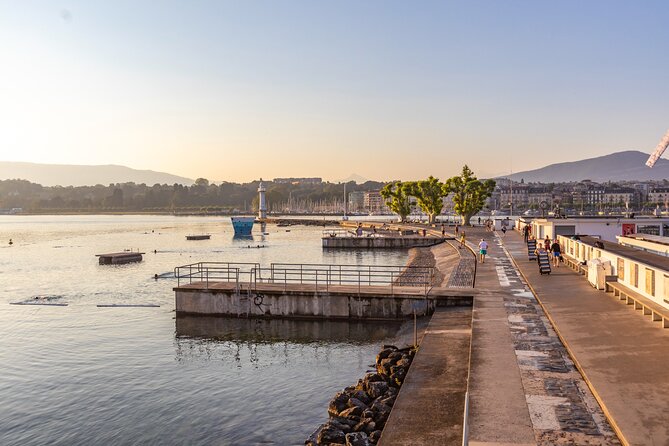
Reviewed · WALKS WITH A LOCAL GUIDE
Explore the Instaworthy Spots of Geneva with a Local
Geneva looks different when you shoot it right. This 90-minute photo walk helps you find the most photogenic corners of the city with a local guide and practical picture tips, from L’Usine street scenes to UN Geneva symbolism. I like that it keeps the group small, so the guide can adjust to your pace and photo goals.
Two things I really like: you get hands-on photography coaching along the way, and you visit a mix of places that most people miss when they rush through Geneva. In particular, I love that the route combines everyday city textures with landmark storytelling, including the Broken Chair and the Alley of the Flags. One thing to keep in mind is that some parts of the UN area can involve ticketed entry, and transport passes may be needed, so plan ahead.
From what I’ve seen in the guide experiences, people often get top service from guides like Jurabek (known for being on time and patient with questions) and Mike (clear history and strong guidance). Still, the timing is tight, so if you expect a slow, extended UN visit, you may feel rushed if you hit ticket delays or long questions.
In This Review
- Key highlights you will feel fast
- How the 90-minute Geneva photo plan stays personal
- The start at Bâtiment des Forces Motrices, and what to do before you go
- L’Usine: street culture frames your photos in the first stretch
- Smurfs Buildings: how to shoot playful color without it looking flat
- Pâquis Centre: faces, community, and real city atmosphere
- Broken Chair and the UN forecourt: symbolism with time pressure
- Alley of the Flags: your composition practice in a single strong line
- Photography coaching that makes the whole walk better
- Transport, tickets, and what can change the route
- Value check: is $136.11 a smart use of your Geneva time?
- Who should book this Geneva local photo walk?
- Should you book? My practical take
- FAQ
- How long is the Geneva photo tour?
- How many people are in the group?
- Where does the tour start and end?
- Do I get a ticket on my phone?
- What’s included, and what’s not?
- Is UN Geneva entry included?
Key highlights you will feel fast
- Small group size (limited to 6, with a maximum of 8) keeps the tour flexible and photo-focused
- Local-led route built around Instagram-worthy stops, not just a standard sightseeing loop
- Golden-hour timing is specifically worth aiming for if you book an afternoon slot
- Street art and color architecture stops, including L’Usine and the Smurfs Buildings
- Meaningful UN symbolism at the Broken Chair and the Alley of the Flags
- Photo tips that match real spots, so your pictures improve immediately
How the 90-minute Geneva photo plan stays personal
This tour is designed for fast, satisfying results. It runs about 1 hour 30 minutes, and because the group is capped at 6 (maximum 8), you are not fighting for attention or camera angles.
The guide also adapts to your walking pace and interests, and that matters in Geneva, where a few blocks can feel like a lot when you are stopping every minute. You also get personalised recommendations, which usually means more than just pointing at a view, it means advising how to frame it.
For price, think of the $136.11 per person as paying for three things at once: a local who knows where to stand, real time photography guidance, and a route that strings together photogenic spots efficiently. If you were to do it alone, you would still be walking between locations, but you would miss the “where exactly” part and the picture tips.
One more detail that affects how it feels: the tour notice and what you bring matters. In one experience, a guide indicated you might need a bus or tram pass to reach spots, and that person had not been told beforehand, which cut into the plan. Don’t assume transit is covered, just because the meeting points are transit-friendly.
The start at Bâtiment des Forces Motrices, and what to do before you go
You begin at Bâtiment des Forces Motrices, Pl. des Volontaires 2, 1204 Genève, and the tour ends at UN Geneva, Palais des Nations, 1211 Genève, at the Alley of the Flags area. That start and end setup is handy because you get a logical progression from city culture toward the UN core.
You’ll likely get a mobile ticket, and confirmation comes at booking time. I recommend checking your phone battery before you arrive, because photo tours live and die by small logistics like that.
Because you are near public transportation, you can reduce stress by arriving a little early and doing a quick scout of your surroundings before the group meets. Also, with only 90 minutes, being late can shrink the time you have for the best light.
More Local Guide Walks in Geneva
- Geneva: Private custom tour with a local guide
★ 4.7 · 75 reviews - Geneva: Private Walking Tour with a Local Guide
★ 4.8 · 40 reviews - Geneva Private Walking Tour with a Local Guide
★ 5.0 · 17 reviews
L’Usine: street culture frames your photos in the first stretch
The first stop is L’Usine, a hub for alternative arts and music. This is where you start building variety in your feed, because you’re not just photographing official landmarks, you’re capturing the city’s creative side.
In practical terms, places like L’Usine help you create images with texture. You can look for layered backgrounds, sign details, walls with color, and street-level compositions that feel lived in. It’s also a good place to experiment early, because once you lock onto the angles, your later shots get easier.
If you care about photos that feel current rather than postcard-perfect, this is a strong opener. It sets the tone that the tour is not only about pretty scenery, it’s about how to see.
Smurfs Buildings: how to shoot playful color without it looking flat
Next you’ll see the Smurfs Buildings, famous for their bright, characterful facade. This is one of those spots where people either get a great shot or a disappointing one, depending on where they stand.
To get better results, think about depth and edge lines. Step back if you can, look for a perspective that shows more than one facade section, and try to include a foreground element like street detail to keep the image from feeling like a single flat wall.
Geneva’s light can be tricky, especially when shadows cut across glossy surfaces. If the weather is bright, shift your angle slightly rather than trying to crop your way out of hard glare. A local guide’s on-the-spot advice helps here, because they can react to what you’re seeing in real time.
Pâquis Centre: faces, community, and real city atmosphere
The tour then moves into Pâquis Centre, known as a mix of communities and a lively meeting point. This stop is valuable because it adds human scale to your set of photos.
For better results here, don’t only aim your camera at the biggest signage. Look for small gestures: people moving through the space, color contrasts in storefronts, and micro-scenes that tell you the place is active right now. If you’re shooting street-style photos, this area gives you material.
One advantage of having a guide is that you can ask quick questions about composition while you’re standing there, instead of trying to solve it after you get home. In a short tour like this, that kind of “on the spot” correction is the difference between okay and great.
Broken Chair and the UN forecourt: symbolism with time pressure
You’ll reach the Broken Chair, a poignant peace and disarmament symbol placed facing the UN. This part of the route is a big reason to take the tour, because it turns a photo stop into a story stop.
When you photograph something symbolic like this, you want a frame that clearly shows the message while still feeling natural. Try stepping back for context, then move closer for a detail shot that focuses on texture or the shape of the symbol. If the light is harsh, you might prefer overcast moments, but you can also work with the contrast if you keep the chair as the main subject.
Here’s the practical consideration: access to UN buildings can involve ticketing. In one experience, the guide reportedly showed the entrance area but the group could not go into the UN for a full visit without tickets arranged well in advance. That person also felt the UN portion didn’t match expectations, and the tour felt a bit rushed.
So set your expectations clearly: the photo tour includes the exterior experience and iconic UN-facing locations, and entry into UN buildings is not included. If you want interior time, you should plan it separately and treat this tour as the fast, meaningful photo introduction.
Higher up, or further along the lake:
- Geneva: 50-Minute Lake Geneva Cruise★ 4.3 · 4,063 reviews
- Award-Winning Geneva Chocolate &Old Town Tour with Boat Ride (3h)★ 5.0 · 3,721 reviews
- Geneva: Scenic Lake Cruise with Snacks and Wine★ 4.4 · 1,503 reviews
- Chamonix & Mont Blanc Panoramic Sky-Glass Bus Guided Day Trip★ 4.0 · 1,324 reviews
Alley of the Flags: your composition practice in a single strong line
The final stop is the Alley of the Flags at UN Geneva within the Palais des Nations area. It’s a straightforward visual idea, and that’s why it’s so effective for photos: the flags create a repeating pattern that pulls your eye down the path.
To make this area work for your camera, keep an eye on leading lines. Stand far enough back to show multiple flags in a rhythm, then shift to side angles so your perspective makes the alley feel deeper. A local guide’s coaching can help you avoid the common mistake of focusing only on one flag, when the power of the shot is the sequence.
This is also a great place to slow down, because it’s the kind of location where your framing matters more than the “moment.” If you’re rushing, you’ll end up with safe but less interesting photos.
Photography coaching that makes the whole walk better
The tour is sold as an Instagram feed upgrade, but the real value is that the guide offers tips that you can apply immediately. You’re not just collecting images, you’re learning how to look.
What that looks like in practice:
- You get suggestions for where to stand for stronger perspective.
- You’re guided to think about foreground, midground, and background.
- You can ask quick questions while you’re in place, not after.
If you’re going with friends, this is also a good way to prevent the usual photo tour chaos. The guide can take a moment to help place people and adjust angles, which saves you time and lowers the chance of blurry, awkward group shots. One positive review even mentioned the guide helping with pictures directly along the way.
Also, for same-day bookings, the tour specifically encourages you to catch the afternoon golden hour. Golden hour matters because it softens shadows and adds warmth, which is especially helpful at color-heavy spots like the Smurfs Buildings. If your schedule allows, picking an afternoon slot often gives you more forgiving light and better mood.
Transport, tickets, and what can change the route
This is the one part you should treat as “read this twice” before you go. The tour does not include entry tickets for transportation, museums, and monuments, and your ability to move smoothly can depend on what you already have.
In at least one experience, the guide indicated you needed a bus or tram pass to access the spots, and that created an avoidable problem. In another experience, the UN portion reportedly required tickets well in advance for a fuller visit, and the tour notice did not set clear expectations about needing them.
What this means for you:
- Bring or plan for local transit, just in case the day’s route requires it.
- Decide whether you only want the iconic outdoor UN photo stops, or whether you want to go inside the UN spaces too. If you want inside access, arrange tickets separately.
The itinerary can also vary with weather conditions, so don’t schedule another demanding activity immediately after. Geneva weather changes fast, and photo tours depend on light and visibility.
Value check: is $136.11 a smart use of your Geneva time?
At $136.11 per person for about 90 minutes, you’re paying for more than walking. You’re paying for a local who can guide you through a curated set of stops and teach you how to capture them.
This is best value if you:
- want help getting better photos without spending hours studying camera settings,
- prefer a route that’s optimized for visuals rather than a checklist,
- like small-group attention rather than a big crowd.
It may feel less valuable if you:
- mainly want the UN interior tour and expect that to be included,
- expect transit and entry costs to be handled,
- hate quick pacing and short stops.
The group size being small is the strongest argument for the price. When you pay for a guide, you want guidance, not just a walking companion. The reviews that rate the experience highly often mention being able to ask many questions and getting clear, patient explanations from guides like Jurabek and Mike.
Who should book this Geneva local photo walk?
Book it if you like a photo-first city experience and you want a local perspective on where to stand and how to frame. It also suits you if you’re traveling with a group of friends who want a guided plan but still want to move at a comfortable pace.
You might skip it if you already know exactly where you want to go, you don’t want to plan transit or ticketing, or you’re hoping for a long, in-depth UN building visit. Remember, this is a photo tour with a fixed timeframe.
The tour is listed as available to most people, and it allows service animals. Since the tour involves walking between multiple sites, if you have mobility limits, it’s smart to verify fit with the provider before booking.
Should you book? My practical take
If your goal is a strong Instagram set without wasting time, this tour is a solid choice. The combination of street culture (L’Usine), colorful architecture (Smurfs Buildings), and symbolic UN stops (Broken Chair, Alley of the Flags) gives you variety in one compact route.
My main caution is logistics: bring whatever you need for public transport, and don’t assume UN interior access is part of the package. If you treat it as an exterior photo experience with meaningful context, you’ll likely feel like your money bought you something real, not just a walk.
In short: if you want better photos, a local guide like Jurabek or Mike can be a big difference, and the small-group format is the kind of value Geneva tours rarely offer.
FAQ
How long is the Geneva photo tour?
It’s about 1 hour 30 minutes.
How many people are in the group?
The tour is kept intimate, with a group size limited to 6, and it can include up to 8 travelers.
Where does the tour start and end?
It starts at Bâtiment des Forces Motrices, Pl. des Volontaires 2, 1204 Genève, and ends at UN Geneva, Palais des Nations (Alley of the Flags), 1211 Genève.
Do I get a ticket on my phone?
Yes, the tour offers a mobile ticket, and you receive confirmation at booking time.
What’s included, and what’s not?
Included are a local guide, a small group experience, and personalised recommendations. Not included are personal expenses, and entry tickets for transportation, museums, and monuments.
Is UN Geneva entry included?
The route includes the Broken Chair and the Alley of the Flags at UN Geneva, but entry tickets are not included, and you may need to arrange tickets in advance if you want to go inside UN buildings.
Added lately around Geneva
Walks with a Local Guide, compared.
Bern Walking Tour: Explore Top Sights & Hidden Gems
Read our review →
Private Walking Tour with a Local Guide (Private tour)
Read our review →Browse the lists this tour appears in