
Reviewed · WALKING TOURS
Basel Private Walking Tour with a Professional Guide
Basel reveals itself best on foot. I love the quick shift from Tinguely Fountain to Elisabethenkirche, and the wow factor of Münster Cathedral’s Romanesque-Gothic mix. One possible drawback is the route is packed into about 2 hours, so comfy walking shoes matter.
This is a private guided tour for your group only, offered in English, with a mobile ticket for smoother entry at meeting points and stops. Guides can also adjust things on the spot, which is handy if your group wants more photo time or extra context instead of speed-walking.
You’ll also spend real time in the city center, so if you’re looking for museum tickets or indoor exhibits, this is more about streets, façades, and viewpoints than ticketed attractions. With that said, the city sights here are exactly the kind that reward a good guide.
In This Review
- Key things that make this Basel walk special
- Why a Basel private walk works so well in 2 hours
- Meeting at Tinguely Fountain, the city’s playful kickoff
- Elisabethenkirche and Rittergasse, tracing Basel’s layers of time
- Münster Cathedral and Münster Pfalz, Rhine views behind the postcard
- Rathaus and Marktplatz, civic power with a Roman footnote
- The Sarasin Blue and White House, business history by the river
- Middle Bridge and Barfüsserplatz, finishing with Rhine history and transit sense
- Pace, comfort, and what to wear for this stone-and-stairs route
- Price and value for $448.58 per group up to 15
- Who this tour suits best (and who might prefer another plan)
- Should you book this Basel private walking tour?
- FAQ
- Where does the tour start?
- How long is the Basel private walking tour?
- What language is the tour offered in?
- Is this a private tour?
- How big is the group?
- What’s included in the price?
- Are entrance fees included?
- Is gratuity included?
- Is the meeting point near public transportation?
- Can I cancel for a full refund?
- Is the tour open to most travelers?
Key things that make this Basel walk special
- Private, small group feel (up to 15), with an English-speaking local guide
- Tinguely Fountain start point with winter icicle sculpture potential
- Münster Cathedral’s Romanesque and Gothic layers plus the Münster Pfalz viewpoint
- Civic Basel highlights: Rathaus, Marktplatz, and Munatius Plancus in the courtyard
- River history in miniature: Sarasin mansions and the oldest bridge, Mittlere Brücke
- A smart ending at Barfüsserplatz, a key transport junction in front of Barfüsserkirche
Why a Basel private walk works so well in 2 hours
Basel has a knack for feeling both compact and surprising. In a short walk, you can move from modern public art vibes to medieval street forms and then right back to the Rhine. This tour is built for that, with a tight circuit that keeps the story flowing without long transfers.
I like that it stays outdoors and street-level for the most part. You get to see how buildings sit in their real spaces, especially around the cathedral square and the market areas. That matters in Basel, because the city plan and architecture are part of the message, not just the background.
The other value is the guide focus. With only your group and a local professional leading, you can ask questions as you go. It’s the difference between seeing a cathedral from far away and understanding what you are looking at when you stand on the ground.
Meeting at Tinguely Fountain, the city’s playful kickoff
The tour starts at Tinguely Fountain (Fasnachtsbrunnen), a major local meeting spot. In Basel, that is exactly what you want for a tour kickoff, a place people actually use, not just a landmark for tourists to photograph and flee.
This fountain has a quirky story. It was created by Swiss artist Jean Tinguely using pieces from an older theater that once existed on the site. That detail sets the tone right away, Basel treats art and civic space like living material.
There’s also a seasonal angle: during wintertime, the fountain becomes alive with icicles, turning it into real ice sculptures. Even if you visit in warmer months, it helps to know the fountain is designed to be noticed, not just passed by.
From here, your guide sets up the next step in the city’s layering effect, first with a church that reflects a later style revival and then with older medieval street structure.
More Guided Walks in Basel
- Walking Tour through Basel Old Town
★ 4.7 · 1,040 reviews - Basel: Private Walking Tour with a Local
★ 4.4 · 77 reviews - Basel : Private Custom Walking Tour With A Guide (Private Tour)
★ 4.5 · 75 reviews
Elisabethenkirche and Rittergasse, tracing Basel’s layers of time
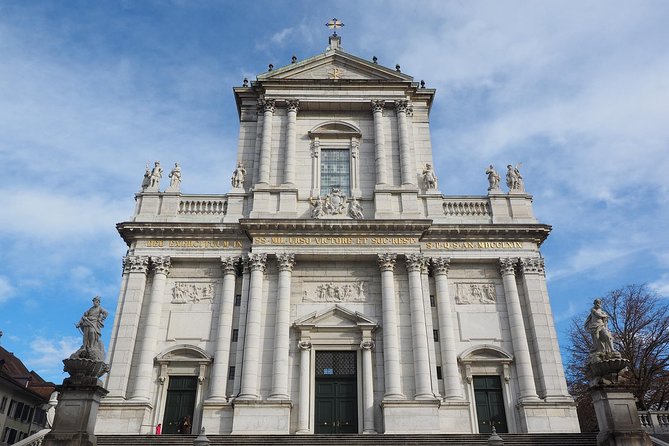
Your next stop is Elisabeth Church, known in German as Elisabethenkirche. This one is a 19th-century church built in a Swiss Gothic Revival style. Construction began in 1857 and finished in 1864, and it was supported by wealthy Basel businessman Christoph Merian and his wife Margarethe Burckhardt-Merian.
I like this stop because it shows Basel did not freeze in medieval time. The city continued to build, and it continued to borrow shapes from older eras. In the crypt, you can find their resting place in a black marble sarcophagus, which gives the building a human and local anchor beyond the architectural form.
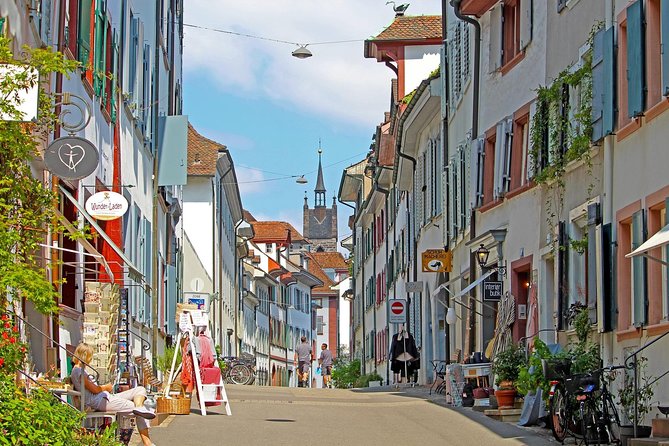
Then you move toward Rittergasse, also called Knights Street. Basel calls it the mother of all streets, and you can feel that in the medieval architecture as you walk. The big practical takeaway is that street patterns and building ages help you understand how the city developed across centuries.
This is a great stretch for photos too, but don’t rush it. When a guide points out what to notice, like how the medieval character shows up in the façades and street shape, the walking part stops being filler and becomes part of the education.
Münster Cathedral and Münster Pfalz, Rhine views behind the postcard
Now for the stop that most people are waiting for. Münster Cathedral is the main picture-perfect sight of Basel, and the guide gives it real context. What you’re seeing is a 12th to 15th century mixture of Romanesque and Gothic elements.
This cathedral does not sit alone. It is surrounded by a large square that hosts events, so it works as a civic stage as much as a religious one. If you’re only staring at the façade, you miss the point. Standing in the space lets you see how Basel uses the cathedral area as a public gathering zone.
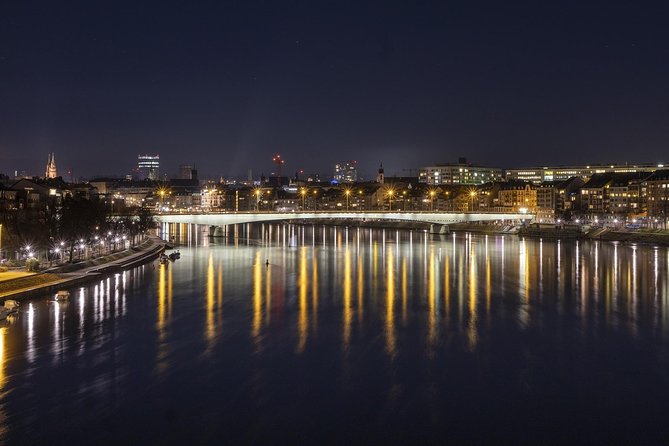
Behind the cathedral, you pass Münster Pfalz, which is your viewpoint moment. From here you look out toward the city, the Rhine River, and the neighborhood of Kleinbasel. This is one of the smartest parts of the route because the view helps you connect the architecture to geography.
I recommend using this stop to orient yourself. After seeing the river and the layout, it becomes easier to plan what you want to see later on your own, whether that means returning toward the river or continuing into the neighborhoods across the water.
Rathaus and Marktplatz, civic power with a Roman footnote
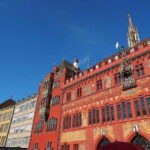
Next up is Basel City Hall, the Rathaus von Basel, located in the old market square, Marktplatz. The building’s red color helps it grab your attention immediately, and the guide can show you what makes the façade and interior courtyard worth pausing for.
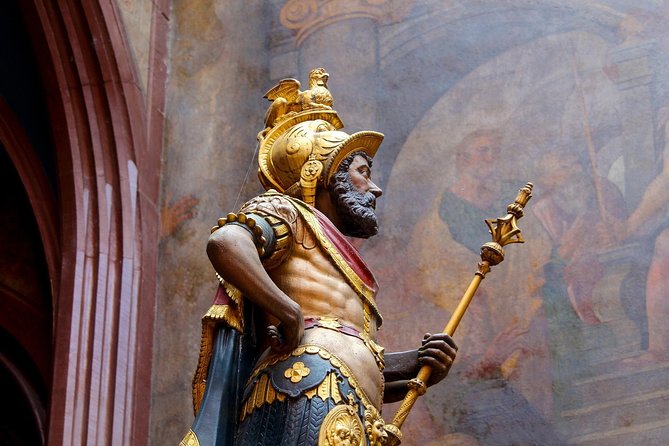
I like the way the tour treats this as more than scenery. City halls are where power shows itself, and you see that in the design and the spaces people used for civic life. The interior patio is also a key moment, with a statue of Munatius Plancus, described here as the Roman founder of the city.
This is a good reality check stop. Basel’s story is not just medieval churches and old bridges. It has Roman roots, and the city keeps reminding you of that through art, symbols, and where it chooses to place important buildings.
Give yourself a minute to look slowly before moving on. The courtyard details are the kind of thing you can miss if you treat this as just another quick photo.
The Sarasin Blue and White House, business history by the river
The walk then heads to the Blue and White House, Blaues und Weisses Haus. These are two baroque mansions on the Rheinsprung built by architect Samuel Werenfels for brothers Lukas and Jakob Sarasin in the 18th century.
Here’s the useful context: the Sarasin family descendants founded Bank Sarasin & Cie in Basel. Today, those buildings are used as the seat of the Department for Economy, Social Welfare and Environment. So the “old money” story isn’t just a history lesson. It also explains why these mansions still matter to how Basel functions.
If you care about how cities change over time, this stop is great. The architecture is baroque, the family story is business and finance, and the modern function is civic administration. You can almost see the timeline in the buildings.
It’s also close enough to the river area to keep the Rhine theme going. After the cathedral viewpoint and the market square, this feels like the city pivoting toward the practical world of commerce and governance.
Higher up, or further along the lake:
- Basel: Sightseeing Bus Tour with Audio Guide★ 4.1 · 377 reviews
- The Best of Basel: Guided Bike Tour★ 5.0 · 223 reviews
- Stories of Basel’s Old Town★ 4.5 · 203 reviews
- Basel Farmer’s Market, Cheese, Chocolate & Pastry Tour★ 4.5 · 171 reviews
Middle Bridge and Barfüsserplatz, finishing with Rhine history and transit sense
Your next major landmark is the Mittlere Brücke, the Middle Bridge. It’s one of the oldest monuments in town, first inaugurated in 1226. The guide connects it to Basel’s role in broader travel routes, linking it to the famous Gotthard Pass through the Rhine connection.
Bridges are more than engineering in old cities. They are decision points. They shape how people move, where markets develop, and which neighborhoods become central.
Then you loop back into the old town area, passing Marktplatz again on the way toward Barfüsserplatz. This square is a major crossing point in Basel’s public transportation system, so it’s a natural place for a tour to end. You also see Barfüsserkirche, the Church of the Bare Feet.
The name comes from the Franciscan order. The square has Franciscans tied to it since the monastery was built there in 1256, and the Franciscans were known in German as the Bare Feet because of their vow of poverty. This kind of detail is why a guide helps. Without it, you read the name as just a quirky label. With it, the name becomes a clue to the city’s medieval religious identity.
From here, you have two ending options. You can end the tour here and then explore on your own in the center. Or you can continue briefly to the nearby Tinguely Fountain for a more recognizable send-off point.
Pace, comfort, and what to wear for this stone-and-stairs route
This tour is about 2 hours long, and it is built around walking between tightly grouped landmarks. That usually means a steady pace and a few steps and turns, especially around older squares and historic sites. I’d treat it like a city-walk workout, not a slow stroll.
Wear shoes that handle stone underfoot. Basel is not all flat and modern sidewalks, and your best experience comes from staying steady while you look up at buildings. A light jacket can also help if the wind off the Rhine area picks up, since several views are outdoors.
Also plan for a lot of stopping. The value of a guided walk is that you pause where it counts. The cathedral and Rathaus stops are designed for looking, not for passing through.
Price and value for $448.58 per group up to 15
The price is listed as $448.58 per group, up to 15 people, for about 2 hours with a professional local guide in English. That sounds high at first glance if you compare it to per-person group tours. But private tours change the math.
For a family or small group, the cost can become quite reasonable, because you’re paying for a guide’s time plus the control of a route that fits your group. You also get the option of customizing on the spot, which is often where private tours earn their keep. If your group wants more time at the cathedral square or more questions about the Sarasin houses, the guide can steer that conversation.
Another value point is the mobile ticket. Small things like that matter when you are trying to keep the meeting smooth and avoid time-wasting guesswork.
One caution: entrance fees are not included. So if you plan to add ticketed museum stops during your walk, budget those separately. For a walk-focused tour like this, the main payoff is in exteriors, courtyards, viewpoints, and interpretation, so it works best when you treat it as a historical walking orientation.
Who this tour suits best (and who might prefer another plan)
This is ideal if you want an organized, high-quality route through Basel’s most recognizable historic beats without having to plan each turn yourself. The cathedral area, Marktplatz, and the Rhine bridge stops are the kind of anchors that make a self-guided tour easier later.
I also think it’s a strong fit for mixed-interest groups. You get Romanesque-Gothic architecture, civic buildings, baroque mansions tied to banking history, and a clear Rhine connection. Even if someone in your group cares more about the city’s story than the buildings, the guide can tie it together as you go.
If your travel style is strictly ticket-heavy, you might feel this is too exterior-focused. And if your group wants a museum day, you should pair this with something else later. But for getting your bearings fast and understanding what you’re looking at, it’s a smart choice.
Should you book this Basel private walking tour?
Yes, if you want a guided walk that hits the main Basel highlights while still explaining what makes them tick. The route is built around the most meaningful spaces, Tinguely Fountain to Münster Cathedral to Rathaus and then down toward the Rhine bridge and Barfüsserplatz.
I’d especially book it if you care about context. The guide format matters here, because architectural styles like the Romanesque-Gothic blend at Münster Cathedral and the Swiss Gothic Revival approach at Elisabethenkirche are easier to appreciate with someone pointing out the clues.
If you’re traveling with a small group and you can spare about two hours, this tour offers good value for the structure and the local interpretation you receive. And if your idea of a great day is street-level history with real city views, Basel should absolutely be on your list.
FAQ
Where does the tour start?
The tour starts at Tinguely-Brunnen, Klostergasse 7, 4051 Basel, Switzerland.
How long is the Basel private walking tour?
It runs for about 2 hours.
What language is the tour offered in?
The tour is offered in English.
Is this a private tour?
Yes. It is private, and only your group participates.
How big is the group?
The tour is for up to 15 people per group.
What’s included in the price?
A local guide with your group only is included, along with a private guided tour. The guide may also customize the tour on the spot. A mobile ticket is provided.
Are entrance fees included?
No. Entrance fees are not included.
Is gratuity included?
No. Gratuities are not included.
Is the meeting point near public transportation?
Yes, it is near public transportation.
Can I cancel for a full refund?
Free cancellation is available. You can cancel up to 24 hours in advance of the experience’s start time for a full refund.
Is the tour open to most travelers?
Most travelers can participate.
If you tell me your travel dates and whether you have kids, I can suggest the best time of day to do the cathedral square and viewpoint section.
Added lately around Basel




Walking Tours, compared.
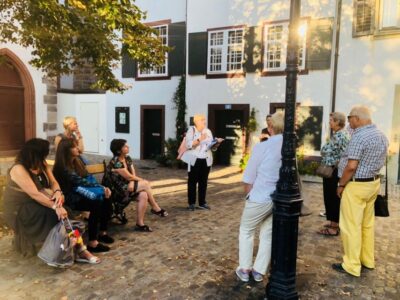
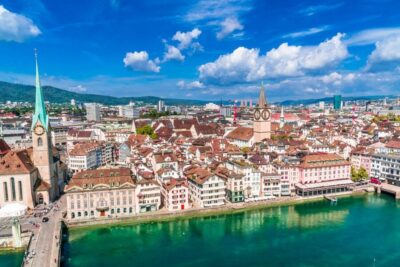
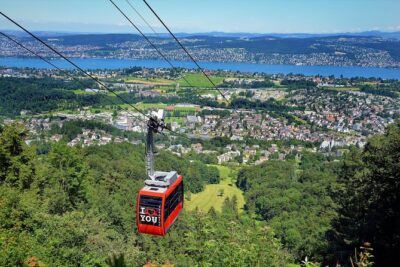
Zurich Walking Tour With Cruise and Aerial Cable Car
Read our review →

Lucerne Walking & Boat Tour: The Best Swiss Experience
Read our review →
3 in 1: Zurich Walking Tour – Cruise on the Lake – Cable Car Ride to Felsenegg
Read our review →Browse the lists this tour appears in