
Reviewed · WALKING TOURS
1.5-Hour Small-Group Nightwatchman Walk in Medieval Lucerne
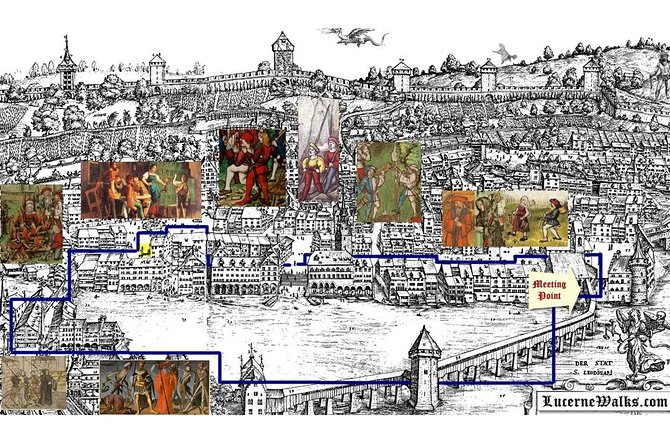
Follow the Nightwatchman through Lucerne’s darkened streets. This 1.5-hour small-group walk turns medieval facts into street-corner stories, with a guide in character and visuals that bring Lucerne’s past into focus. I love the way you study the Martiniplan (the city’s early map) while standing near real surviving buildings, and I love the variety of stops, from chapel bridges to old pharmacy windows. One possible drawback: the stories can get dark and gory, so consider that if you are traveling with sensitive kids.
This is a smart choice when you want history you can see, not just read. With a maximum of 15 travelers, it stays personal, and English is offered throughout, so you are not stuck guessing at the details.
In This Review
- Key points to know before you go
- Nightwatchman storytelling makes Lucerne feel medieval fast
- Price and value: is $39.54 worth a 1.5-hour walk?
- Stop-by-stop walkthrough: Peterskapelle, Martiniplan, and St. Peter’s story
- Chapel Bridge and the Water Tower, torture chambers, and why it matters
- Furrengasse and Kornmarkt: ghosts, measurements, and civic power
- Brandgässli and Weinmarkt: riots, frescos, pharmacy signs, and a glass of water
- Im Zöpfli: law and order shown through projected images
- Bridge views and wall hints: Reussbrücke, Spreuerbrücke, Needle Dam, Musegg Wall
- Alte Suidtersche Apotheke: the medieval pharmacy window stop
- Ritterscher Palace and the Dance of Death projections
- Final stretch: the Jesuits church and the diagonal Chapel Bridge exit
- Pacing, comfort, and who this tour suits best
- Should you book the 1.5-Hour Nightwatchman walk in Lucerne?
- FAQ
- How long is the Nightwatchman walking tour in Lucerne?
- Is the tour offered in English?
- How large is the group?
- Where do I meet, and where does the tour end?
- Is hotel pickup or drop-off included?
- Does the tour run in bad weather?
- Can I cancel and get a full refund?
Key points to know before you go
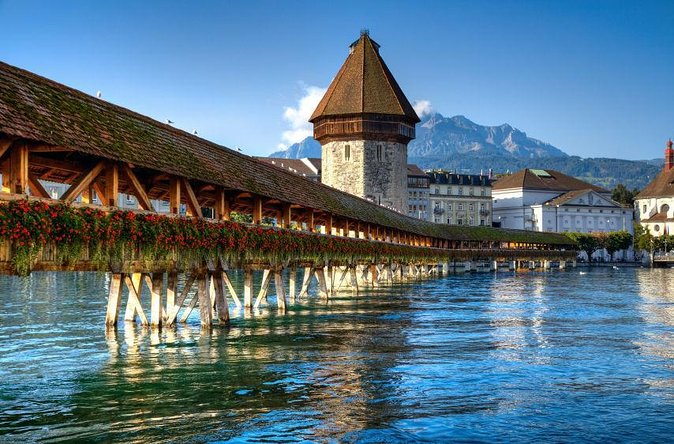
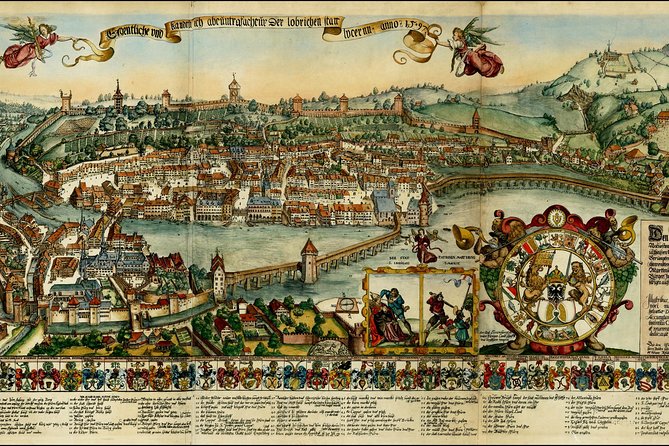
- Martiniplan (1597) with street-level context, so the map is more than a picture
- Projected visuals that make symbols, murals, and punishment methods easier to understand
- Iconic Lucerne links in one walk, including Chapel Bridge and the Water Tower area
- Dark tales with humor and pacing, best for adults and older teens
- Small details that stick, like the clock on the town hall tower and old measurement units
Nightwatchman storytelling makes Lucerne feel medieval fast
Lucerne is postcard-beautiful in daylight, but at night it has a different tempo. This tour uses that mood on purpose. The Nightwatchman starts with a fire horn signal and an invocation, then talks through what his job meant in medieval days, including the hard realities of life in a walled city.
What I like most is that you are not just walking past landmarks. You are learning how people lived, policed the streets, measured time, and even handled medicine. The guide also uses a projector with visuals. That matters, because medieval Lucerne often feels like a blur of old buildings unless someone helps you connect dates, places, and symbols.
The overall feel is tour-company polished without turning into a theme park. You get the theatrical framing, but the stops are real. And you can see why the same corners that mattered centuries ago still shape today’s walk.
Price and value: is $39.54 worth a 1.5-hour walk?
At $39.54 per person for about 1 hour 30 minutes, the value comes from three things: group size, guide format, and concentrated content.
First, the group cap is 15 travelers. That keeps questions possible and helps the guide keep everyone oriented as you move through narrow old-town lanes. Second, the experience is not only spoken. The Martiniplan segment and later projected imagery do real work for your understanding. Third, the itinerary is packed with major Lucerne features in a walkable route, including Chapel Bridge and bridge-side structures like the Spreuerbrücke area.
You also get small extras included in the package, like medievally dressed local guiding and exclusive postcards featuring Old Lucerne. It is not a huge souvenir moment, but it is a nice add-on that supports the art-and-history tone of the walk.
If you are hoping for a long sit-down museum lesson, this is not that. It is a moving story. If that style fits you, the price feels fair.
More Guided Walks in Lucerne
- Lucerne: Private Walking Tour with a Local Guide
★ 4.6 · 450 reviews - Lucerne Walking & Boat Tour: The Best Swiss Experience
★ 4.5 · 417 reviews - Lucerne: Guided Walking Tour with an Official Guide
★ 4.7 · 321 reviews
Stop-by-stop walkthrough: Peterskapelle, Martiniplan, and St. Peter’s story
The tour begins at Rosengart Platz and opens at Peterskapelle, also known as Peter’s Chapel. This is where you set the “medieval lens” for everything else you will see.
Here is what makes this start special. The guide uses the projector to introduce medieval Lucerne and gives you a close look at the Martiniplan, the first city map of Lucerne, dating from 1597. You are not only told that this map exists. You are shown how the route on the map works and how many of the buildings you see today correspond to what is marked on the plan. That is an excellent mental shortcut. After this, later stops feel like chapters in a single story instead of random stops.
From there, you also see St. Peter’s Chapel, with roots in the 12th century. Even if you have visited Lucerne before, standing here and hearing how early worship shaped the town makes the old stones feel purposeful, not just pretty. Next to it, the tour points out the first private stone house of Lucerne and connects it to the origin of the expression stone rich. That kind of language-and-place connection is small, but it helps you remember what you learn.
Note: Peterskapelle comes with a line that admission tickets are not included. If you plan to go inside any chapel or special viewing area, confirm what is accessible during the walk and what is optional.
Chapel Bridge and the Water Tower, torture chambers, and why it matters
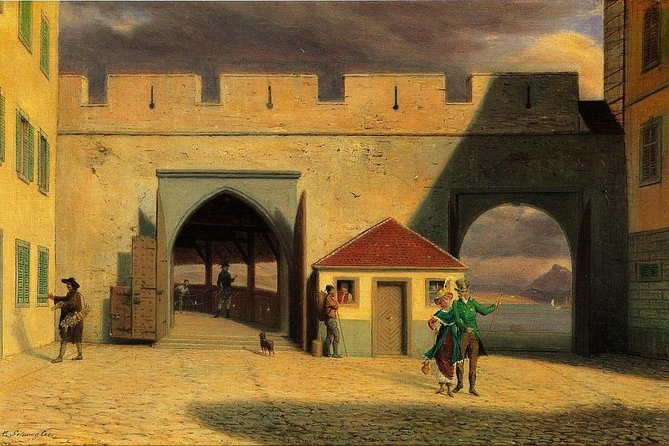
Next you move to the Chapel Bridge area, a Lucerne landmark that most people recognize. But this tour’s angle is not postcard photos. It compares structures and timelines.
You learn that the Water Tower was built in the late 13th century, while the Chapel Bridge dates back to 1365. That detail matters because it explains how Lucerne’s defenses and trading needs evolved over time, then you see projected images of the Water Tower interior.
The guide also discusses a torture chamber, a dungeon, and a secret room connected with the building. The point here is not shock for shock’s sake. It is how justice and punishment functioned in a city where control mattered. You will likely understand the emotional weight behind the architecture, even if you would never choose to tour a prison in real life.
If you are sensitive to dark themes, this is the section where your comfort level is most likely to be tested. The tour can feel a bit gory, depending on how you take the story and how it is presented that night.
Furrengasse and Kornmarkt: ghosts, measurements, and civic power
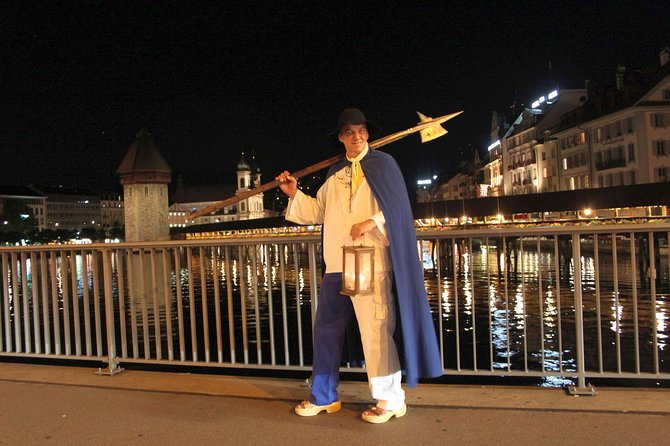
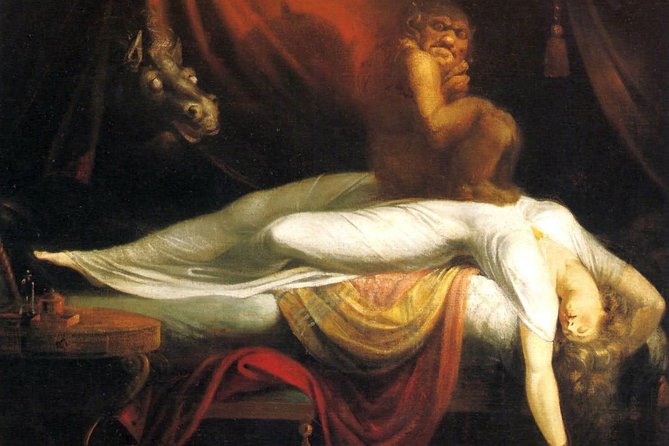
From Chapel Bridge you head toward Kapellplatz, then walk into Furrengasse. This part leans into folklore and the strange edge of medieval imagination. You hear about the ghost connected with the alley, plus the Toggeli, described as an incubus, sometimes linked with the idea of a love robber. Even if you normally skip ghost stories, this works because it shows how rumors and fear were part of city life, not just bedtime entertainment.
Then you arrive at Kornmarkt, the Town Hall Square. This is one of those stops where the guide makes you look up instead of just around. You learn about the Renaissance town hall and its clock tower, including the detail that the clock has no minute hand. You also hear the story of the Giant of Reiden.
The tour adds another layer with official measures from Old Lucerne, including the Lucerne Foot and Elle. That is surprisingly relevant. Medieval cities relied on strict, public measurement because trade and taxes depended on consistent standards. You are learning the invisible systems that shaped daily life.
Brandgässli and Weinmarkt: riots, frescos, pharmacy signs, and a glass of water
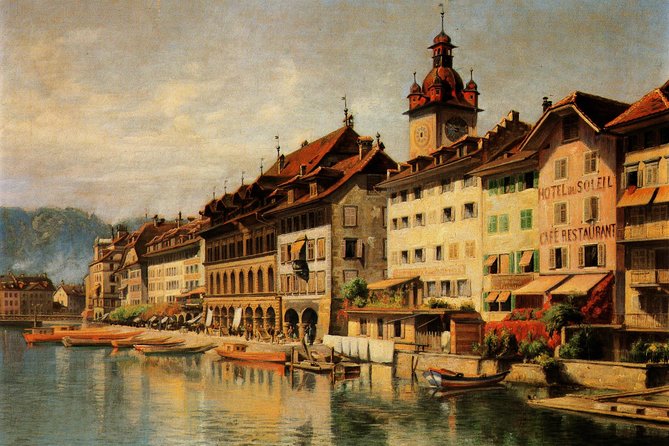
Brandgässli Alley shifts the tone from civic rules to city conflict. You hear about the Riot of Lucerne, then you continue toward the former fish market, known today as the wine market. That change in use is a reminder that cities recycle their space. The same street can serve totally different needs across centuries.
Then comes Weinmarkt, where the tour becomes visual in a different way. You see old guest house signs and admire frescos on houses. You also read a Latin sentence on the former pharmacy house of Renward Cysat: Amor medicabillis nullis herbis, meaning there is no cure for a broken heart.
From there, you hear about reformation and counter reformation. This is one of those moments where a walking tour can feel like a shortcut into big ideas, but it works best if you enjoy connections between politics, religion, and everyday street life.
Right at this stop you also get a glass of the best water in Lucerne, which is a delightful practical break from the heavy stories. The tour keeps moving, but that sip helps you reset your attention.
The tour also mentions that the pillory was located in the lower wine market. Again, the takeaway is the same: public punishment was built into the rhythm of commerce.
Higher up, or further along the lake:
- From Zurich: Mount Titlis with Ice Flyer & Lucerne Day Tour★ 4.7 · 3,899 reviews
- Lucerne: Mt. Pilatus Cable Car, Cogwheel Train & Lake Cruise★ 4.7 · 2,338 reviews
- Mount Pilatus Summit from Lucerne With Lake Cruise★ 4.5 · 1,260 reviews
- Lucerne: Round-Trip Catamaran Cruise on Lake Lucerne★ 4.4 · 1,169 reviews
Im Zöpfli: law and order shown through projected images
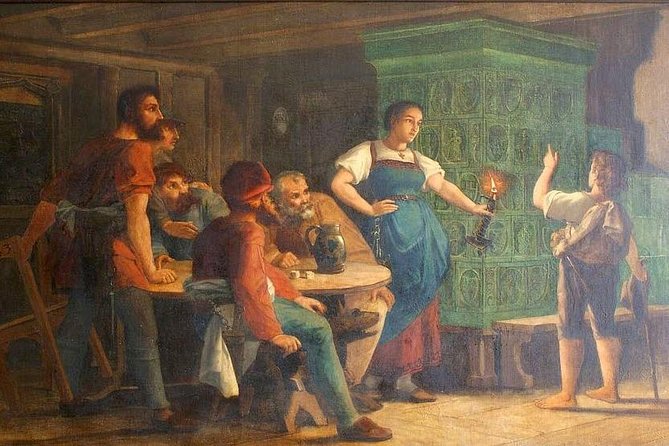
Im Zöpfli is a riverside square, which is a nice pacing trick. After squares and alleys filled with stories, the river air gives your brain a moment to breathe.
Here you hear how law and order worked in old Lucerne. Projected paintings explain methods of prosecution, interrogation, and corporal punishment. If you have ever wondered how medieval justice differed from modern systems, this is the section where the tour puts concrete visuals to concepts.
This is also where group size helps. A small group can hear the projections without constant jostling. And because the tour is moving, you are getting story context right where the city layout makes sense.
Bridge views and wall hints: Reussbrücke, Spreuerbrücke, Needle Dam, Musegg Wall
After Zöpfli, you pass the bridge Reussbrücke and see the Spreuerbrücke (Mill Bridge), the Needle Dam, and parts of the Musegg Wall. Even without going deep into architectural details at every point, the visual sequence helps you understand how Lucerne defended itself and controlled movement.
If you like structural clues, these are good moments to notice how bridges and river crossings shaped where people could go, where goods moved, and where authorities could observe the street.
Also, you are still in “Nightwatchman mode,” so the mood ties together. You are not just sightseeing river reflections. You are learning why this city built the way it did.
Alte Suidtersche Apotheke: the medieval pharmacy window stop
One of the most visually memorable moments comes at Alte Suidtersche Apotheke, with its breathtaking medieval pharmacy window.
The guide explains the house and its location, and this is where medicine, trade, and status intersect. Old pharmacies were not only about remedies. They were about reputation, knowledge, and the visible signals of credibility in a town where survival depended on local systems.
This is also a stop where admission is marked as not included. If you want more than what you see from the outside, make sure you know what is available during the walk and what requires an extra ticket.
Ritterscher Palace and the Dance of Death projections
Ritterscher Palace Lucerne brings you into the realm of legends and symbolism. You hear about guardian demons, then you stop at the legendary house of Lux Ritter.
You learn why the first two floors look different from the third one. You also hear the story of Hans von Trient, the unlucky stonemason. Stories like this sound like folklore, but they reflect how people used architecture and rumor to explain fortune, fate, and craftsmanship.
The highlight at this stop is the presentation of seven paintings of the Dance of Death. The guide has you look at projected images on a house wall and provides details. If you like art-history style explanations, this is the moment that often makes this tour feel different from a standard overview walk.
One review specifically called out that the guide mixed humor and art-history lessons, with a slideshow and even hands-on touches like tasting fountain water. That kind of presentation style is exactly what makes projections feel less like gimmicks and more like a way to interpret symbols you would otherwise walk right past.
Final stretch: the Jesuits church and the diagonal Chapel Bridge exit
Near the end, you pass the Church of the Jesuits, described as the first baroque building in Switzerland dating back to 1677. This is a useful contrast after the medieval focus. It reminds you that cities layer eras, and Lucerne is not stuck in one century.
Then you reach the final Chapel Bridge stop, where you cross back over. You see the paintings again and learn why the bridge is built diagonally over the river. That diagonal design detail is one of those things you would never guess from viewing it once. When a guide points out why, the bridge stops being static and starts being logical.
At the end, you return to the starting point, Rosengart Platz.
Pacing, comfort, and who this tour suits best
The tour runs about 1 hour 30 minutes, and the stops are structured so you do not spend too long stuck in one spot. Still, it is an evening walk on cobblestones and uneven old-town surfaces. Wear comfortable shoes and expect to keep moving.
You should also dress for weather. The tour runs rain, snow, or shine, and you are advised to bring an umbrella or rain coat. If you go in cold weather, you will likely enjoy this more if you layer. You will want to stay comfortable while listening and looking at projections.
As for suitability, this is ideal for:
- Adults and older teens who like stories tied to architecture
- People who enjoy folklore with historical framing
- Anyone who wants a compact Lucerne history orientation without booking museums
It may not be ideal for very sensitive travelers. The tour includes torture and corporal punishment themes, plus descriptions that can feel gory. If that is a hard no for your group, skip this one.
Should you book the 1.5-Hour Nightwatchman walk in Lucerne?
If you want an evening activity that makes medieval Lucerne feel specific, not vague, book it. The combination of Martiniplan mapping, projected visuals, and major old-town landmarks is a strong package for a relatively short time. The small group size also helps, especially if you like asking questions or hearing the guide explain details like the clock tower, measurement units, and the Chapel Bridge design.
I would book this if your travel style is walking plus storytelling. I would think twice if you are traveling with kids who cannot handle dark themes, or if you prefer history that stays light and purely architectural.
Overall, with a 4.7 rating and a high recommendation rate, this is one of the clearer choices for getting the medieval feel of Lucerne in a single night.
FAQ
How long is the Nightwatchman walking tour in Lucerne?
It lasts about 1 hour 30 minutes.
Is the tour offered in English?
Yes, it is offered in English.
How large is the group?
The tour has a maximum of 15 travelers.
Where do I meet, and where does the tour end?
You start at Rosengart Platz, 6004 Luzern, Switzerland, and the tour ends back at the same meeting point.
Is hotel pickup or drop-off included?
No, hotel pickup and drop-off are not included.
Does the tour run in bad weather?
Yes. Tours take place rain, snow, or shine. You should dress appropriately and bring an umbrella or rain coat.
Can I cancel and get a full refund?
Yes. You can cancel up to 24 hours in advance for a full refund. If you cancel less than 24 hours before the start time, the amount paid is not refunded.
Added lately around Lucerne






Walking Tours, compared.

Zurich Walking Tour With Cruise and Aerial Cable Car
Read our review →

Lucerne Walking & Boat Tour: The Best Swiss Experience
Read our review →
3 in 1: Zurich Walking Tour – Cruise on the Lake – Cable Car Ride to Felsenegg
Read our review →Browse the lists this tour appears in